Al-Naṣī Plant Covers the Dunes of ʿIrq al-Ashayākh South of Rafha and Enhances Vegetation Cover
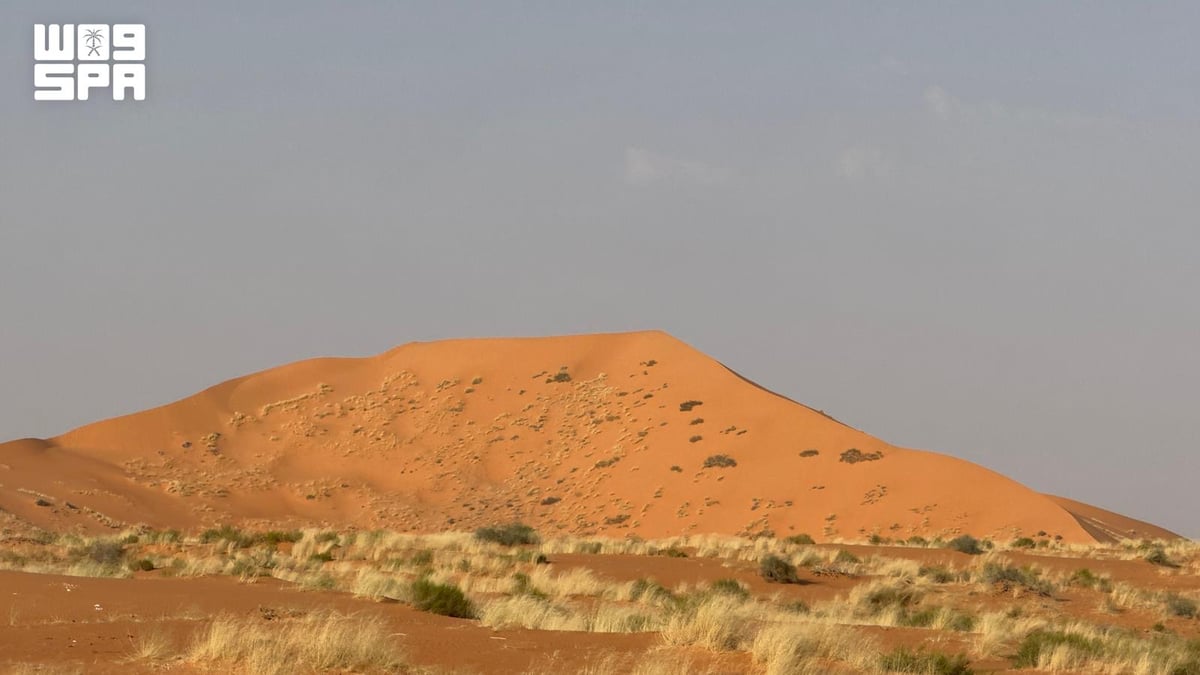
تشهد كثبان عرق الأشياخ الرملية جنوب غرب محافظة رفحاء انتشاراً واسعاً لنبات النصي الصيفي المعمر، مما يبرز غنى التنوع البيئي وصور استدامة المراعي في صحارى المملكة.
The sandy dunes of ʿIrq al-Ashayākh, located about 130 kilometers southwest of the Rafha Governorate, were adorned with tufts of the sibṭ plant, locally known as 'al-Naṣī', in a scene highlighting the richness of vegetation and environmental diversity in the Kingdom's deserts.
During this period, ʿIrq al-Ashayākh witnesses a notable spread of the Naṣī plant, a perennial summer plant belonging to the grass family, which grows naturally in sandy soil and is characterized by its high ability to adapt to harsh climatic conditions.
Specialists explained that the plant plays an important role in supporting pasture sustainability, as it is a natural source of livestock feed, and contributes to improving soil properties and reducing sand encroachment, thanks to its ability to spread and reproduce, thereby enhancing ecological balance in desert areas.
In the same context, the scenes of the spread of Naṣī in ʿIrq al-Ashayākh reflect the plant diversity and natural features of the Kingdom's deserts, as part of efforts to preserve vegetation cover and develop the environment.
It is noteworthy that these sites attract enthusiasts of off-road trips, photography, and nature, due to their combination of natural beauty and environmental importance.
Discuss the news with artificial intelligence.
Original source: Ajel.sa




Comments (0)
Be the first to comment.