Rare Astronomical Scene in Rafha Sky: Conjunction of Two Clusters with Mars and Capella
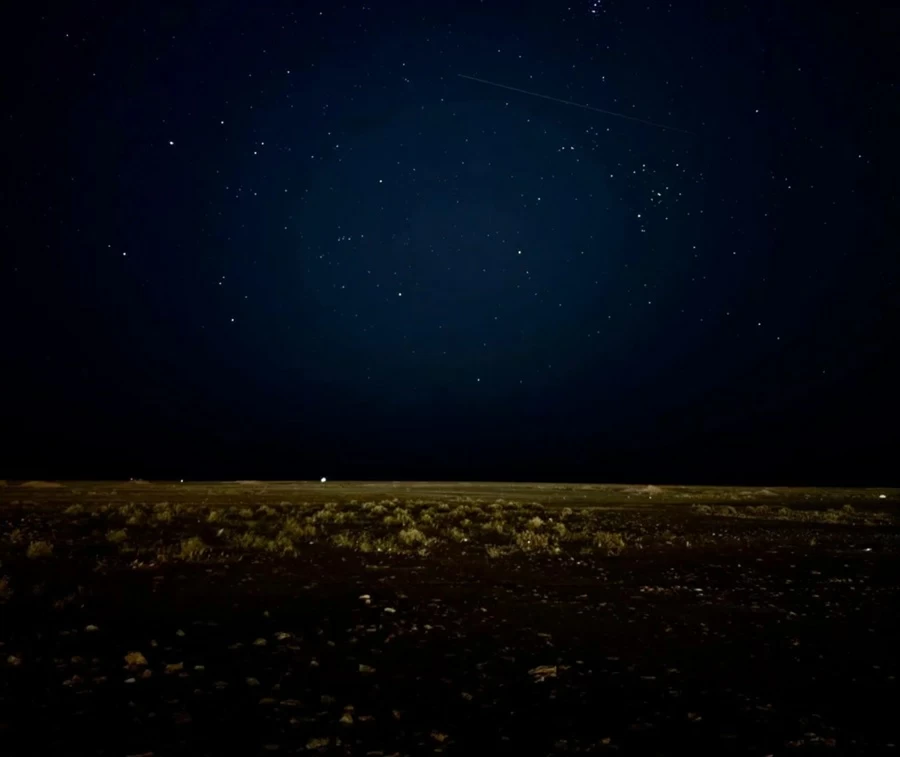
This morning, a striking astronomical scene was observed in the sky of Rafha Governorate in the Northern Borders Region, featuring the conjunction of the Pleiades cluster, the Hyades cluster, Mars, and the star Capella.
Member of the "Afaq" Astronomy Society, Burges Al-Faleh, explained that the scene brought together several of the most prominent celestial bodies and astronomical landmarks that can be observed with the naked eye during the summer when the skies are clear, noting that the Pleiades is one of the most famous open star clusters, located within the constellation Taurus, and is easily distinguishable due to its cluster of bright stars.
He pointed out that the Hyades is astronomically known as the cluster of Al-Qala'is (Hyades), which is the closest open star cluster to Earth, appearing as a wide star gathering adjacent to the Pleiades. Meanwhile, Mars stood out with its reddish hue, being one of the most distinctive planets during suitable observational periods, indicating that the star Capella is one of the bright stars belonging to the constellation Auriga, and is used by astronomy enthusiasts to identify the locations of constellations during observation nights.
He emphasized that such scenes contribute to enhancing the culture of astronomical observation and encourage enthusiasts to learn about stars, planets, and star clusters, especially in areas characterized by low light pollution and clear skies, such as the plains of Rafha Governorate, which are considered suitable locations for observing astronomical phenomena and night photography.
This morning, a striking astronomical scene was observed in the sky of Rafha Governorate in the Northern Borders Region, featuring the conjunction of the Pleiades cluster, the Hyades cluster, Mars, and the star Capella.
Member of the "Afaq" Astronomy Society, Burges Al-Faleh, explained that the scene brought together several of the most prominent celestial bodies and astronomical landmarks that can be observed with the naked eye during the summer when the skies are clear, noting that the Pleiades is one of the most famous open star clusters, located within the constellation Taurus, and is easily distinguishable due to its cluster of bright stars.
He pointed out that the Hyades is astronomically known as the cluster of Al-Qala'is (Hyades), which is the closest open star cluster to Earth, appearing as a wide star gathering adjacent to the Pleiades. Meanwhile, Mars stood out with its reddish hue, being one of the most distinctive planets during suitable observational periods, indicating that the star Capella is one of the bright stars belonging to the constellation Auriga, and is used by astronomy enthusiasts to identify the locations of constellations during observation nights.
He emphasized that such scenes contribute to enhancing the culture of astronomical observation and encourage enthusiasts to learn about stars, planets, and star clusters, especially in areas characterized by low light pollution and clear skies, such as the plains of Rafha Governorate, which are considered suitable locations for observing astronomical phenomena and night photography.
Original source: Okaz



Comments (0)
Be the first to comment.