Rock Cavities Revitalize Nature in the Highlands of Asir
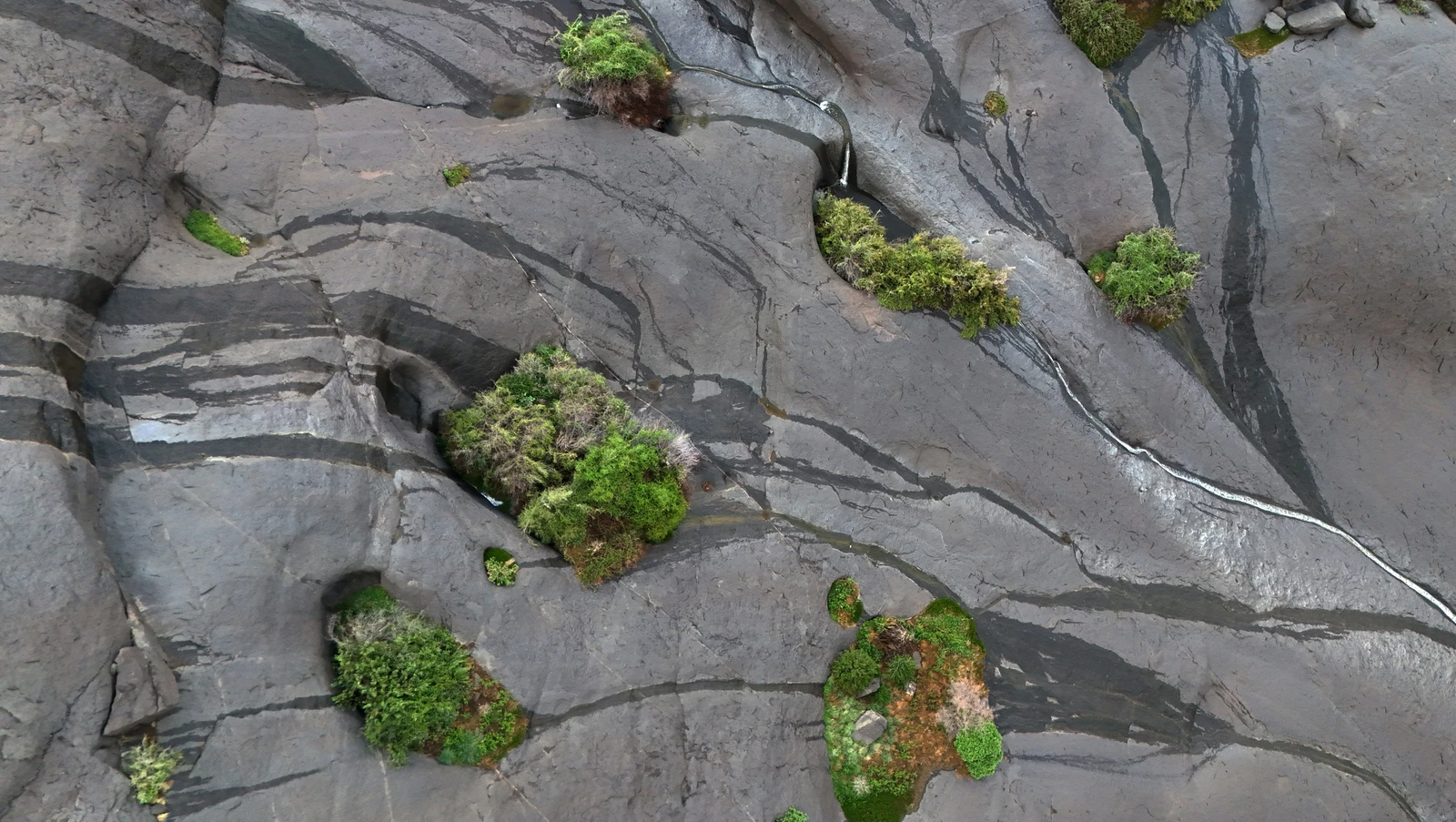
The rock cavities scattered in the highlands of Asir highlight a remarkable geological and environmental value, as they have formed over thousands of years within granite formations, serving as natural reservoirs that preserve rainwater and support the sustainability of wildlife in mountainous environments.
This phenomenon represents a natural record of the history of Asir's terrain formation.
These basins are formed by weathering and erosion processes that widen the minute cracks in solid rocks, turning them into cavities of varying sizes that receive rainwater and seasonal floods, retaining them for long periods, making them an important water resource for plants and wildlife during dry seasons.
This phenomenon also serves as a natural record of the history of Asir's terrain formation, revealing the impact of climatic factors in sculpting mountains and shaping their geological diversity, while becoming a destination for nature lovers and photographers due to the scenes it offers that combine clear water, rock gradients, and vegetation cover.
Rock cavities are distributed in several locations in the region, most notably Ghayah Village at the summit of Jabal Tahwi, and Rahwat Al Samid in Khat Center in Al Majaridah Governorate, in addition to multiple sites in the Tanumah mountains, forming part of the natural heritage that enhances Asir's status with its unique environmental and tourism components.
Original source: Akhbaar24




Comments (0)
Be the first to comment.