Role Models: When Communities Preserve Their Memory
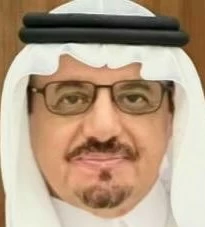
At the evening organized by the 'Qudwat Ataa wa Wafa' Foundation in Asir, where I was honored to be one of the honorees, the meaning went beyond the moment of recognition and remained longer. The occasion, at its core, was not a celebration of names as much as it was a reminder of a value without which the lives of communities cannot be upright: to see generations embodying values in the lives of people, not just written in phrases. The role model is not made on a platform, nor is it granted by a trophy or certificate. It is the result of a lifetime of work, a way of fulfilling duty, and an impact that a person leaves wherever they are. However, this impact may remain limited to its surroundings, and worthy experiences may pass...
At the evening organized by the 'Qudwat Ataa wa Wafa' Foundation in Asir, where I was honored to be one of the honorees, the meaning went beyond the moment of recognition and remained longer. The occasion, at its core, was not a celebration of names as much as it was a reminder of a value without which the lives of communities cannot be upright: to see generations embodying values in the lives of people, not just written in phrases.
The role model is not made on a platform, nor is it granted by a trophy or certificate. It is the result of a lifetime of work, a way of fulfilling duty, and an impact that a person leaves wherever they are. However, this impact may remain limited to its surroundings, and worthy experiences may pass without finding someone to narrate them or place them in their broader national context. Hence, the need arises for institutions that track meaning before names and extract from experiences what can be part of the community's memory.
In my opinion, this is the idea upon which the 'Qudwat' Foundation stands. It does not add to the honorees a virtue they did not possess, nor does it make recognition the end of their journey, but rather it transfers the experience from its private realm to the public domain, telling generations that the values they hear about have living witnesses; that hard work, patience, and taking responsibility are not subjects for preaching, but ways of life that can be seen and known.
This role has become increasingly important in a time when images are accelerating, and models compete for the awareness of the youth, to the point that fame often precedes value, and media presence is stronger than real impact. In such an atmosphere, presenting role models is no longer a celebratory act, but rather a cultural and educational endeavor; because it rearranges the criteria of perception and distinguishes between those who attract attention and those who deserve it.
From here, the importance of the non-profit sector in the Kingdom becomes clear. Its role does not stop at the doors of assistance and service, however significant they may be, but extends to building awareness, nurturing values, and enhancing social cohesion. The Saudi Vision 2030 has come to grant this sector a broader space and a more mature role as a partner in development, viewing development itself as building the human being before it is an expansion of facilities and projects.
Perhaps the 'Qudwat' experience provides a clear example of this transformation; it has made the recalling of national experiences an extended institutional effort, not a fleeting occasion. It has moved between the regions of the Kingdom, approached different biographies, and linked recognition to its social and developmental context, making the celebration a means to highlight the values that created those experiences, not an end in itself.
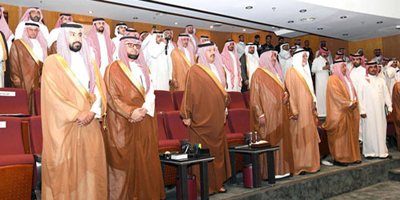
In the Asir evening, the presence of His Royal Highness Prince Turki bin Talal, Governor of the region and Chairman of its Development Authority, gave the occasion its deepest significance; because leadership support for such initiatives confirms that building the human being, celebrating genuine impact, and preserving national memory are not marginal matters, but part of the nation's grand project.
As for Mr. Nasser bin Abdullah Al-Awwad, founder of 'Qudwat', he deserves credit for transforming a good thought into continuous action, and for gathering those who believe in it and work for it. What gives the experience its value is not the number of celebrations, but the clarity and continuity of the message: that communities that know their models are better able to produce their likes.
There is no credit for a citizen in performing his duty to his homeland; for the homeland is the one that grants him identity, security, and opportunity, and what he offers afterwards is part of his obligation. But it is the right of society to preserve its serious experiences, not to exaggerate in their owners, but to make them public knowledge, material for learning, and evidence that building nations is not done by slogans, but by cumulative works, successive generations, and values that pass from one biography to another.
Recognition evenings end and trophies remain in their places, but what truly deserves to last is the meaning that 'Qudwat' called for: that a nation that preserves the biographies of sincere work not only recovers its past, but also prepares its future.
At the evening organized by the "Qudwat Ataa wa Wafa" Foundation in Asir, where I was honored to be one of the honorees, the meaning went beyond the moment of recognition and remained longer. The occasion, at its core, was not a celebration of names as much as it was a reminder of a value without which the lives of communities cannot be upright: to see generations embodying values in the lives of people, not just written in phrases.","The role model is not made on a platform, nor is it granted by a trophy or certificate. It is the result of a lifetime of work, a way of fulfilling duty, and an impact that a person leaves wherever they are. However, this impact may remain limited to its surroundings, and worthy experiences may pass without finding someone to narrate them or place them in their broader national context. Hence, the need arises for institutions that track meaning before names and extract from experiences what can be part of the community's memory.","In my opinion, this is the idea upon which the "Qudwat" Foundation stands. It does not add to the honorees a virtue they did not possess, nor does it make recognition the end of their journey, but rather it transfers the experience from its private realm to the public domain, telling generations that the values they hear about have living witnesses; that hard work, patience, and taking responsibility are not subjects for preaching, but ways of life that can be seen and known.","This role has become increasingly important in a time when images are accelerating, and models compete for the awareness of the youth, to the point that fame often precedes value, and media presence is stronger than real impact. In such an atmosphere, presenting role models is no longer a celebratory act, but rather a cultural and educational endeavor; because it rearranges the criteria of perception and distinguishes between those who attract attention and those who deserve it.","From here, the importance of the non-profit sector in the Kingdom becomes clear. Its role does not stop at the doors of assistance and service, however significant they may be, but extends to building awareness, nurturing values, and enhancing social cohesion. The Saudi Vision 2030 has come to grant this sector a broader space and a more mature role as a partner in development, viewing development itself as building the human being before it is an expansion of facilities and projects.","Perhaps the "Qudwat" experience provides a clear example of this transformation; it has made the recalling of national experiences an extended institutional effort, not a fleeting occasion. It has moved between the regions of the Kingdom, approached different biographies, and linked recognition to its social and developmental context, making the celebration a means to highlight the values that created those experiences, not an end in itself."
Original source: Okaz


Comments (0)
Be the first to comment.