Cultural / "Jarsh Archaeological".. The Wonder of Entering the Depths of a City That Tells the Civilization of the South of the Kingdom of Saudi Arabia
Cultural / "Jarsh Archaeological".. The Wonder of Entering the Depths of a City That Tells the Civilization of the South of the Kingdom of Saudi Arabia
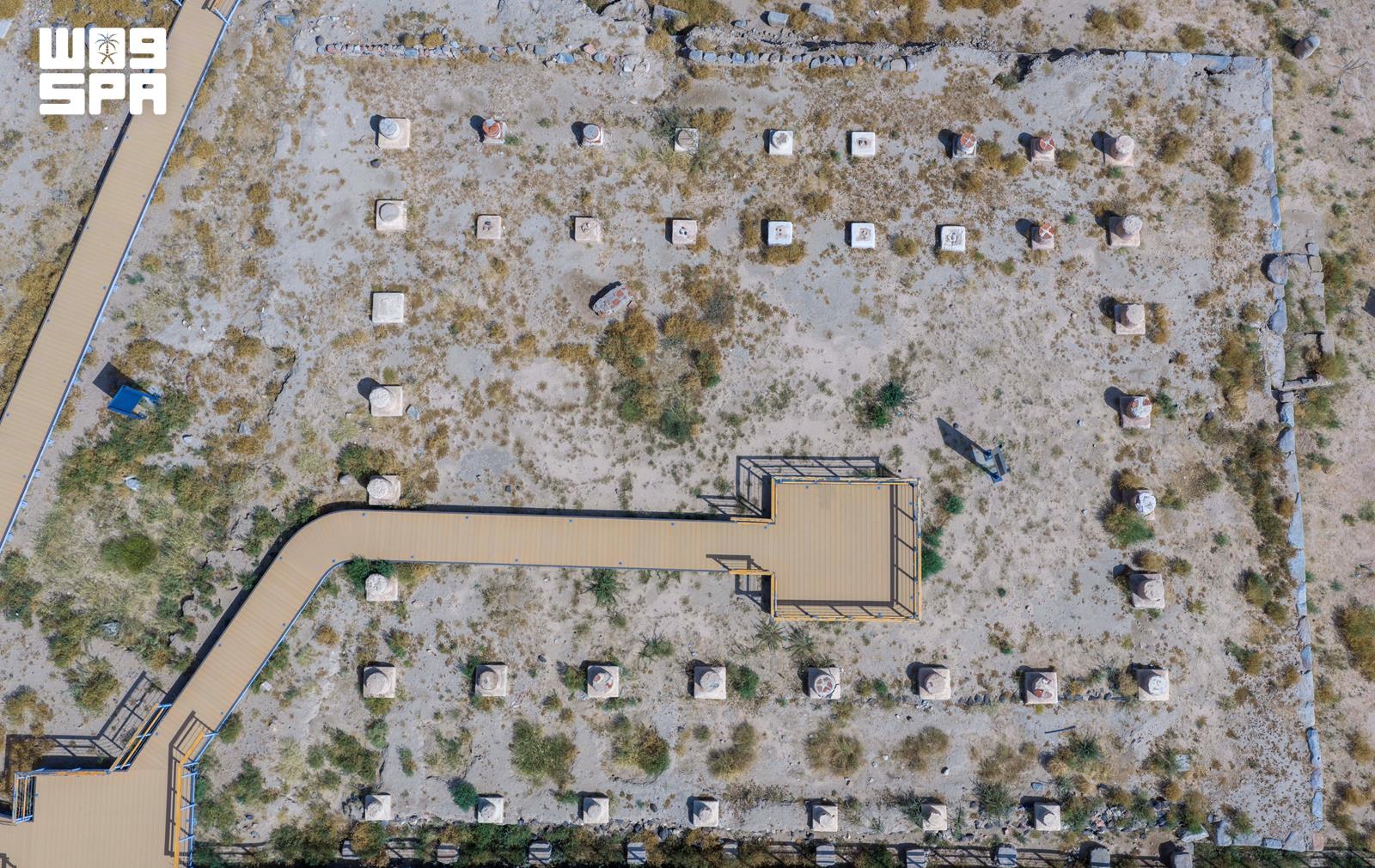
Abha, 08 Safar 1448 AH corresponding to July 22, 2026, SPA: In the moment when a visitor or tourist crosses the gate of the Visitor Center at the 'Jarsh Archaeological Site' in Ahad Rufidah Governorate, Asir Region, a moment of special wonder shapes before them; the quiet pathways, informative panels, and visual displays lead them on a journey that begins in the present, but quickly opens onto deep historical layers that tell the story of a city that was once a station for trade, pilgrimage, and cultural communication in the south of the Arabian Peninsula. The Visitor Center welcomes its guests through qualified cultural guides, who accompany the visitor from the very first moment in a cultural experience designed to be rich and engaging, with display methods varied between graphic panels, television films, models, archaeological pieces and artifacts, in addition to information provided by the guides to answer visitors' questions and enhance their understanding of the site. The visitor proceeds through the center via six successive introductory stations, starting with an introduction to Ahad Rufidah Governorate and its geography, then the history of the Jarsh archaeological site dating back to the first millennium BC. This station highlights that Jarsh was a city of great importance that continued through the early Islamic periods. The stations move on to present a short television film that introduces the archaeological site and the ancient city of Jarsh, reviewing its history, civilization, and most important components and archaeological discoveries. Another visual presentation illustrates the cultural importance of the city of Jarsh, which occupied a distinctive location on the Incense Route and the ancient trade route extending from the north of the Arabian Peninsula to its south, making it a point of communication between local populations and passing caravans. At the archaeological finds station, the visitor views a collection of discoveries found at the site, including metals, glass, pottery, and stoneware, with some pieces displayed in glass cases allowing the visitor to examine them closely. The displayed information indicates that the inhabitants of Jarsh benefited from the abundance of rocks in their environment, using them as the main material in building their city, as well as in making millstones, vessels, saddles, and household tools. Excavations have revealed glass tools in various colors, and a remarkable development in metal industries, represented by coins, ornaments, nails, and metal vessels. The 'Archaeological Discoveries at Jarsh' station takes the visitor on a panoramic tour using 360-degree technology, showcasing the most prominent discoveries at the site, including the fortress, water facilities, the two mosques, rock drawings, and ancient inscriptions. Excavation work, ongoing for more than three decades, has revealed the foundations of two mosques dating back to an early Islamic period, built on the foundations of a pre-Islamic fortress. During the fifteenth excavation season in 2023, an ancient water well built of stones and mud was uncovered, connected to stone channels that were used to distribute water to neighboring residential units, indicating the development of water management systems in the city. Last April, the Heritage Authority concluded the work of the seventeenth season of the excavation project at the Jarsh archaeological site. The excavation work during this season – according to a statement by the Authority – resulted in the discovery of residential units dating back to two different time periods, whose walls were built using large dressed stones and mud mortar, representing an extension of what was uncovered in previous seasons, specifically on the eastern side of the mosque previously discovered at the site. These units included rooms containing precise architectural elements, including small storage rooms for grain, pottery cooking ovens, as well as basins and supports reflecting the local construction style prevalent in that era. Through the season's work, the Authority documented a stone tombstone with inscriptions in Kufic script on both sides, one of which dates back to Thursday, the 17th of Ramadan, 311 AH, representing an important scientific addition to the historical implications associated with the site. The archaeological discoveries included a number of stone tools, consisting of parts of pestles, grinders, and a group of millstones of various sizes and shapes, in addition to parts of vessels made of plain and glazed pottery, and others made of glass, as well as vessels carved from soapstone. The journey of the visitor to 'Jarsh' does not stop at the limits of archaeological evidence, but extends to the introduction of the architectural heritage in the Asir region, through a short film that highlights the difference between mountain architecture and mud architecture, and presents models of heritage villages in the region, in addition to highlighting the distinctiveness of Al-Qatt Al-Asiri as one of the intangible heritage elements registered on the UNESCO list. At the conclusion of the visit, the visitor learns about the handicrafts that Jarsh and the Asir region were famous for, including leatherwork known as 'Adim Jarshi' (Jarsh leather), metal industries that excelled in making weapons, vessels, ornaments and jewelry, in addition to pottery industries on which the locals relied in their daily lives. The archaeological site of Jarsh represents the remains of successive tribes and civilizations in the south of the Arabian Peninsula, having prevailed for centuries before disappearing, leaving evidence of successive historical transformations, and stands out as a civilized, agricultural, and industrial city with distinctive craftsmanship, known for strength and fortification. The ruins of Jarsh today lie in the middle of Ahad Rufidah Governorate, about 30 kilometers east of Abha, surrounded by two mountains: Mount Hamumah to the east and Mount Shakar to the west. Prominent at the site is a rock carving executed in high relief of a lion pouncing on a bull, beneath which is written in Musnad script the phrase 'Thawrn na'man wa asadn malqa', dating back to the first century AD, and it is considered one of the evidence indicating strength and fortification in that period. Jarsh was also known for its diverse industries, housing factories for tanning, pottery, and military industries, including mangonels and catapults, as documented by historical sources that dedicated pages to discussing the site of Jarsh and the works of its inhabitants. The Jarsh Visitor Center offers its content fully in Arabic and English, with supporting services for visitors, including umbrellas and wheelchairs, contributing to improving the visitor experience and making it more comprehensive. With this integration between the archaeological site and the visitor center, Jarsh is transformed into a promising cultural and tourist destination in the Asir region, where the visitor encounters the story of an ancient civilization whose evidence remains present in the city's ruins and the finds of its center, affirming that Jarsh was not just a station on an ancient road, but a civilized center that left its mark on the history of the south of the Arabian Peninsula. // End // 17:26 PM 0159
Original source: SPA


Comments (0)
Be the first to comment.