United States Signs Historic Nuclear Agreement with Saudi Arabia
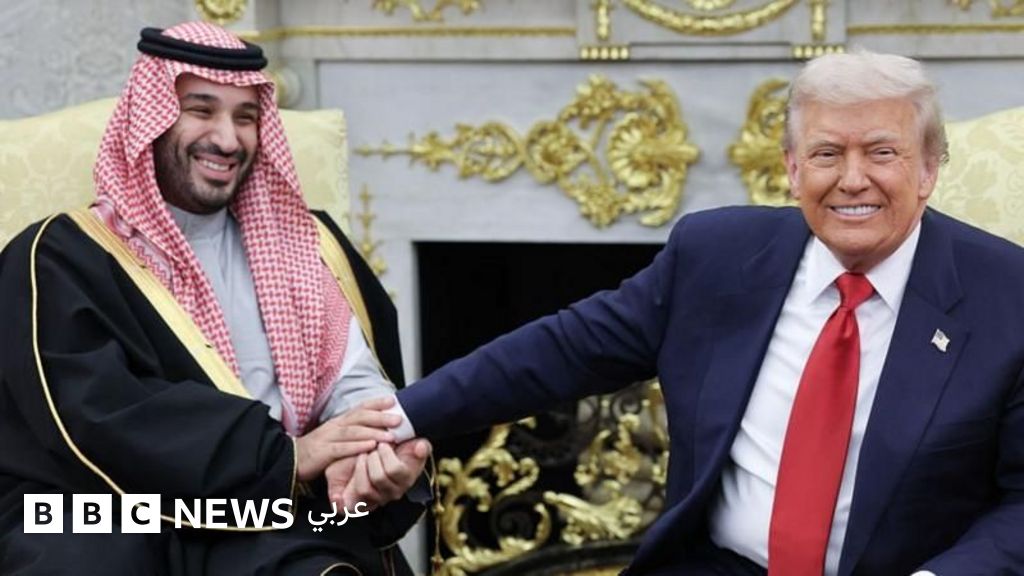
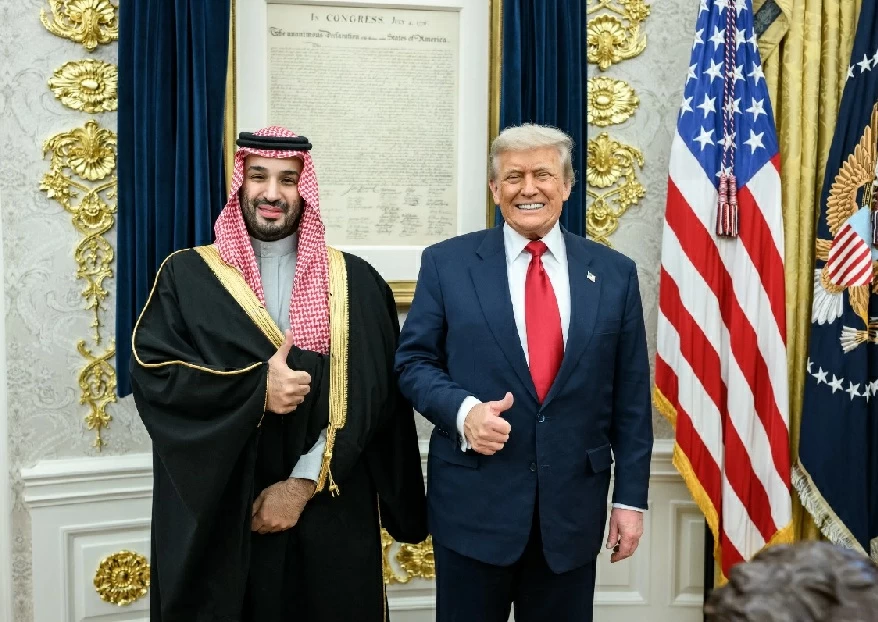
Washington and Riyadh have signed an agreement to develop a Saudi civilian nuclear program; the United States stated that it supports nuclear non-proliferation, while Saudi Arabia described it as an extension of energy cooperation.
Reports: An anticipated nuclear agreement between Saudi Arabia and the United States may allow Riyadh to enrich uranium.
Published 3 hours ago
Reading time: 5 minutes
The United States and Saudi Arabia are preparing to announce an agreement for civilian nuclear energy cooperation that may allow Riyadh to enrich uranium within its territories, according to American media reports, without official confirmation from either country thus far.
CBS News, the BBC's US partner, quoted a regional official familiar with the agreement as saying that American companies will operate nuclear power plants on Saudi soil, in a move that would enable the Kingdom to develop nuclear energy for the first time.
The names of the participating companies have not yet been disclosed, while the network reported that the agreement will be submitted to Congress for consultation.
American media reports stated that the agreement may allow Saudi Arabia to produce its reactor fuel through uranium enrichment at a facility built by the United States within the Kingdom, rather than relying on imported fuel.
This would differ from the nuclear cooperation agreement concluded by the United States with the UAE in 2009, which does not allow Abu Dhabi to produce its own nuclear fuel and imposes strict restrictions and inspections.
In response to concerns regarding the agreement, US Secretary of State Marco Rubio said that the United States "will not reach any agreement with any country in the world that leads to the risk of nuclear proliferation."
Divergent positions in Congress
Democratic lawmakers criticized the anticipated agreement, demanding that it be subjected to the same safeguards applied in the US-UAE agreement.
Democratic Representative Brad Sherman said the United States should not approve the agreement unless it includes "the same strict standard terms" contained in its agreement with the UAE.
Skip most read and continue reading
What happened to the Egyptian child "Makary Younan", and was he excluded because of his religion?
A fashion talent scout linked to Jeffrey Epstein found dead in his home in France
How did Godzilla star and Hollywood's most famous deaf child Kylie Hotter pass away?
Trump threatens to bomb civilian facilities if Tehran targets ships in the Strait of Hormuz, and Israeli "Mossad" chief holds talks in Washington
Sherman added via the X platform: "A president fighting a war to prevent nuclear proliferation in the Middle East should not facilitate this proliferation simply because American companies will make profits."
Democratic Representative John Garamendi described the agreement as "very bad policy," saying that enriched uranium can be used to make a nuclear weapon.
In contrast, Republican Representative Marlin Stutzman said he has no "principled concerns" regarding the agreement, but would like to see more intelligence information about it.
Israeli positions
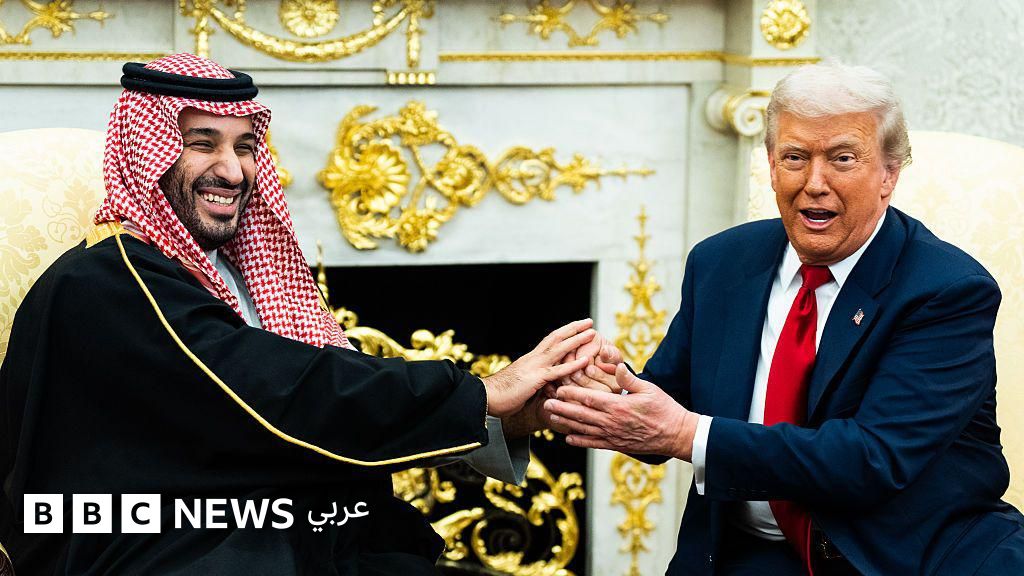
Image caption, former Israeli Defense Minister Avigdor Lieberman said that the Saudi nuclear program will lead to acquiring nuclear weapons
For his part, Israeli Economy Minister Nir Barkat said Israel can deal with Saudi Arabia acquiring nuclear power if it is intended for peaceful purposes.
Barkat told Israeli military radio: "If they want it for peaceful purposes, we can handle that. The Americans do not want to put Israel at risk, and Netanyahu and Trump know how to move without taking risks."
Israeli Heritage Minister Amichai Eliyahu said his country will do "everything in its power" to ensure that no country in the Middle East develops a nuclear weapon, adding that Saudi Arabia "is heading in a good direction today, but that may change in the future."
As for former Israeli Defense and Foreign Minister Avigdor Lieberman, he called on the government to act to halt the agreement, considering that the Saudi civilian nuclear program will ultimately lead to acquiring nuclear weapons and launching "a frantic arms race across the Middle East."
Israel is widely believed to possess nuclear weapons, though it neither confirms nor denies it.
How Trump plunged the US into numerous crises - The Guardian
Trump opens the door to communication with Hezbollah during his meeting with Aoun at the White House
American expert downplays risks
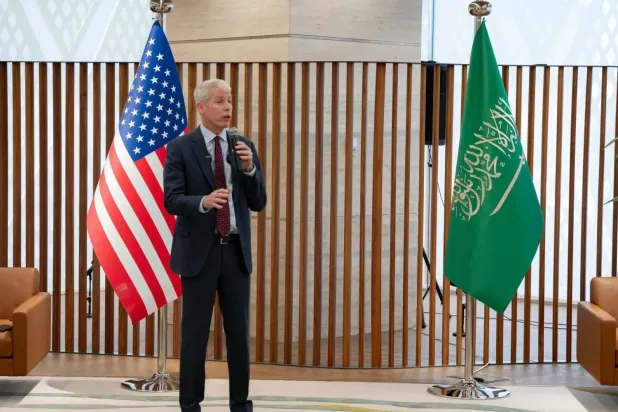
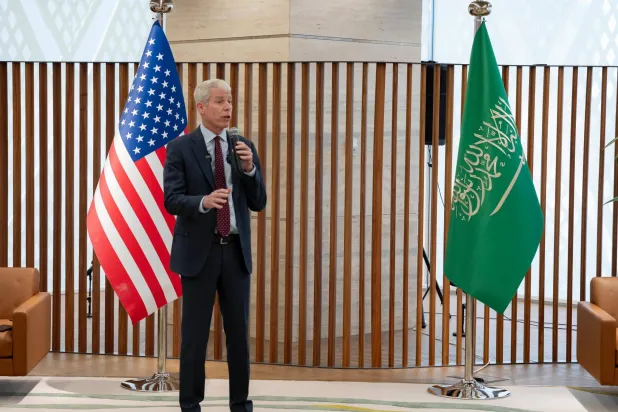
Image caption, Bob McNally, head of Rapidan Energy Group, was a former member of the National Security Council for George W. Bush
Skip podcast and continue reading
Worth paying attention to
An in-depth explanation of major events and topics, to help you understand the most important developments around you and their impact on your life
Episodes
Podcast end
Bob McNally, head of Rapidan Energy Group and a former National Security Council member during President George W. Bush's administration, said that cooperation between a major country like Saudi Arabia and the United States to develop its nuclear sector represents a "permanent win."
Responding to a question about potential security risks, McNally told the BBC: "I don't think they are significant," adding that the United States has a good track record in helping countries develop their nuclear sectors responsibly.
He said he is more concerned about the possibility of "a regime like the Tehran regime" acquiring nuclear weapons, compared to Saudi Arabia or the UAE, which he described as "responsible allies and friends."
For his part, former British Ambassador to Saudi Arabia William Patey said the Kingdom has a "real need" for civilian nuclear energy, because it uses large amounts of oil and gas to generate electricity and seeks to reduce its reliance on them.
Patey added that he believes Saudi Arabia is not interested in acquiring nuclear weapons unless Iran obtains them, noting that Riyadh has previously affirmed it will seek to do the same if Tehran possesses a nuclear weapon.
Saudi Crown Prince Mohammed bin Salman had stated that he would seek to acquire nuclear weapons if Iran does so.
Hegseth: The cost of the war on Iran reached $37.5 billion and we do not rule out Tehran possessing hidden capabilities
Trump imposes new 50 percent tariffs on Canadian exports
Image caption, former British Ambassador to Saudi Arabia William Patey said the Kingdom has a "real need" for civilian nuclear energy
Talks began in 2008
Talks on civilian nuclear cooperation between Washington and Riyadh date back to 2008, when the two countries signed a non-binding memorandum of understanding during President George W. Bush's administration.
The United States stated at the time that it would help Saudi Arabia develop civilian nuclear energy, while Riyadh announced its intention to import nuclear fuel and not seek to acquire "sensitive nuclear technologies."
Between 2017 and 2019, the United States authorized seven American companies to conduct civilian nuclear discussions with Saudi Arabia, but the US Government Accountability Office reported in 2020 that the two countries had not made tangible progress due to persistent disagreements over terms, including restrictions on enrichment.
In 2022, the two countries signed a memorandum of understanding to exchange technical information and cooperate on nuclear safety issues. Then, in November 2025, they signed a joint declaration which the Trump administration said legally establishes a decades-long, multi-billion-dollar nuclear energy partnership.
Original source: BBC Arabic


Comments (0)
Be the first to comment.