8 Peshmerga fighters wounded in Iranian shelling of Iraqi Kurdistan

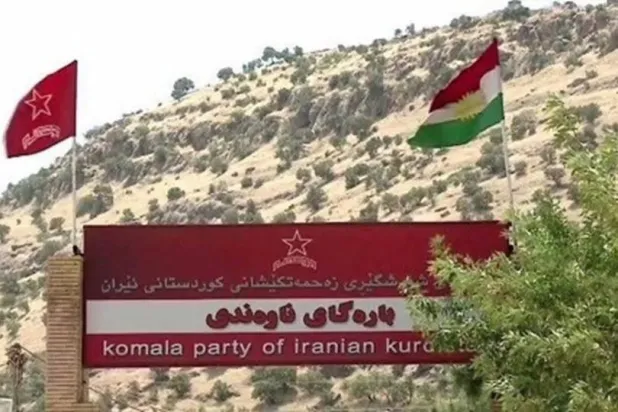
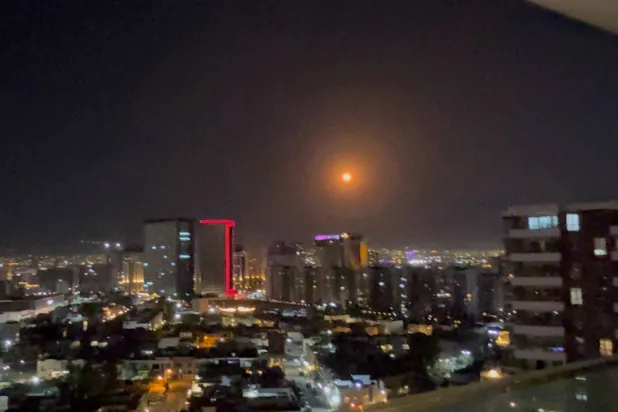
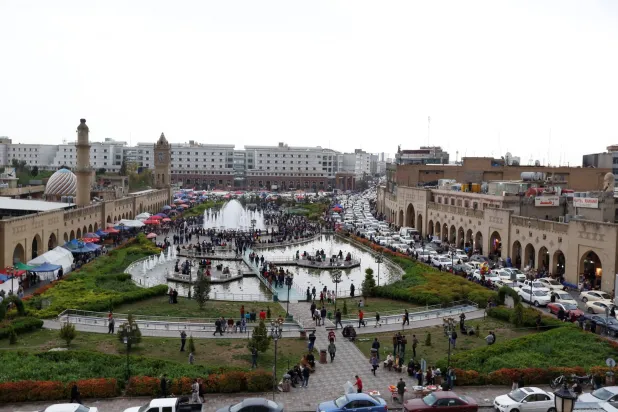
8 Kurdish Peshmerga fighters were wounded in an Iranian attack in Erbil, northern Iraqi Kurdistan, while an attack drone crashed near the US Consulate in Erbil, Iraq.
Al-Zaidi praises the results of his Washington visit... amid public support and political division.
Iran has (officially) distanced itself from remarks made by Ali Akbar Velayati, advisor to the Supreme Leader, against Iraqi Prime Minister Ali Al-Zaidi, following his visit to Washington, seemingly to pave the way for an anticipated visit by Al-Zaidi to Tehran.
After concluding his 5-day visit to the United States, Al-Zaidi said in a post on the 'X' platform: 'As we conclude our visit to Washington and return to our beloved Baghdad, we express our deep gratitude to President Trump's administration and the friendly American people for the warm welcome and appreciation.'
He added: 'We renew our government's determination to move forward in embodying the strategic economic partnership between the two friendly countries, and to enhance mutual trust and a shared vision for the future, based on the agreements and memorandums of understanding and cooperation we have concluded. These will lead to building a new phase of bilateral relations based on common interests in various fields, and joint coordination to solidify stability and enhance the path of prosperity in Iraq and the entire region.'
Iraqi Prime Minister Ali Al-Zaidi (center) attends the US-Iraq Business Summit on July 17, 2026, in Washington (AP).
During the visit, Iraq and the United States signed 48 agreements that require parliamentary ratification, while the memorandums of understanding signed could enter into force without such a requirement. This has prompted many parties opposed to the visit, particularly pro-Iranian armed factions, to view the achievements between the two countries with suspicion, 'based on the premise that implementing the minimum of these agreements and memorandums could move the relationship between Baghdad and Washington to a new level, in contrast to declining cooperation with Iran, especially after the blockade on smuggling funds to it through the agreement between the Central Bank of Iraq and the US Treasury Department.'
In this context, Al-Zaidi described this agreement as 'an important step in the path of reforming the banking sector and enhancing its integration into the global financial system.'
He stated: 'The qualification of 7 Iraqi banks to return to external banking correspondent channels in other currencies, in preparation for restoring their eligibility to deal in US dollars after completing compliance and governance requirements, confirms the success of the financial reform approach adopted by the government, enhances confidence in the Iraqi banking sector, and opens wider horizons for the national economy and investment.'
He emphasized the continued 'support for financial and banking reforms, and the consolidation of transparency and governance principles, in a way that serves Iraq's interests and enhances its economic standing regionally and internationally.'
US Secretary of Defense Pete Hegseth and Iraqi Prime Minister Ali Al-Zaidi during a meeting at the Pentagon on July 14 (AP).
While Baghdad's steps this time appear confident regarding its relationship with Washington, the talk of moving to a 'new phase' in this relationship seemed surprising to many circles, especially the public, who expressed relief over it... It equally surprised the opposition, particularly parties close to Iran, as they are no longer able, as they were in the past, to stop such developments led by Al-Zaidi.
Abdul Rahman Al-Jubouri, head of the Political Development and Good Governance Academy, says in a statement to Asharq Al-Awsat: 'If the approach of the visit is adhered to and applied on the ground, then Iraq and Al-Zaidi will have abandoned the concept of balance and moved toward the Western camp and the United States, choosing an economic and financial ally that Iraq needs. Baghdad, after dismantling the factions' weapons, could remain neutral in the war.'
In turn, Dr. Talib Mohammed Karim, professor of political thought at Mustansiriyah University, says in a statement to Asharq Al-Awsat that 'it is too early to talk about a radical shift in the nature of the Iraqi-American relationship, but it can be said that Al-Zaidi's visit represents the beginning of an attempt to redefine this relationship. Moving from the dominance of security and military files to focusing on economy, investment, and energy reflects a trend towards building a relationship based on mutual interests rather than crisis management.'
Karim adds that 'the success of this transformation does not depend on what was achieved in Washington, but on what the government will accomplish within Iraq. The Iraqi state still faces structural challenges, primarily poor services, corruption, and multiple decision-making centers, factors that have affected the efficiency of state institutions and their ability to attract investment and build trust with international partners.'
He explained that 'the United States has begun to view the reform path announced by the government positively, but this trust remains conditional and will depend on Baghdad's ability to translate pledges into tangible administrative, legal, and institutional reforms.'
US President Donald Trump receiving Iraqi Prime Minister Ali Al-Zaidi at the White House (AP).
Regarding the nature of the balance in the relationship between Iraq and both the United States and Iran, Dr. Karim says: 'Reading the relationship with the logic of profit and loss does not reflect Iraq's interest. Therefore, I do not see that Iraq's success is measured by distancing itself from Iran or getting closer to the United States, but rather by its ability to build a balanced foreign policy that stems from national interest and maintains stable relations with the United States, neighboring countries, and regional countries, without becoming a theater for settling conflicts between them.'
Velayati's offense...
Furthermore, Iran sought to contain the offensive remarks made by Velayati against the Iraqi Prime Minister, describing them as 'unofficial.' On Sunday, Iranian Foreign Minister Abbas Araghchi informed his Iraqi counterpart, Fuad Hussein, in a phone call, that 'relations between the two countries should not be affected by personal and unofficial remarks.' He added that 'relations between the Islamic Republic of Iran and Iraq are deep-rooted and strategic, based on deep historical, cultural, and religious ties and mutual interests between the two peoples,' explaining that 'these valuable relations should not be affected by some personal and unofficial remarks.'
Velayati, advisor to the Iranian Supreme Leader, had criticized Al-Zaidi's visit to the United States, describing the Iraqi Prime Minister as 'inexperienced,' according to media reports.
Iraqi Foreign Minister Fuad Hussein and his Iranian counterpart Abbas Araghchi during a press conference in Baghdad on June 28, 2026 (AFP).
He said in an op-ed published by Farhikhtegan newspaper: 'The Prime Minister's behavior during his meeting with the American President, shortly after the funeral of the former Supreme Leader Ali Khamenei, is a great disgrace,' as he put it.
Iran has officially maintained silence regarding the agreements signed between Baghdad and Washington, which could pull the rug out from under it in Iraq, in parallel with the attacks of the pro-Iranian armed factions on the visit and its outcomes.
Original source: Asharq Al-Awsat


Comments (0)
Be the first to comment.