Abyei returns to ignite dispute between Sudan and South Sudan
Return of tensions over the disputed Abyei between Sudan and South Sudan, amid political disagreement over its future, and security, economic and humanitarian deterioration, and the suffering of residents, in the absence of a final settlement determining its affiliation.
Sudanese Abyei: "Neither elections nor referendum are important... what matters is a safe and stable life"
Article Information
Author, Mohamed Mohamed Othman, Role, BBC News Arabic correspondent, Reporting from, Omdurman
Published 3 hours ago
Reading time: 7 minutes
The disputed Abyei region between Sudan and South Sudan has come back into the spotlight, after the Sudanese government rejected Juba's inclusion of the area in the electoral constituencies for the upcoming December elections in South Sudan.
These developments come at a time when the region is suffering from the repercussions of ongoing conflicts and a complex humanitarian situation.
The Sudanese Foreign Ministry explained in an official statement that including the region in the electoral constituencies is a unilateral measure that violates the agreements and protocols signed between the two countries to regulate the legal and administrative status of Abyei.
So what is the importance of this region? How is the situation there currently? And how has it been affected by the ongoing war between the Sudanese army and the Rapid Support Forces for more than three years?
An oil-rich region
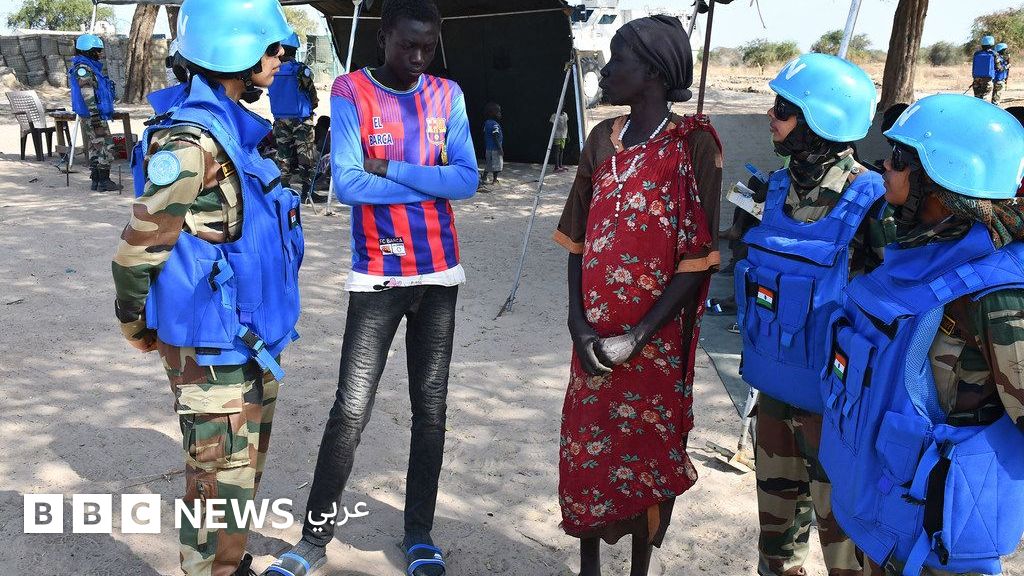
Image caption, Peacekeeping forces distribute sweets to a group of Sudanese children.
Abyei covers an area of approximately 10,546 square kilometers of agricultural and desert land, and hosts oil fields that once produced about 350,000 barrels per day, equivalent to a quarter of Sudan's crude production before South Sudan's secession, in addition to the passage of the vital pipeline transporting South Sudanese oil to Port Sudan.
The Abyei region has been a continuous source of dispute between Sudanese governments and rebel factions in South Sudan due to its geographical location, as Sudanese governments considered it part of the north, while southern factions say it belongs to the south.
In 2005, after signing the Comprehensive Peace Agreement, the north and south reached a historic agreement that included a special protocol on Abyei, which essentially called for a popular referendum for the region's residents to determine its fate, either remaining within Sudan or joining South Sudan. However, dispute intensified over the boundaries of the area where the referendum would be held, so the matter was referred to the Permanent Court of Arbitration in The Hague, which issued a ruling accepted by both parties. But another dispute later emerged over who was eligible to participate in the referendum.
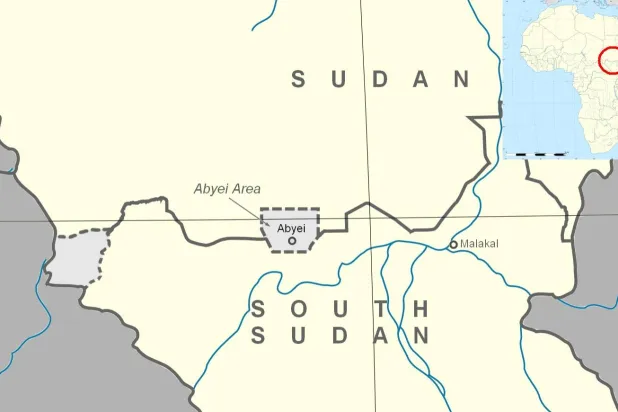
Geographically, the Abyei region lies on the border strip between Sudan and South Sudan. To the north, it is bordered by the southwestern part of Sudan's West Kordofan state, which is about 50 kilometers from Bahr al-Arab. To the west, it is bordered by Northern Bahr el Ghazal state, and to the east by Unity state in South Sudan.
"The death we fled from is still chasing us"
"Has Britain's voice faded regarding what is happening in Sudan due to UAE money and the arms market?" - in the Financial Times
"Neither elections nor referendum are important... what matters is a safe and stable life"
Image caption, UNISFA peacekeeping forces help recover stuck vehicles and rescue civilians stranded after heavy rains.
The region is inhabited by the Misseriya and Rizeigat tribes, of Arab origin and engaged in herding and farming, along with the Dinka Ngok tribes, mostly African, in the southern part, who are cattle herders.
Skip most read and continue reading
What is the story of the Egyptian child "Makari Younan" who was excluded because of his religion?
Iran announces destruction of US military equipment in Jordan and strikes on US military targets in Kuwait
OpenAI's artificial intelligence systems go out of control and launch an "unprecedented" cyber attack
Why does Iran risk so much for the Strait of Hormuz?
More than ten years ago, I visited the region as part of journalistic coverage of a conference on peaceful coexistence between the components of Abyei, the Dinka and Misseriya, along with other components representing minorities in the region.
My most notable observation at the time was that coexistence among local components existed and was not a source of dispute among them; rather, their interests were focused on how to develop the region and turn it into an attractive trade center, and to benefit from the allocated share of oil revenues, which the Comprehensive Peace Agreement set at two percent.
There was a large mosque where worshippers gathered, whether from the Misseriya, most of whom are Muslim, or from the Dinka. It was notable that the mosque's imam belonged to the Dinka and recited the Quran fluently, before I later learned that he was a graduate of Al-Azhar University in Egypt.
Christians also went to the church located inside the market to perform their religious rites.
Image caption, South Sudanese herders during their migration in Abyei, with the onset of the dry season, on December 18, 2016 (archive photo).
Skip podcast and continue reading
Worth paying attention
In-depth explanation of the most prominent events and topics, to help you understand the most important changes around you and their impact on your life
Episodes
Podcast end
Life was mainly centered around the city market, which represented its beating heart, with active trade arriving via trucks from Sudan. The market also housed a modest health center and a primary school, and most basic services were concentrated inside it.
Today, years later, the situation seems much worse, according to Abdullah Wad Ibrahim, a prominent merchant in the market.
He told me, after I contacted him via WhatsApp due to weak traditional communication networks, that conditions have become bad in various aspects, whether security, livelihood, or even coexistence between communities.
He said in a voice message: "Abyei has been greatly affected by the war in Sudan. The security situation is very difficult, and there are killings and robberies that residents suffer from multiple parties. There are also many checkpoints set up by various military forces to collect money from trucks, and livestock owners are also forced to pay numerous levies and fees."
When I asked him about the role of UN forces in protecting civilians, he replied: "They do not play a major role. They usually arrive after the crime, whether murder or robbery, and we often do not know what happens to the victims. There are patrols by these forces, but they are very few and do not leave the market area, while most crimes occur outside it."
Video caption, Your guide to understanding what is happening in Sudan, from the 1989 coup until now
As for Gabriel Majok, who has run a restaurant in Abyei for years, he believes the priority is not elections or a referendum, but restoring security and stability and developing the region.
He said, in a voice message sent to me via WhatsApp, that it does not matter to him whether Abyei will belong to the north or south, as much as it matters that it becomes a livable place.
He added: "We learned that elections will be held in Abyei in a few months, but what matters is not holding elections, but improving conditions. Abyei has been greatly destroyed over the past years, prices of goods have risen sharply, we are losing our sources of income, and I fear I may have to close my restaurant forever. What I want is not elections or a referendum, but a stable and dignified life."
A long history of conflicts
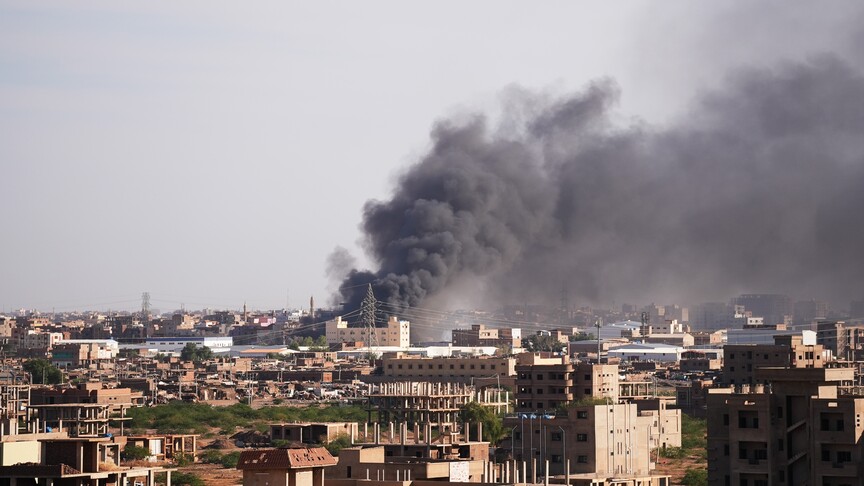
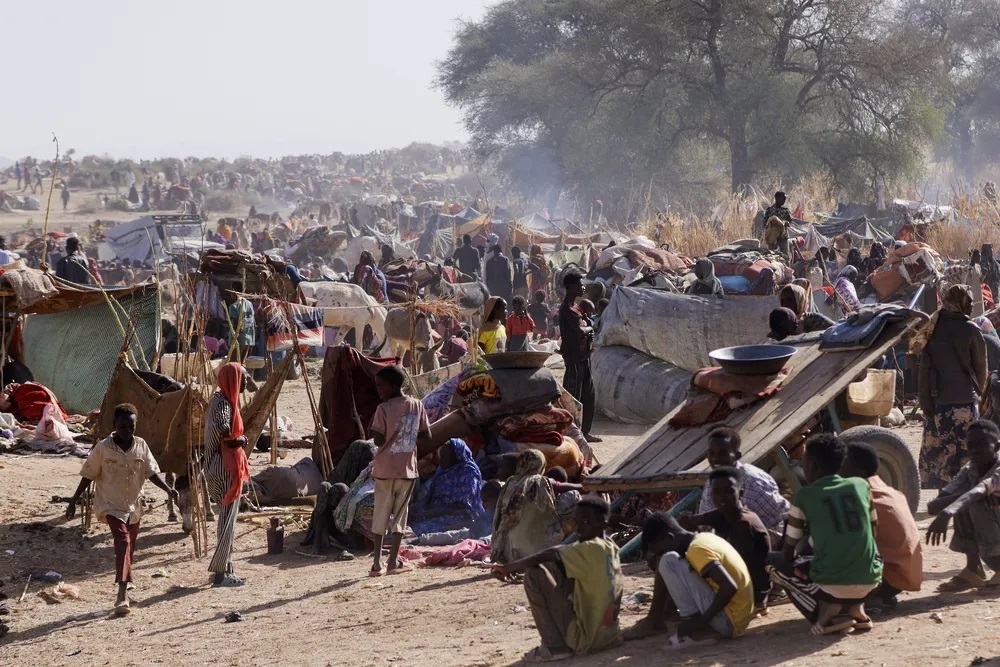
Image caption, The war in Sudan continues to have a profound impact on the security, economic and humanitarian situation in both Sudan and South Sudan.
Original source: BBC Arabic


Comments (0)
Be the first to comment.