Al-Alimi: No Expansion of Confrontations, Our Priority is Protecting Civilians

While the General Authority of Civil Aviation and Meteorology in Yemen announced the closure of all Yemeni airports, Yemeni Presidential Leadership Council Chairman Dr. Rashad al-Alimi stressed on Monday that his priorities are protecting civilian lives and public property, and not expanding the scope of confrontation to achieve the goal Iran seeks by dragging Yemen and its people into wars that serve its interests and using Yemen, land and people, as a card in its regional conflict.
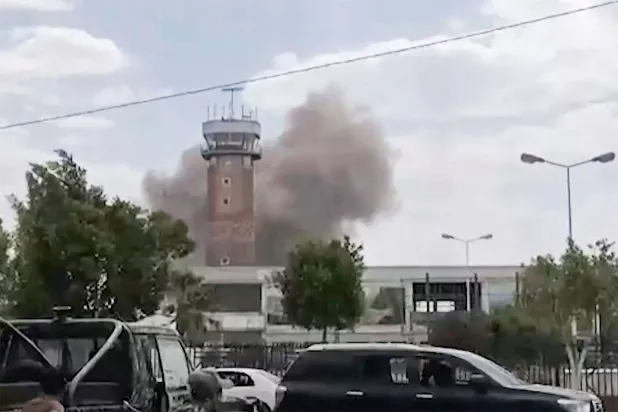
Al-Alimi said in a statement: 'Our armed forces and security agencies were at the highest levels of readiness and preparedness, and carried out the necessary defensive measures by targeting Sanaa airport runway, to protect national sovereignty, and proved their high efficiency and full capability to deter this threat affecting the airspace of the Republic of Yemen, and prevent the imposition of any fait accompli outside the framework of the constitution and law, thereby confirming the state's readiness to defend its sovereignty and security by all legitimate means.'
The Supreme Commander of the Yemeni Armed Forces pointed out that the state will not allow any aircraft in the future to violate Yemeni airspace, whether for Sanaa airport or any other airport, and will deter any attempt to impose a fait accompli affecting its sovereignty or detracting from its authority over its territory, airspace, and all ports, explaining that this decision was not a retreat from the state's duty to protect its sovereignty, nor leniency towards any violation, but rather a responsible sovereign decision taken from a position of strength and confidence in the capabilities of our armed forces, and after the state proved its full readiness to defend its sovereignty, while ensuring to spare our people any risks or repercussions that the militia sought to exploit politically and media-wise.
He clarified that the Houthis insisted on imposing a new fait accompli by receiving a new flight in violation of the law, in a flagrant violation of Yemen's sovereignty, a deliberate contempt for state institutions, and an explicit rejection of all efforts that sought to prevent Yemen from sliding into further escalation.
Al-Alimi denounced the Houthis' insistence on repeated violations of Yemeni sovereignty, and the responsible initiatives presented by the state to spare the country and people further escalation, stressing that what the terrorist Houthi militia did today reaffirms its determination to undermine peace opportunities and reject all initiatives aimed at protecting citizens' interests and preserving Yemen's security and stability.
He pointed out that the Yemeni government was and still is the most keen party on the continued operation of Sanaa airport in a legal and safe manner, and presented practical initiatives to operate civilian flights through Yemen Airways, the only national carrier authorized by law, and also expressed its readiness to facilitate the transport of the militia's delegation via a plane leased by the company to the agreed destination, in a way that preserves citizens' interests and ensures the airport continues to operate in accordance with the law.
He accused the Houthis of rejecting all those initiatives and insisting on imposing a fait accompli that serves their agendas and exposes Yemen and its people to more risks. He reaffirmed the government's continued seriousness in operating Sanaa airport with commercial flights to alleviate the suffering of the Yemeni people and lift the siege imposed on them by the Houthi militias.
Al-Alimi held the Houthis directly responsible for this escalation and its repercussions after rejecting all initiatives, deliberately violating state sovereignty, and undermining peace opportunities, and also held the Iranian regime fully responsible for its continued support and enablement of these practices that violate international law and Security Council resolutions.
The Chairman of the Presidential Leadership Council directed the government, armed forces, and security agencies to continue raising the highest levels of readiness and vigilance, and to take all political, diplomatic, and legal measures, as well as all legitimate procedures guaranteed by the constitution and international law, to ensure the protection of the sovereignty of the Republic of Yemen, its airspace, and its land, sea, and air ports, and to prevent the recurrence of such violations in the future in any of the country's ports or airports.
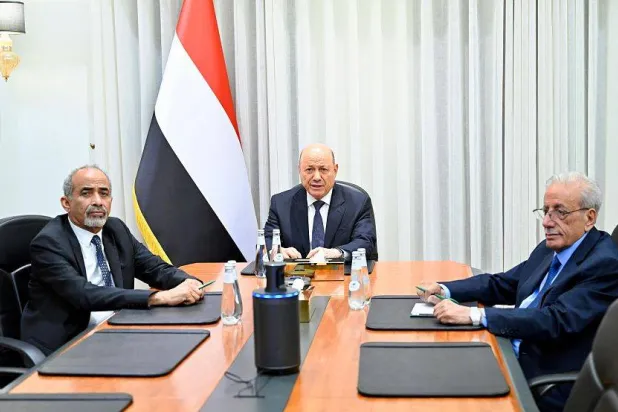
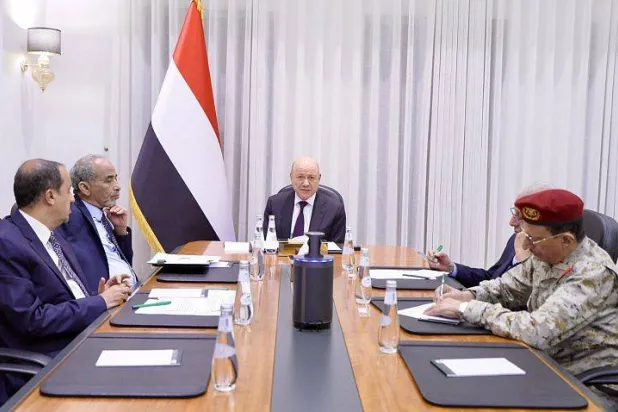
Al-Alimi called for an emergency meeting of the Presidential Leadership Council to review recent developments, assess the situation at various levels, and adopt procedures and measures to enhance the readiness of state institutions, coordinate their efforts, and ensure full implementation of issued decisions and directives, in a way that preserves the sovereignty of the Republic of Yemen, protects the interests of the people, and enables state institutions to assume their national responsibilities at this critical stage in Yemen's history.
The Chairman of the Presidential Leadership Council renewed his call on the international community, foremost the Security Council, to move from the stage of condemnation to the stage of deterrence, and enforce international legitimacy resolutions, especially those related to the arms embargo and sanctions regime, to ensure respect for the sovereignty of the Republic of Yemen and put an end to the repeated violations that threaten regional and international peace and security.
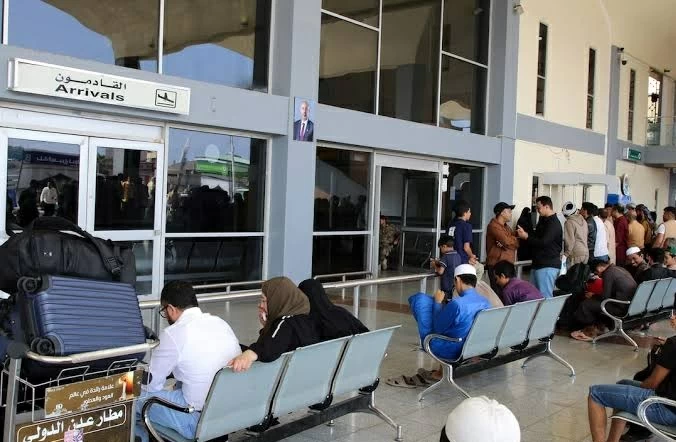
Meanwhile, the Yemeni General Authority for Meteorology issued a warning to all airlines and international organizations operating flights to and from airports of the Republic of Yemen, stressing that all airports of the Republic of Yemen are closed to air traffic until further notice.
The Yemeni government had approved the formation of a government crisis management team to coordinate and manage military, political, diplomatic, legal, and media efforts, continuously follow up on developments, take necessary actions, maintain vigilance, and respond quickly to any attacks or violations of Yemeni airspace and sovereignty as a red line, ensuring unified government performance, rapid decision-making, and effective response to all developments.
Original source: Okaz


Comments (0)
Be the first to comment.