Al-Alimi: State Imposed Firm Deterrence Equation Without Closing Doors to Just Peace
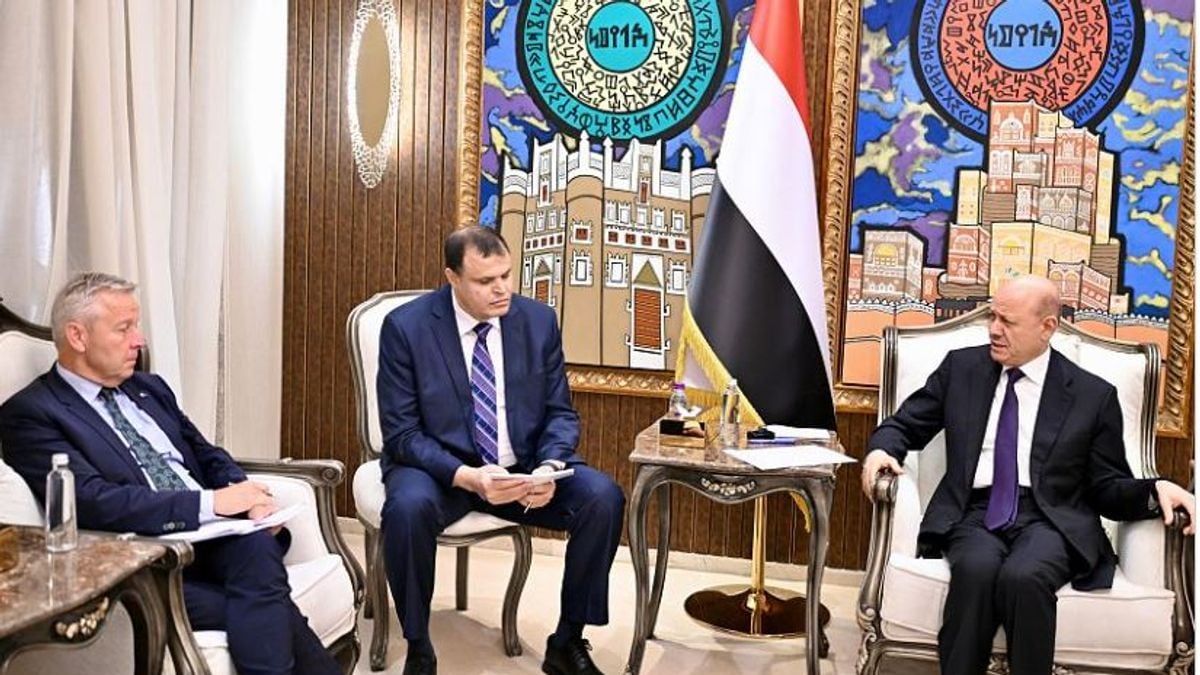
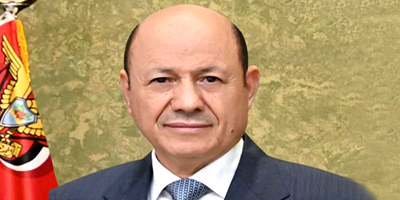
President Dr. Rashad Muhammad Al-Alimi, Chairman of the Yemeni Presidential Leadership Council, praised the European Union's strong commitment to standing by the Yemeni people, its continued support for the government, development programs, humanitarian response, and economic reforms, as well as its clear positions supporting Yemen's unity, sovereignty, and territorial integrity.
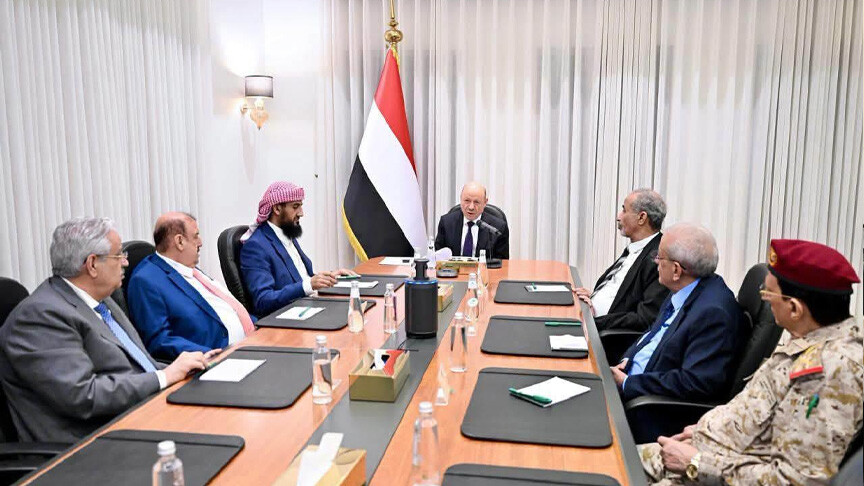
During his reception of the European Parliament delegation headed by Austrian MP Reinhold Lopatka, with members from Sweden, Germany, and Spain, and other officials from the Peninsula and Gulf Committee in the European Parliament, the Chairman of the Yemeni Presidential Council emphasized the importance of the European Union's role in strengthening the balance of power in favor of peace, stability, and development projects in the region, defending the international order based on respect for state sovereignty, and deterring violent groups by all means, including their designation on terrorism lists.
The Yemeni President touched on the measures taken to confront the escalation of the terrorist Houthi militias, including the firm deterrence of their daily violations of the truce on all fronts, and the initiatives presented by the government to operate Sana'a Airport in a legal and safe manner, preserving citizens' interests, the country's sovereignty, and respect for the principles of international law and relevant Security Council resolutions.
In this context, he affirmed that the Yemeni government dealt with this escalation with the highest degree of responsibility, by deterring the threat and immediately welcoming the Jordanian initiative that provided a humanitarian and legal solution ensuring citizens' travel through arrangements that respect Yemen's sovereignty and end the pretexts of the terrorist militias.
Al-Alimi pointed out that the government has never been the cause of the humanitarian crisis; rather, this catastrophe resulted from the Houthi militias' coup against the national consensus, their continued forceful control over precious parts of the densely populated country, and their obstruction of all initiatives to alleviate suffering, including rejecting the operation of flights through Sana'a Airport and paying employee salaries, before going on to target oil facilities, destroy the capabilities of the airline company, confiscate its assets, and use civilians as hostages to achieve illegitimate gains.
The Chairman of the Yemeni Presidential Council touched on the practices of the Houthi militias and their grave violations against the Yemeni people, explaining that the continuation of the status quo simply means widening the circle of poverty, displacement, human rights violations, continued disruption and fragmentation of the national economy, and threatening freedom of navigation and global energy supplies.
The Yemeni President stressed the importance of the European Parliament's role in exerting maximum pressure on the Houthi militias to release United Nations and humanitarian relief staff kidnapped by the militias, and to ensure that those responsible for human rights violations do not escape punishment.
Al-Alimi reaffirmed the government's commitment to a peace approach that ends the causes of war, not a peace that gives the coup a new opportunity to reproduce itself, stressing that any future understandings must be a step on the path to ending suffering and restoring state institutions, not a substitute for them, and must be based on respect for the sovereignty of the Republic of Yemen, the security of neighboring countries and waterways, and the state's exclusive monopoly on the means of force in accordance with the law and constitution.
He pointed out that stability in Yemen means safe maritime routes for global trade, protection of supply chains, reduction of terrorism and organized crime, curbing waves of irregular migration, and protection of international law based on respect for state sovereignty.
The Yemeni President touched on the progress made in rebuilding state institutions, the process of economic, financial and administrative reforms, and empowering Yemeni citizens, especially women and youth, in decision-making.
The Chairman of the Yemeni Presidential Council expressed his aspiration for continued European political support for the Yemeni government and its national institutions, and support for economic and developmental reforms in liberated areas, considering that European investment in the Yemeni state is not support for a political party, but rather an investment in security, stability, and the consolidation of the principles of justice and international law.
He concluded, saying: 'The cost of supporting the Yemeni state today is much less than the cost of containing the resulting destruction tomorrow with the continued control of the terrorist militias over the southern shore of the Red Sea.'
Post the tweet on platform X
Original source: Ajel.sa
Comments (0)
Be the first to comment.