Albudaiwi: Iranian Aggressions and Houthi Threats Require a Firm International Stance

His Excellency Mr. Jassim Mohamed Albudaiwi, Secretary-General of the Gulf Cooperation Council (GCC), affirmed that the treacherous Iranian attacks on GCC states and the threat by the terrorist Houthi militia to close the Bab el-Mandeb Strait are acts that require immediate accountability and a firm international stance that ensures respect for the rules of international law, guarantees freedom of navigation, and protects vital infrastructure related to energy and natural resources.
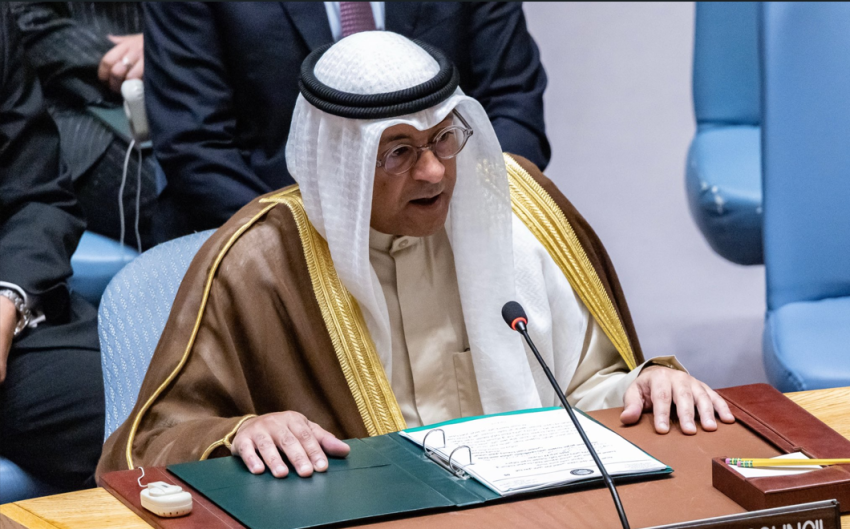
This came during his speech at the high-level open debate of the United Nations Security Council under the title 'Governing Natural Resources: A Pillar for Peace, Security and Prosperity,' yesterday in New York, United States.
During his speech, His Excellency noted that the session's topic is gaining increasing importance in light of the major challenges facing the international community. He pointed out that the GCC states have made good governance of natural resources a fundamental pillar of their national and collective policies, as they possess about 30% of the world's oil reserves, nearly 20% of natural gas reserves, and contribute about a quarter of global oil production, making them a reliable partner in achieving stability in global energy markets, even in times of crises and geopolitical fluctuations.
He strongly condemned the irresponsible hostile statements issued by the Houthi militia, including the false allegations against the Kingdom of Saudi Arabia and the threat to close the Bab el-Mandeb Strait, a dangerous escalation that constitutes a flagrant violation of international law, a direct threat to the freedom of international navigation, and to the safety of one of the world's most important strategic maritime passages. Such threats affect the security and stability of the entire region and undermine international efforts to protect global supply chains and ensure the flow of international trade and energy supplies.
His Excellency highlighted the dangerous Iranian practices targeting freedom of navigation in the Strait of Hormuz, including targeting commercial vessels, laying naval mines, attempts to impose mandatory routes inside Iranian territorial waters, explicit threats to prevent passage, in addition to repeated announcements of closing the strait. He stressed that these practices constitute a violation of international law and undermine confidence in the security of one of the world's most important maritime passages.
Original source: Al-Riyadh





Comments (0)
Be the first to comment.