Riyadh and Washington discuss military cooperation after return of tension in region
International
Riyadh and Washington discuss military cooperation after return of tension in region
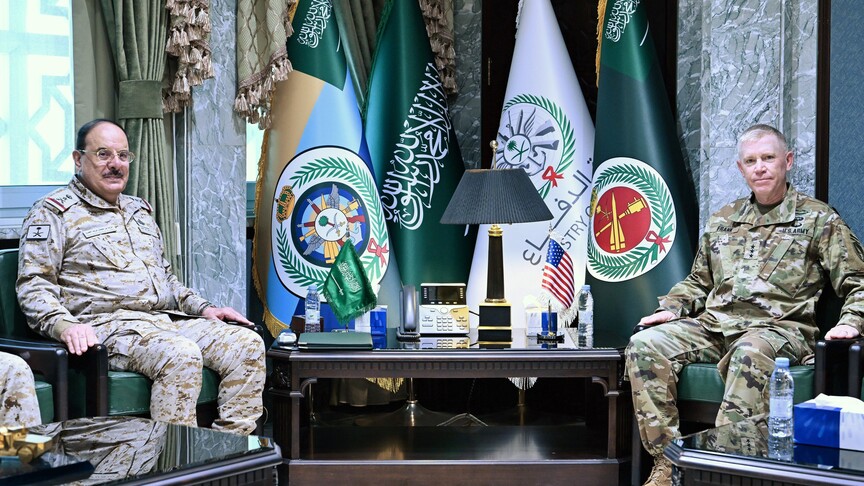
During a meeting held by Saudi Air Defense Forces Commander Lieutenant General Mazyad Al-Amro with US Central Command Deputy Commander Lieutenant General Patrick Frank
Hussien Elkabany
July 19, 2026 • Updated: July 19, 2026
photo: from: x.com/modgovksa / AA
ISTANBUL
Istanbul / Anadolu Agency
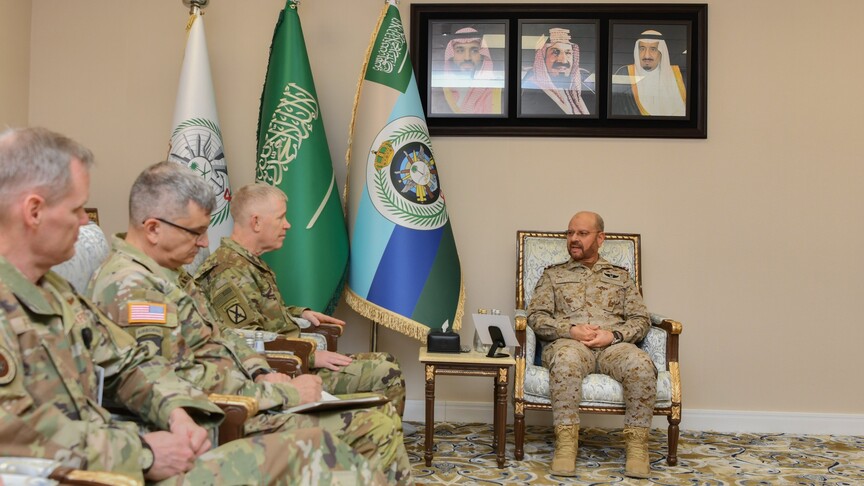
Saudi Air Defense Forces Commander Lieutenant General Mazyad Al-Amro and US Central Command Deputy Commander Lieutenant General Patrick Frank discussed ways to develop joint cooperation and coordination.
This came during a meeting held by Al-Amro with Frank on Sunday, according to a statement from the Saudi Ministry of Defense.
The two sides discussed 'ways to develop joint cooperation and coordination between the two sides,' as stated by the ministry without further details.
This is the second meeting held by the Saudi Ministry of Defense with the US Central Command in days to discuss enhancing military cooperation between the two countries.
On Wednesday, Saudi Chief of General Staff General Fayyad Al-Ruwaili held a meeting with Frank to discuss 'ways to develop cooperation in military fields to achieve mutual interests between the two friendly countries.'
The previous meeting came two days after Saudi Arabia announced that its air defenses had intercepted ballistic missiles fired by the Houthi group in Yemen towards the southern region.
The new meeting between the air defense forces responsible for countering aerial attacks comes amid escalating Iranian attacks on countries in the region with the return of tension with the United States.
On June 18, 2026, Washington and Tehran signed a memorandum of understanding that included a cessation of military operations and the start of negotiations to reach a broader agreement.
However, US President Donald Trump announced on July 8 that the interim agreement had ended after Iran targeted three ships in the Strait of Hormuz, prompting Washington to resume its strikes inside Iran amid escalating Iranian responses.
Washington demands ensuring freedom of navigation and its security in the Strait of Hormuz, while Tehran insists on imposing a mechanism to regulate ship passage through the strategic corridor, exacerbating fears of disruption to oil and gas exports from the region.
Original source: Anadolu Agency





Comments (0)
Be the first to comment.