Araghchi: Security Breach Caused Khamenei’s Death and Still Exists
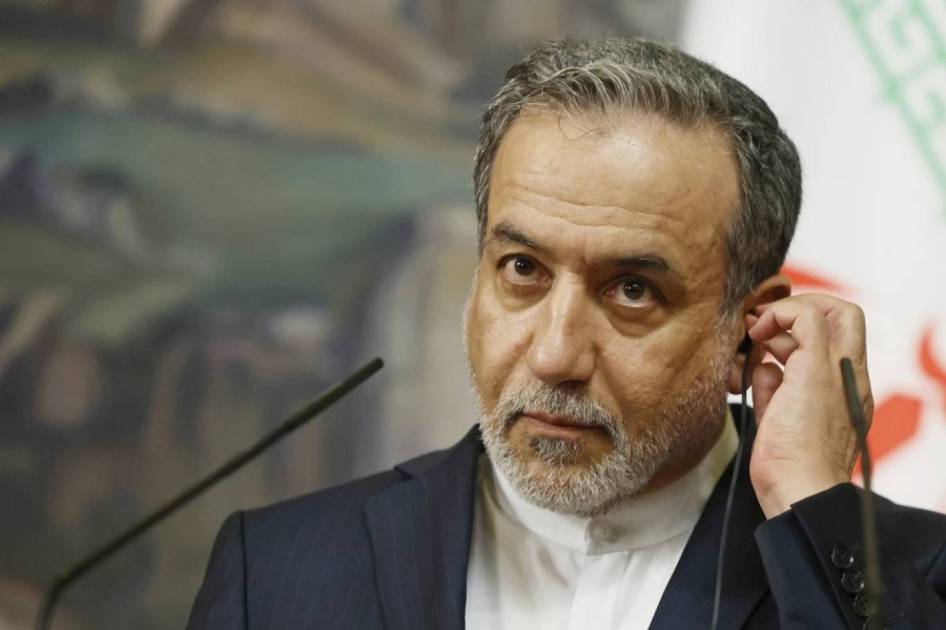
Summary: In his first detailed account of the war’s backstage, Iranian Foreign Minister Abbas Araghchi reveals unprecedented details regarding the targeting of senior regime leaders’ meetings, a security breach that he suggests persists, the decision-making mechanism for negotiations with the United States, and the reasons he says led to the outbreak of war, along with Tehran's positions on the proposals of "zero enrichment" and suspension of uranium enrichment.
Iranian Foreign Minister Abbas Araghchi said in the program "The Story of War" broadcast on Iranian television that before the outbreak of the war, a decision was made to "close the Strait of Hormuz if the leadership was targeted."
Araghchi spoke about the bombing of the command headquarters at the beginning of the war, saying, "I had a meeting with Mr. Hejazi at nine o'clock that morning, and I gave him a report on the negotiations and said the atmosphere had turned warlike." He added that the meeting he attended was targeted.
According to him, the office of Ali Asghar Hejazi, the senior advisor to Supreme Leader Ali Khamenei, was also among the targets, but Hejazi left the meeting alive.
He explained that the Strategic Council for Foreign Relations was holding a meeting that day in a location other than its usual headquarters, and the reason for moving the meeting to the command headquarters that day is unknown.
But he added, "Worse than that was the meeting held by Ali Shamkhani with a number of military commanders." Ali Shamkhani and those present at that meeting were killed the same day during the bombing of the command headquarters.
Araghchi confirmed that on the same day, the Council of Deputies of the Ministry of Intelligence was holding a meeting inside the ministry building, adding that this meeting, which was not held at the command headquarters, was also targeted on the first day of the war, which lasted 40 days.
The Iranian Foreign Minister said that the office of Mohammad Shirazi, then military advisor to the Iranian Supreme Leader, as well as the office of Ali Shamkhani, where the Supreme Defense Council was meeting that day, were among the targets.
He added that knowledge of the timing of all those meetings resulted from a security breach, which he said "also affected the orientations and decision-making mechanisms within the Iranian regime," suggesting that this breach may still exist.
The Iranian Foreign Minister said, "The meeting held by Mr. Shamkhani at the command headquarters, along with the offices of Mr. Shirazi, Mr. Hejazi, and the late Supreme Leader, were all targets that came under rapid attacks. At that moment, His Eminence the Leader was in his office, and the enemy’s knowledge of these meetings is evidence of security gaps."
Araghchi revealed that he has not met Mojtaba Khamenei since he was elected Supreme Leader, adding that he believes only a very limited number of people have seen him during this period. He explained that even before he assumed the position of Supreme Leader, he had seen him from a distance on some occasions.
Araghchi’s account of how the war broke out
Araghchi discussed the decision-making mechanism regarding negotiations with the United States, saying, "At that time—between the two wars—we formed the Nuclear Committee within the secretariat of the Supreme National Security Council, which today is known as the Negotiations Committee and is famous as the Six-Party Committee."
He added that "all discussions related to negotiations took place within this committee, and its decisions went through the same procedures as decisions of the Supreme National Security Council."
According to Araghchi, the committee was initially headed by Ali Shamkhani, then by Ali Larijani, both of whom were killed in American and Israeli attacks.
Araghchi defended the option of negotiations, saying, "The decision to start the war was made by the other side, and we sought to change its course away from war. To say that negotiations caused the war is not correct, and the decision to negotiate was not my personal decision but a collective one."
Regarding the reasons for the outbreak of the war that lasted 12 days, he said, "Everything began from a perception of weakness in Iran. The other side believed that Iran had lost its regional deterrence power and would seek to compensate for that through nuclear deterrence, so it saw the need to destroy its nuclear facilities."
Read more
Iran between the poison option and the suicide option
Political activists inside Iran: 'We do not want war'
How did Iran use the truce to export oil?
The Strait of Hormuz weapon game... bigger than America and Iran
The Iranian Foreign Minister added, "The other side tried the diplomatic path and insisted from the beginning on the principle of zero enrichment. We adhered to our position, and when it realized it could not impose this demand through negotiations, it started the war. So our adherence to our positions during the negotiations pushed the other side to try the war option, but it failed."
Araghchi continued, saying, "After the enemy completed its military buildup in the region, it again raised the demand for negotiations based on zero enrichment, saying if you do not accept that, we will attack again. After lengthy discussions, a decision was reached to resume negotiations, and our main goal was to establish proof, so that no one could later say that if negotiations had taken place, the war would not have broken out."
In response to a question that if the war that lasted 12 days had continued, the war that lasted 40 days would not have occurred, Araghchi said, "This perception also exists on the other side, because the 12-day war helped raise Iran’s level of readiness for the subsequent war."
He added, "We had to try the opportunity to reach a path other than war through negotiations, and that was also to establish proof before the international community, the other side, and our people."
Rejection of the zero-enrichment principle
In the same context, he said that during the negotiations that preceded the outbreak of the war that lasted 40 days, and after Iran’s rejection of the zero-enrichment principle, a proposal was made to suspend enrichment, but Iran also rejected it. Araghchi defended this decision, saying, "Our task was not to accept it."
In response to a question about whether Iran’s acceptance of suspending enrichment would have prevented the war, the Iranian Foreign Minister said, "It cannot be confirmed. First, because the suspension period was not short, and second, because our acceptance of this in the nuclear file would have established a pattern that whenever you want, you can attack and destroy, and then the Iranian regime accepts what is imposed on it."
Araghchi added that on February 26, during the negotiations held in Geneva, when Iran rejected the suspension of enrichment, the negotiations collapsed, but it was agreed that technical teams would continue their talks. However, the atmosphere changed from the next day.
He said that the nuclear issue was, at least for Israel, just a pretext, and its real goal was to seek regime change.
Original source: Independent Arabia



Comments (0)
Be the first to comment.