8 Killed, Including High-Ranking Officer, in Israeli Airstrike on Police Station in Gaza
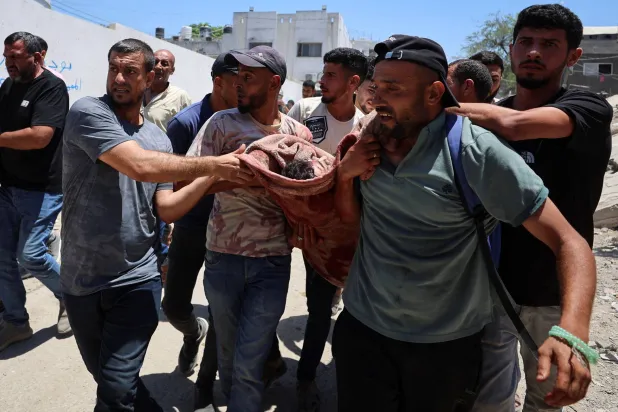
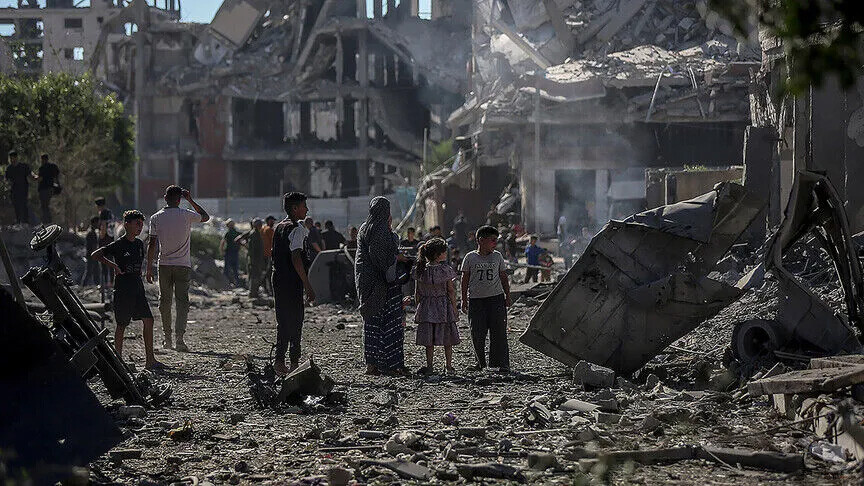
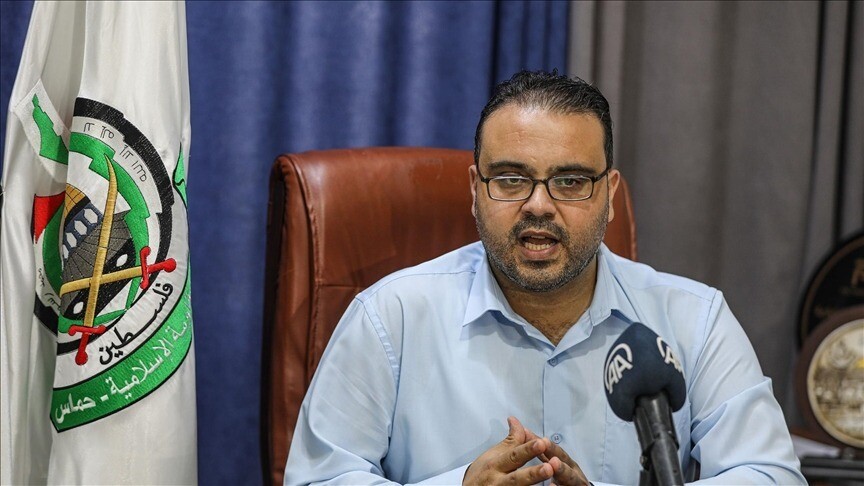
Medical and security sources reported that 8 Palestinians, including a senior officer in the Hamas-affiliated police, were killed in an Israeli airstrike on the Jabalia refugee camp in the northern Gaza Strip on Tuesday.
"Pilot zones" are the focus of Rome negotiations... and Israel expresses readiness for implementation.
The first meetings of the sixth round of negotiations between Lebanon and Israel were held on Tuesday in the Italian capital, Rome, where Beirut hopes the results will define the path for implementing the "framework agreement" and begin the Israeli withdrawal from the south, as agreed upon to apply what were called "pilot zones," under which Hezbollah would be disarmed, Israeli forces would withdraw, and the Lebanese army would deploy in one area after another in the south.
The "pilot zones" and the working mechanism for their implementation formed the focus of the first session, which was held at noon after a delay of about an hour due to logistical reasons, without reaching any agreement, according to sources familiar with the negotiations who spoke to Asharq Al-Awsat.
The sources explained that the discussions in the first session focused on the disagreement regarding the approach to the "pilot zones." While the Israeli side demands that implementation begin through the deployment of the Lebanese army in unoccupied areas, the Lebanese delegation insists on its position of demanding that it begin in occupied areas, a matter that prompted extensive discussions and contacts. Hence, the sources believe that practical steps are likely to be announced at the end of Wednesday's meetings, relying on the American role in this context, and pointing to a middle-ground solution proposed through the deployment of the Lebanese army in two villages at the same time: one occupied and the other unoccupied.
The site of the US Embassy in Rome, where the sixth round of Lebanese-Israeli negotiations is being held under American sponsorship (AP).
The importance of this round is highlighted by the fact that it is being held one week before Lebanese President Joseph Aoun’s scheduled visit to Washington, where he will meet with US President Donald Trump. This leads some to believe that no progress in the negotiations will be recorded before this visit, on which President Aoun is counting, hoping that it will bring positives for Lebanon, as he had previously announced.
Israel is ready for the "pilot zones."
While officials in Lebanon confirm that the Lebanese army is fully prepared and ready to take over the areas occupied by Israel after its withdrawal—which the delegation presented in Tuesday's session in Rome—Israeli Foreign Minister Gideon Sa'ar said during a press conference on Tuesday: "We are ready to move forward with these two pilot zones." He added: "I hope, and I believe, that this round of discussions in Rome will push towards achieving that."
The Israeli army occupies what it describes as a "buffer zone" extending about 10 kilometers into Lebanese territory along the entire Israeli border. Israeli officials say this area is necessary to protect northern settlements from Hezbollah strikes.
A meeting held in Washington on June 26 resulted in an agreement calling for an end to the conflict in Lebanon, the disarmament of armed groups—in reference to Hezbollah—the deployment of Lebanese forces in the south, and the gradual withdrawal of Israeli forces.
However, Israeli strikes have not stopped, and Hezbollah has rejected the agreement as well as efforts aimed at its disarmament. Israel has said that its forces will remain in southern Lebanon as long as Hezbollah's weapons are not removed.
During the arrival of one of the delegations at the US Embassy headquarters in Rome, where the Lebanese-Israeli negotiations are being held (AFP).
While anticipation prevails over the outcome of the sixth round, held on Tuesday and Wednesday in Rome, Italian Foreign Minister Antonio Tajani said on Monday that his country had offered to host the talks to continue working toward a real ceasefire in Lebanon.
Tajani said before a European Union meeting in Brussels: "We are also very happy that Rome is a venue for these meetings. In this way, our capital becomes a capital of peace."
Hezbollah continues its attack on the "framework agreement."
These negotiations come at a time when Hezbollah continues its attack on the "framework agreement," as expressed by Hezbollah bloc member MP Hajj Hassan, who considered that "the political authority is hiding the content of the framework agreement from its people, and this is a big mistake; they are not acting as a state, and this agreement is tripartite in form and unilateral in content, and it is Israeli par excellence."
He considered that "the authority has abandoned the issue of prisoners, especially in light of the continuous concessions, including the 'agreement of shame,' and has become indifferent to all the targeting of civilians and the army, and the systematic destruction of border villages that we are witnessing," adding: "Unfortunately, the authority continues to offer concessions to the enemy in the meetings that take place, and we do not count on it delivering any achievements."
The Kataeb Party reaffirms its support for the state's negotiating path.
In contrast, the Kataeb Party responded to those attacking the "framework agreement," reaffirming its "full support for the Lebanese negotiating delegation in the Rome meetings, and for the President of the Republic and the Prime Minister in facing Hezbollah's attempts to besiege the executive authority and circumvent the framework formula that was approved in the Washington meetings, with the aim of keeping Lebanon an open arena and a negotiating card in the hands of Iran."
The Kataeb expressed hope that the Rome meetings would lead to an agreement on the implementation mechanisms and the timeline for applying the framework formula, in a way that accelerates the Israeli withdrawal, puts a final end to the war, and paves the way for reconstruction and the return of displaced people to their villages.
The Kataeb considered that "the campaigns targeting the framework formula lack any constitutional basis, and the forces that object to it today are still represented in the government that approved it and won confidence based on its ministerial statement, noting that the framework formula does not deviate from the contents of the oath of office and the ministerial statement, in terms of restoring the state's free decision and restricting weapons and the decision of war and peace to its own hands."
Original source: Asharq Al-Awsat

Comments (0)
Be the first to comment.