Witnesses: Loud bang heard in downtown Dubai
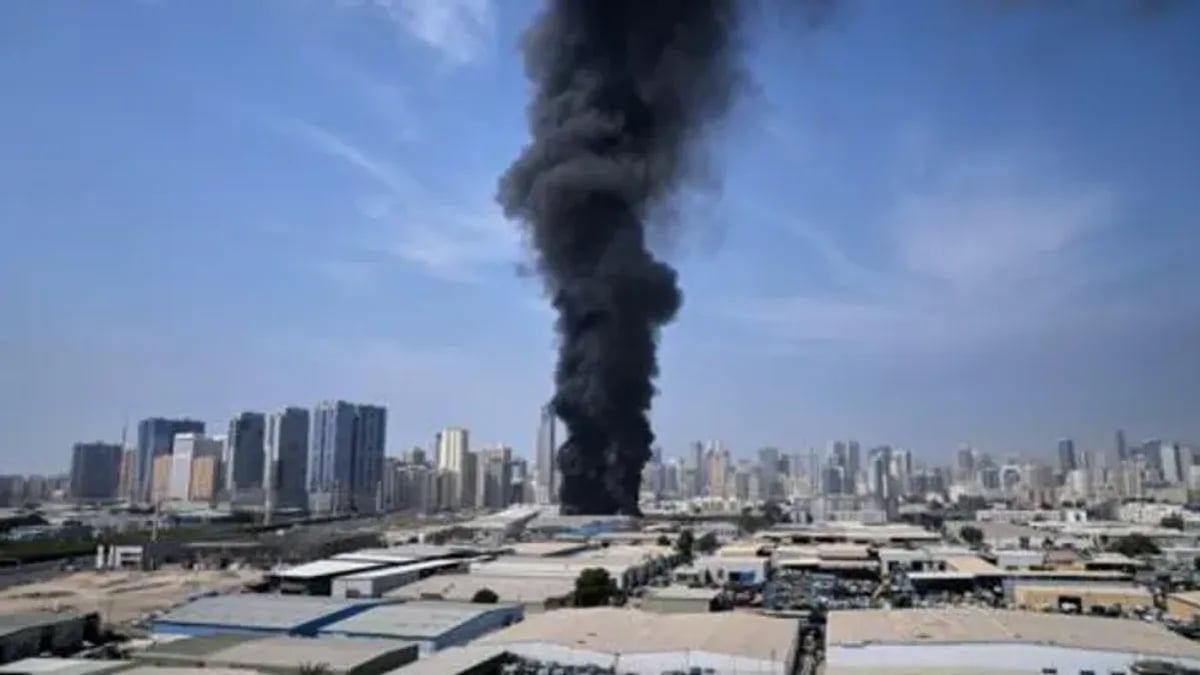
Witnesses told Reuters that they heard a loud bang in downtown Dubai, UAE on Thursday, while the Dubai Government Media Office denied the accuracy of the Reuters report regarding the sound of explosions in downtown Dubai.
Display the tweet on platform X
The Dubai Government Media Office affirmed that the information contained in it is incorrect, urging media and the public to source news and information from official and reliable sources, and to verify accuracy before publishing or circulating any information, and to avoid spreading rumors and false news and press reports.
Iran and the United States escalated mutual attacks on Thursday in an ongoing escalation over the past week that undermines the continuation of a truce they reached last month, but Iran's release of an American citizen indicated the possibility of a path to avoid resuming all-out war.
The United States launched two major waves of airstrikes in a single day on Wednesday, mostly targeting sites near the coast in southern Iran, for the first time since a memorandum of understanding halted fighting last month.
Iran responded by launching missiles and drones at US military bases in neighboring countries, including targeting an air base in Jordan that was recently expanded.
After Tehran resumed closing the Strait of Hormuz, Washington reimposed a blockade on Iranian ports as of yesterday. The US military said it fired on a tanker near the Iranian island of Kharg, with Hellfire missiles hitting its smokestack.
In a possible next step, Iran hinted that it may push its Houthi allies in Yemen to close another major strait, the Bab el-Mandeb at the entrance to the Red Sea. Sources told Reuters that Iran has already informed the Houthis to close it if Washington carries out its threats to attack Iranian infrastructure.
The increased shelling over a week showed that both sides are approaching the escalation limits they set during four months of fighting before last month's truce. But as attacks continued, US President Donald Trump welcomed the release of an American citizen in Iran, calling it a 'gesture of good faith'.
The renewed escalation largely halted traffic through the Strait of Hormuz, the world's most important shipping lane for oil and gas, driving up global energy prices.
Fighting resumed last week when Iran struck ships moving through a passage in the strait, causing a serious fire on a Qatari tanker carrying liquefied natural gas.
Iranian sources told Reuters that Iran's goal is to assert its authority over the strait, but Tehran otherwise does not want a broader escalation that would blow up the preliminary agreement reached in June, which it still believes achieved most of what it sought.
Inside Iran, the renewed shelling left residents anxious, following week-long massive mourning ceremonies for the late Supreme Leader Ayatollah Ali Khamenei, which authorities portrayed as evidence of victory and national solidarity.
Discuss the news with artificial intelligence
Original source: Ajel.sa



Comments (0)
Be the first to comment.