US strike kills 2 near Iran-Iraq border; Houthis hit 2 Saudi tankers

A US military attack near the Shalamcheh border crossing has left two dead and 11 wounded, while Houthi forces in Yemen claim responsibility for striking two Saudi oil tankers. New explosions are reported in several Iranian cities.
Live updates,
The United States and Iran continue to exchange attacks, with new explosions reported in Iranian cities including Sirik, Ahvaz and Bushehr.
The escalating hostilities come amid heightened tensions between Washington and Tehran over nuclear negotiations and regional proxy conflicts.
Published On 23 Jul 2026
- The US bombs Iran for the 12th consecutive night, killing at least two people and wounding 11 others in an attack on the Shalamcheh border crossing with Iraq.
- Iran’s Islamic Revolutionary Guard Corps (IRGC) says a tanker is ablaze in the Strait of Hormuz, while Yemen’s Houthis also claim missile and drone strikes on two Saudi oil tankers in the Red Sea.
43 Updates
2m ago
(06:00 GMT)

‘Pakistan’s reputation will be damaged’ if it joins in Houthi-Saudi conflict
We have more from Sanaa-based journalist Hussain al-Bukhaiti.
Al-Bukhaiti told Al Jazeera that Yemenis do not believe Pakistan, despite its mutual defense agreement with Saudi Arabia, will intervene in the Houthi-Saudi conflict.
“If Pakistan inserts itself into the conflict between the Saudis and the Houthis, it’ll prove that Pakistan has decided to side with the oppressors against the oppressed,” al-Bukhaiti said.
“We Yemenis remember when Pakistan’s former Prime Minister Imran Khan [who served from 2018 to 2022] had repeatedly refused Saudi requests to send Pakistani troops to fight against the Houthis,” al-Bukhaiti said.
“The view in Sanaa is, Pakistan’s involvement now, after its agreement with the Saudis, will not make any difference to the final outcome, but Pakistan’s reputation will be damaged forever,” he added.
12m ago
(05:50 GMT)

What is the Shalamcheh border crossing?
As previously reported, a US attack near the Shalamcheh border crossing between Iran and Iraq has killed two people and wounded at least 11.
- It connects Iran to southern Iraq and is a key corridor for commerce and pilgrimages to Shia holy sites in Iraq.
- Thousands of people use the crossing daily, and those numbers rise to as many as two million travellers during peak religious months.
- The US attack came as pilgrims began journeys to the holy city of Karbala to participate in Arbaeen, one of the world’s largest annual religious events. This year’s Arbaeen falls in early August.
- A local official quoted by Iran’s Mehr News Agency said pilgrim journeys through the crossing continued after the attack as relief operations were also under way.

Shia Muslims arrive in Iraq from Iran through the Shalamcheh border crossing on July 18, 2026, on their way to Karbala for the Arbaeen pilgrimage [Ali Rahim/AP Photo] 22m ago
(05:40 GMT)
Qatar, Pakistan, Egypt propose truce amid Iranian attacks on Gulf states
By Um-e-Kulsoom Shariff
Reporting from Doha, Qatar
It’s been busy nights and days [in the Gulf] in the past 12 consecutive nights of US attacks.
Iran’s formula is pretty straight. They’ve laid it out, saying, “Eye for an eye”, after the US president said that his forces are going to attack an Iranian bridge or a power plant every time a ship gets attacked in the Strait of Hormuz. Iran says they’re going to play it the same way.
We’ve seen these attacks continue across GCC countries, namely Kuwait and Bahrain, in the past 12 days, and also Jordan. On Wednesday, Jordan’s military said that it shot down four missiles, and Kuwait was also attacked.
So, in all these days, we’ve seen the GCC countries come under attack for a war they did not start, for a war they say they do not support, and if at all, are making efforts to bring back the ceasefire.
The latest on that is we’ve had Qatar, Pakistan and Egypt propose a 10-day ceasefire between Washington and Tehran, so that this does not widen into a regional conflict.
37m ago
(05:25 GMT)
Iraq loses at least $40bn in revenue during US-Israel war on Iran, official says
Muzhar Saleh, financial adviser to Iraq’s prime minister, has told the AFP news agency that the country has suffered a huge hit to its revenues since the US and Israel’s war on Iran began in February.
“For Iraq, due to a 90 percent drop in its oil exports … in addition to the decline in growth rates, … the estimated loss was between $40bn and $45bn up to June 2026,” Saleh said.
That figure could climb to $50bn if the Strait of Hormuz remains closed, he added.
Before hostilities began, Iraq was producing roughly 4 million barrels of oil per day, about 3.5 million of which were exported daily, mostly via the Strait of Hormuz.
Iran’s blockade of the waterway has choked off shipments and forced Iraq to cut its oil production. With the strait closed, Iraq has been able to export only limited volumes to neighbouring Turkiye and Syria.
Iraqi Oil Minister Bassem Mohammed Khudair said in a television interview on Tuesday that his ministry “used to put between $7bn and $8bn a month” into state coffers. “Today, we do not exceed $1.5bn,” he added.
52m ago
(05:10 GMT)
Iraq’s prime minister visits Iran after trip to US
Reporting from Tehran, Iran
There are several important factors behind this visit.
According to official statements from both sides, discussions between [Iraqi Prime Minister Ali al-Zaidi and Iranian President Masoud Pezeshkian] will focus on bilateral relations with several memoranda of understanding scheduled to be signed aimed at improving ties between Iraq and Iran.
Energy is expected to be a critical issue in those talks.
Timing matters here for two reasons. First, the visit comes amid the escalation between the US and Iran, and Iraqi officials have said that helping bring an end to that escalation is part of the purpose of the trip. Second, the sequencing of the prime minister’s travel is significant. He was recently in the United States, is now visiting Iran and will go on to Turkiye with the region’s confrontational scenarios likely to feature in all three stops.
Iraqi officials say the prime minister is not carrying a message from the US but will talk about the Iraqi position alongside the American position that they have been updated about during his recent visit to the United States.
1h ago
(05:00 GMT)
If you’re just joining us
Here’s what happened overnight:
- The US has bombed Iran for a 12th straight night, with Iranian media reporting explosions in cities including Bushehr, Ahvaz, Sirik and Shalamcheh.
- Two people have been killed and 11 others wounded in a US attack on Iran’s Shalamcheh border crossing with Iraq, according to officials.
- Iran’s IRGC has claimed responsibility for additional strikes on US military targets in Kuwait, and said an explosion has set a tanker ablaze in the Strait of Hormuz after it attempted to transit through an unauthorised route.
- Saudi Arabia confirms an attack by the Houthis on the state-owned vessel Encelia in the Red Sea, reporting that a fire broke out at its bow, though all crew members were unharmed.
- Oil prices rise to reach $96 a barrel, marking their highest level since June 8.
1h ago
(04:50 GMT)

IRGC tells Kuwaitis: It is US, not Iran, that violates your sovereignty
We have more from the IRGC statement.
Addressing the Kuwaiti people directly, the IRGC insisted it is the United States, not Iran, that has “violated your territorial integrity and sovereignty”.
It said its attacks are aimed at US bases, territory it described as beyond the control of Kuwait’s own border guards, and where Americans and anyone they want, including prisoners from other countries, enter and leave freely.
“So it is America that has violated your territorial integrity and sovereignty, not us. We are attacking lands occupied by the American army, an army that knows nothing but crime,” it said.
1h ago
(04:45 GMT)

IRGC claims attacks on Kuwait
Iran’s Islamic Revolutionary Guard Corps (IRGC) has claimed more attacks on US military assets in Kuwait, saying the strikes are retaliation against Washington and not the Kuwaiti people.
The IRGC said it had “attacked and destroyed a large warehouse of military equipment, a Patriot missile defence system, and a hangar of American MQ9 drones” at Ali al-Salem airbase.
It also claimed attacks on US forces’ accommodation and two helicopter hangars at the Al-Adiri barracks, saying the attacks caused casualties and inflicted heavy damage on helicopters and drones.
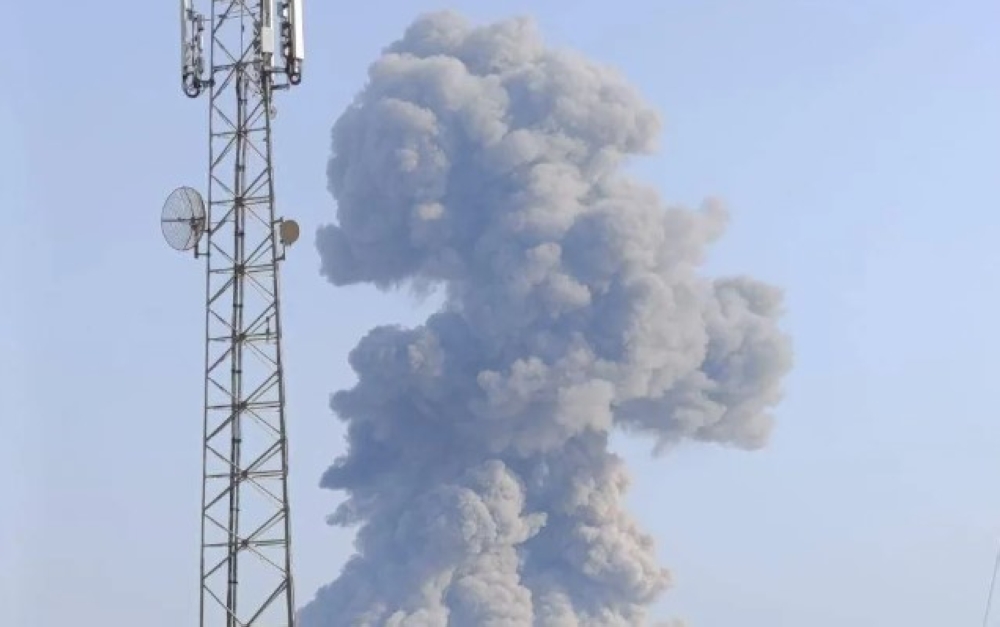
The IRGC added that its fighters “targeted a telecommunications tower in response to US attacks on telecommunications towers in Iran”.
Sign up for Al Jazeera
Americas Coverage Newsletter
1h ago
(04:40 GMT)

What is Bab al-Mandeb?

(Al Jazeera) 1h ago
(04:30 GMT)
Houthi attacks affect another key energy route – Bab al-Mandeb
By Um-e-Kulsoom Shariff
Reporting from Doha, Qatar
The Saudi state media has confirmed attacks on a vessel in the Red Sea that have caused a fire and said that all crew members are safe.
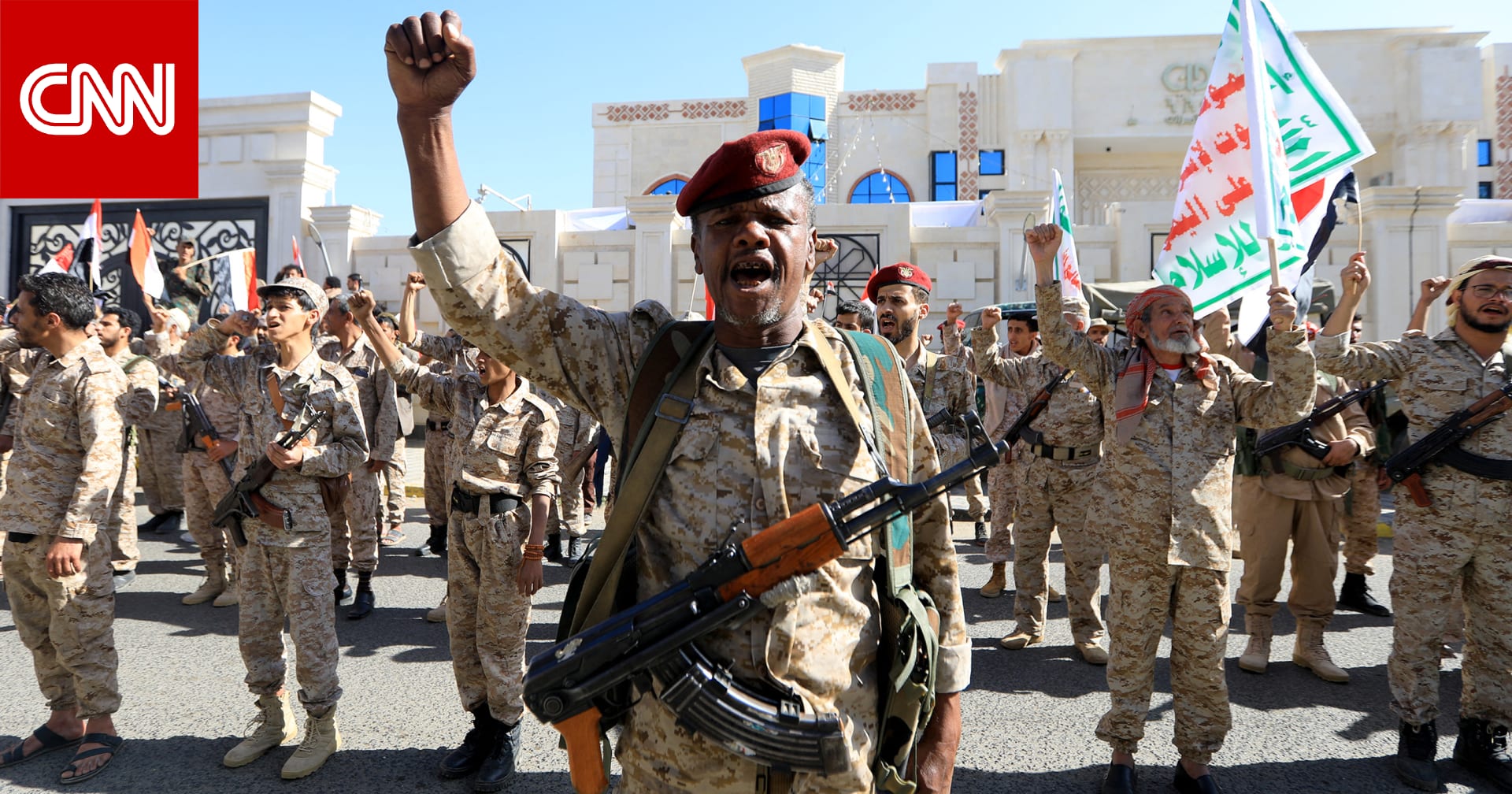
This comes after Yemen’s Ansar Allah, known as the Houthis, claimed responsibility for attacks in the Red Sea.
This is the latest flashpoint we are seeing in a war that’s widened after the Houthis declared a maritime blockade – so to speak – on the kingdom.
This affects not the Strait of Hormuz, which is effectively closed, but the Bab al-Mandeb Strait, which is another key energy supply route.
1h ago
(04:20 GMT)
Two Chinese tankers heading to Bab al-Mandeb for Red Sea exit
Two vessels carrying a combined 4 million barrels of Saudi Arabian oil are heading towards the Bab al-Mandeb Strait to exit the Red Sea, Reuters has reported, citing shipping data.
The agency said their transit will test how tightly the Houthis will enforce the naval blockade they have announced on Saudi Arabia.
According to Reuters, the ships in transit include the Singapore-flagged VLCC Xin Long Yang, which took a pause in the Red Sea on Tuesday before resuming south on Wednesday en route to Qinzhou, China. The other is the China-flagged VLCC Cosnew Lake, which is bound for Huizhou, Guangdong.
Both vessels indicated through their automatic identification system transmitters that there were Chinese crew onboard, Reuters said.
The Houthis, meanwhile, have said they struck two Saudi tankers with drones and missiles earlier today.
1h ago
(04:10 GMT)
Trump faces ‘very tall order’ in getting deal on Hormuz and Iran’s nuclear programme
We have more from Joey Hood, former US envoy to Tunisia.
He said Trump “threw away the possibility of an agreement on the nuclear programme in February” and now needs a far more ambitious deal.
“Now he needs not just an agreement on the nuclear programme, but also one that gives up Iran’s stated goal of trying to control the Strait of Hormuz, and with it, the economies of Iraq and the Gulf States,” said Hood.
“That’s a very very tall order,” the former envoy said. “But obviously, diplomacy is going to be the answer to this, not a military solution. If a military solution was going to work, it probably would have worked by now.”
Hood said the conflict has widened into a regional war because Iran believes that by drawing in other countries, “somehow, the rest of the world will side with Iran, and will put pressure on Donald Trump”.
But the calculation is mistaken, he argued.
“As much as other governments may not like” Trump, they “have way too much bound up in the United States, politically and economically, and they have absolutely nothing in common with Tehran”.
The only exception, he said, is China, which has been Iran’s largest oil customer.
“If China decides to get more involved, that could change the balance of things here. But for now, I think what Trump sees is that the rest of the world does not agree with Tehran, even if they’re not supportive of him.”
2h ago
(04:00 GMT)
Two rescue boats damaged in US attack on Iran’s Hormozgan
Two naval search and rescue vessels have been hit and seriously damaged in a US attack on Iran’s Hormozgan, the ISNA news agency has reported, citing the province’s Ports and Maritime Administration.
2h ago
(03:50 GMT)
WATCH: Hegseth wants $70bn more to keep fighting
Iran activated air defence systems across Tehran on Wednesday as the war edges closer to the capital.
Meanwhile, the Pentagon is seeking nearly $70bn more to sustain the war, on top of the $37.5bn it has already cost.
Watch a recap of Wednesday’s developments below:
2h ago
(03:40 GMT)
Iranian actors pose ‘genuine risk’ to US critical infrastructure
Jody Westby, chief executive of cybersecurity firm Global Cyber Risk, has told Al Jazeera that the US government’s advisory warning of Iran-affiliated cyber-threats reflects a “genuine risk”.
Westby said US authorities have observed attacks “targeting US critical infrastructure” that they believe are “clearly” being conducted “with the Iranian Revolutionary Guard’s Electronic Cyber Command group”.
“So these are skilled, smart people conducting cyberattacks,” she said.
The potential systems that could be at risk include those at hospitals, as well as at water, waste management and electricity facilities.
Westby said the targets, as well as conditions in the US, which is currently experiencing a “very hot summer”, mean that the attacks “could have a significant impact”.
The “very fractured and fragmented private sector network structure” in the US “doesn’t allow for rapid or large government response, and so they [Iran] are going to take advantage of that”, she said.
“Five months ago, we went to war with Iran, [and] this is what we get with asymmetrical warfare. This is Iran striking back,” she added.
2h ago
(03:30 GMT)
US agencies warn of Iranian-affiliated cybersecurity threats
US government agencies, including the Cybersecurity and Infrastructure Security Agency and the FBI, have issued an advisory, warning US organisations of “ongoing Iranian-affiliated cyber activity targeting” internet-connected devices.
“Iranian cyber actors continue to target US critical infrastructure, and the FBI is committed to identifying, disrupting, and imposing costs on those responsible,” assistant director of the FBI’s cyber division, Brett Leatherman, said in a statement.
“This advisory provides network defenders with the information they need to identify malicious activity, strengthen their defences, and reduce opportunities for Iranian cyber actors to disrupt the essential services Americans rely on,” Leatherman added.
2h ago
(03:20 GMT)
Two killed, 11 wounded in Iran as explosions rock southwestern provinces
Reporting from Tehran, Iran
Explosions have been heard in different Iranian provinces in recent hours, particularly the southwestern province of Khuzestan.
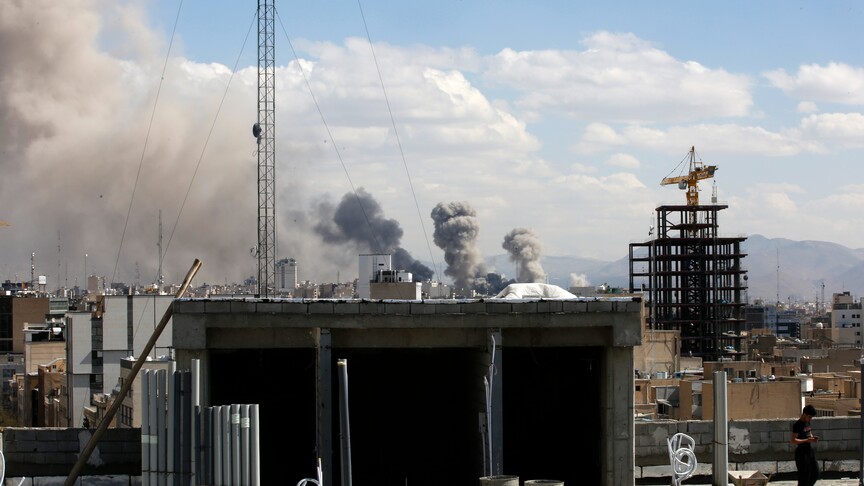
In several cities, explosions were reported, including in Ramshir, where an asphalt storage facility was targeted, and also in Ahvaz, in Mahshahr and Andimeshk.
Most importantly, explosions were reported in an area close to a passenger station in Shalamcheh, a border area close to Iraq. As a result of this, according to local authorities, at least two people were killed and 11 injured.
We know that at least eight people have been killed over the past few weeks, and now we can say that at least 10 people have been killed as a result of the US’s air strikes since the beginning of this new round of confrontation.
In Hormozgan province, explosions were also reported in Sirik and, most recently, in Jask. These cities are critically important as they oversee the Strait of Hormuz amid Iran’s claims of control and authority over the waterway.
Two explosions were reported in Bushehr as well: one earlier in the night, and another more recently.
2h ago
(03:10 GMT)
US advises ‘Americans worldwide to exercise increased caution’
The US State Department has renewed a security alert advising Americans “worldwide to exercise increased caution” due to “heightened tensions in the Middle East”.
“The security environment remains complex with the potential for unforeseen escalation,” the department said in its latest update.
The alert noted that “US diplomatic facilities, including outside the Middle East, have been targeted”, and warned that “Iran and groups supportive of Iran may target other US interests overseas or at locations associated with the United States and Americans throughout the world, including US businesses and other institutions”.
In particular, the alert advised Americans currently in the Middle East to be aware of potential flight and other travel disruptions, and said: “Americans outside the Middle East should reconsider travel to and through the region.”
Worldwide Caution: Due to heightened tensions in the Middle East, the security environment remains complex with the potential for unforeseen escalation.
Americans currently in the Middle East should exercise caution and heightened vigilance and should be prepared for flight… pic.twitter.com/PNSVFgfPpP
— TravelGov (@TravelGov) July 23, 2026
3h ago
(03:00 GMT)
US completes 12th consecutive night of strikes on Iran
US Central Command (CENTCOM) says it has completed another round of strikes to “further degrade Iran’s ability to attack civilian mariners and commercial vessels”.
In a statement, CENTCOM said its forces struck “Iranian military targets including maritime capabilities, missile and drone storage facilities, coastal surveillance sites, and air defense assets” in the latest wave.
It added that US forces have targeted dozens of land-based Iranian military sites this month while also enforcing a maritime blockade. “As of today, CENTCOM has redirected nine commercial vessels and disabled one to prevent ships from entering or departing Iranian ports,” it said.
“More than 50,000 US service members are operating across the Middle East and remain highly vigilant, focused, lethal, and ready,” the statement added.
3h ago
(02:50 GMT)
Iranian missiles show deadly precision amid US-Iran war escalation
An Iranian attack on a US military site in Jordan that killed three US soldiers has shown the IRGC’s ability to inflict a deadly toll five months into the US-Israel war on Iran.
The strikes on Friday were the first time US soldiers have been killed by Iranian attacks on US military installations since March 1, just hours after the US and Israel launched the war.
While the Pentagon has not released full details of the attack, analysts say the deadly incident underscores an uncomfortable reality for Washington: Despite barrage after barrage of US air strikes, Iran maintains the military capability it needs to continue a prolonged asymmetric war.
Read more here.

A US Army carry team moves a transfer case containing the remains of Lieutenant Tyler James Feehan of Ewa Beach, Hawaii, into a transfer vehicle [Julia Demaree Nikhinson/AFP]
The Houthi attacks on Saudi oil tankers mark a significant escalation in the conflict between the Iran-backed group and the Saudi-led coalition. Yemeni journalist al-Bukhaiti expressed confidence that Pakistan will not enter the fray, citing former Prime Minister Imran Khan's past refusal to send troops. Observers will watch whether the new Saudi-Pakistan defense agreement changes that calculus. The US strike near the Iranian border further risks direct confrontation between American and Iranian forces. The situation remains volatile, with multiple fronts of engagement.
Original source: Al Jazeera



Comments (0)
Be the first to comment.