Sudanese Army Advances West of El-Obeid, Cautious Calm in Darfur and Blue Nile
SummaryIn the South Kordofan axis, military sources reported that the army shelled with heavy artillery multiple times and intensively, positions controlled by the Rapid Support Forces alliance and the Sudan People's Liberation Movement led by Abdelaziz al-Hilu north of the city of Dilling, the largest city in South Kordofan state.
While the combat fronts in both Darfur and Blue Nile regions witnessed a state of cautious calm, with continued military alertness and tactical field movements, battles continued between the army and its supporting forces on one side, and the Rapid Support Forces on the other, in the western axis of the city of El-Obeid, capital of North Kordofan state.
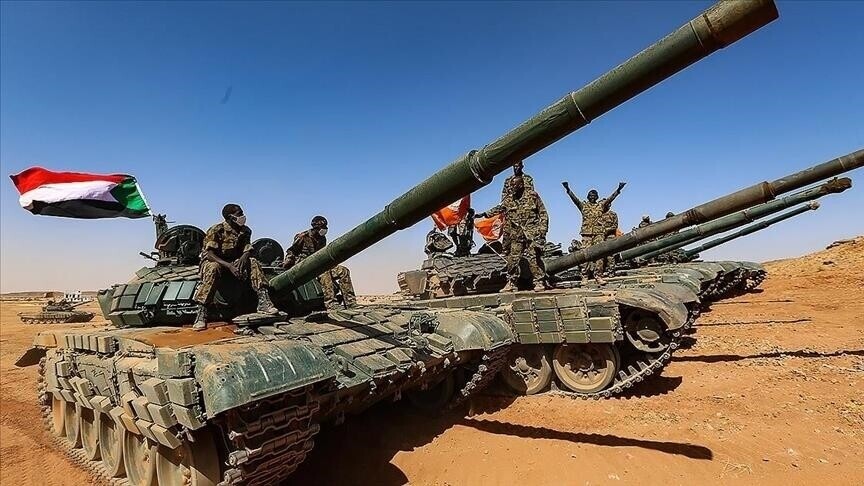
According to military sources, the army and its allies managed to advance on the ground in areas west of the city of El-Obeid after surprise offensive operations, forcing the group to withdraw from some positions they were stationed in around the city. The sounds of clashes were heard in the western parts of the city, while some surrounding roads witnessed military movements, without affecting the conditions inside the city, which continued to witness a state of caution, according to the same sources.
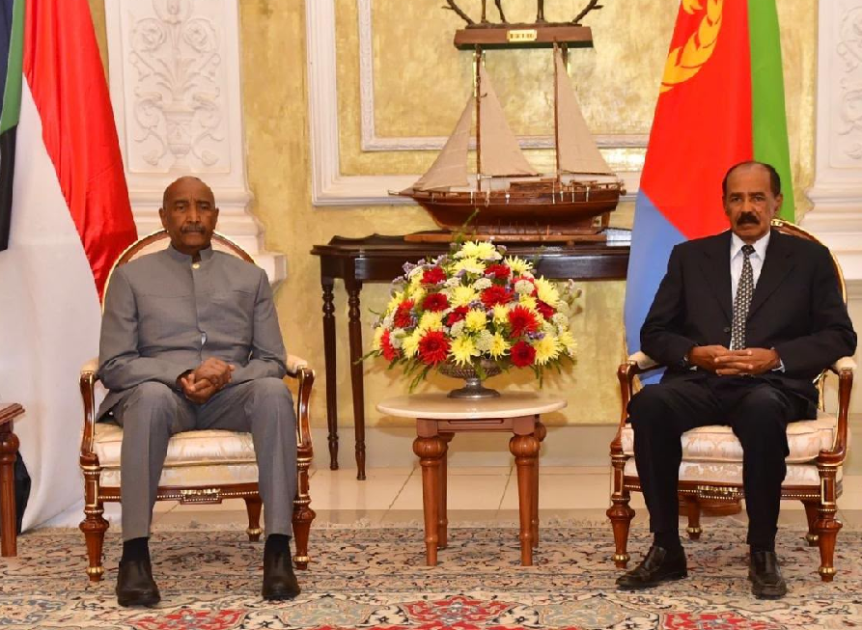
Abdel Fattah al-Burhan (right) with Eritrean President Isaias Afwerki (Sudan Sovereignty Council Media)
This advance comes days after the escalation of drone attacks on the city, which targeted service facilities and infrastructure, amid warnings from humanitarian organizations of the deterioration of humanitarian conditions due to the continuation of military operations.
El-Obeid is one of the most strategic cities in western Sudan, as it represents a logistical center linking Kordofan states with the Darfur region, and constitutes a main node for supply routes between central and western Sudan, which made it a focus of military confrontations since the outbreak of war in April 2023.
Destination for Displaced Persons
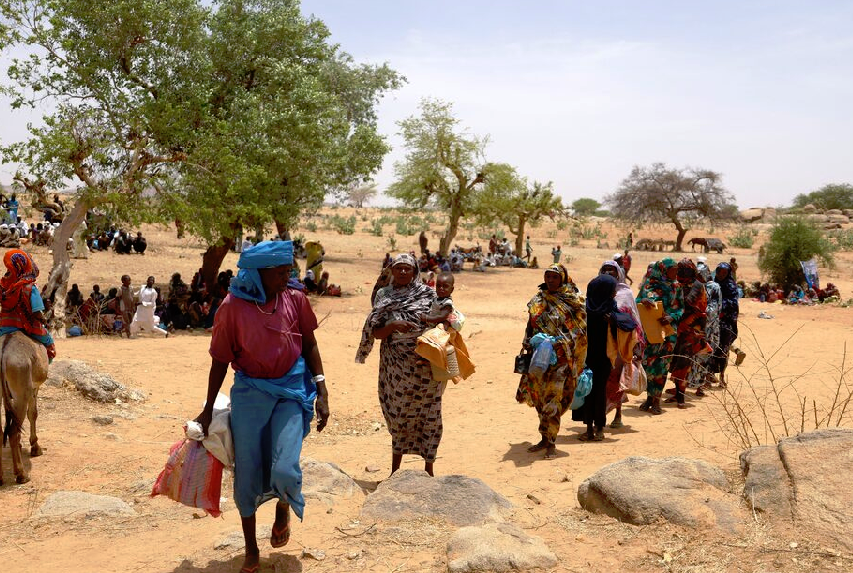
Despite the continuation of aerial bombardment and ground clashes in its vicinity, which have resulted in dozens of deaths and hundreds of injuries, El-Obeid has become a destination for thousands of displaced people seeking safety and protection.
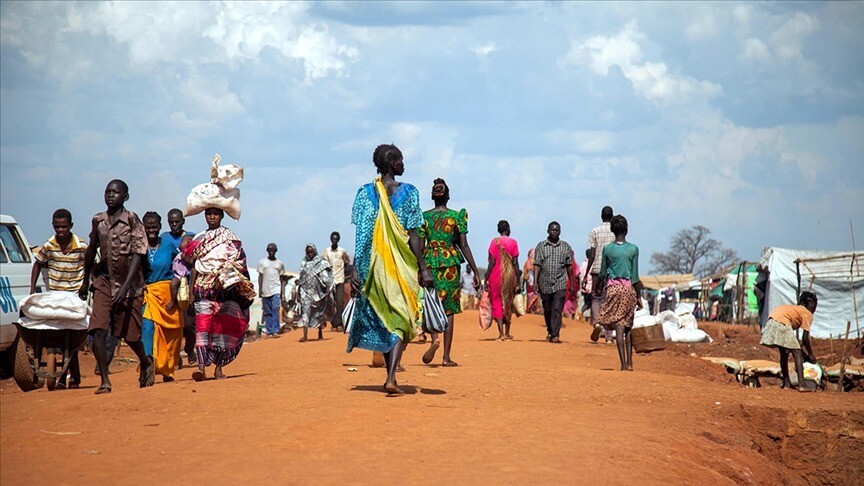
The city has received, according to a local official in North Kordofan state, more than 1.2 million people, distributed in eight camps suffering from severe overcrowding and lacking the most basic necessities of life: shelter, food, and drinkable water. He pointed out that despite the efforts of humanitarian organizations to provide aid, the need remains great and exceeds the capabilities of the Humanitarian Aid Commission in El-Obeid, which is decreasing in the face of the numbers of displaced people and their needs.
The same official explained that most of these displaced people came from South and West Kordofan, noting that the last census of El-Obeid's population before the war ranged between 750,000 and 800,000 citizens, and now the number has reached 3.2 million.
Hunger Crisis
Meanwhile, the United Nations World Food Programme indicated that the city of El-Obeid has become the new epicenter of the displacement and hunger crisis in Sudan, with increasing numbers of displaced people arriving and humanitarian needs worsening, at a time when the deteriorating situation threatens to undermine the limited gains achieved in the past months in delivering food aid.
The program affirmed in a statement that El-Obeid hosts hundreds of thousands of internally displaced persons, doubling pressure on basic services and limited resources, amid shortages of food, fuel, and drinking water, while displacement centers have exceeded their capacity with the continued arrival of new families from Kordofan and Darfur states. The statement noted that frequent power outages have affected water supplies and contributed to worsening health conditions, with more than 30 new cholera cases recorded in the city.
The statement pointed out that about 400,000 people in Sheikan locality, which includes the city of El-Obeid, along with Bara and West Bara localities, are facing emergency levels of acute food insecurity (Integrated Food Security Phase Classification Phase 4), meaning they need urgent food assistance to avoid hunger-related deaths.
The city of El-Obeid, capital of North Kordofan state, is one of the most important urban and commercial centers in western Sudan, linking Kordofan, Darfur, and Khartoum states via a network of land routes. Since the outbreak of war in April 2023, the city has become a center for receiving thousands of displaced people and represents a main pivot for humanitarian relief operations in the Kordofan region.
Bombardment of Dilling
In the South Kordofan axis, military sources reported that the army shelled with heavy artillery multiple times and intensively, positions controlled by the Rapid Support Forces alliance and the Sudan People's Liberation Movement led by Abdelaziz al-Hilu north of the city of Dilling, the largest city in South Kordofan state.
The sources indicated that the shelling caused casualties and equipment losses in the ranks of the alliance, and that it came after the army monitored movements of forces loyal to it. The army and the Rapid Support Forces alliance and the Sudan People's Liberation Movement have been exchanging intermittent drone and heavy artillery shelling inside the city of Dilling.
This city is experiencing a highly complex security and humanitarian situation, as it witnesses a state of constant tension and clashes, with its residential neighborhoods and various facilities subjected to continuous artillery shelling and escalating ground and drone attacks.
Despite breaking the siege imposed by the Rapid Support Forces and the Sudan People's Liberation Movement for a long period, the city still faces isolation and fluctuation in supply routes, as the previous siege and ongoing clashes have caused a severe humanitarian and health crisis, leading to an acute shortage of food and medicine and the shutdown or partial operation of many facilities and hospitals.
Read more
Army Sweeps Areas in Blue Nile and Destruction of Rapid Support Forces Sites in Darfur and Kordofan
Historic Recession of the Nile in Sudan and the Ethiopian Dam as the Prime Suspect
They Fled the War but Return Was Not Possible... The Tragedy of Sudanese Refugees
Debt Relief for Sudan
Economically, the Organization of African, Caribbean and Pacific States (OACPS) exempted Sudan from its entire debt owed to the organization, amounting to one million dollars, during the meetings of the Council of Ministers held in the Belgian capital, Brussels.
The decision to exempt Sudan from its debt comes at a time when its economy faces major challenges due to the war between the army and the Rapid Support Forces, ongoing for more than 39 months, which led to a decline in public revenues and disruption of production sectors and infrastructure, amid government efforts to ease debt burdens and attract more international support. A statement by the Ministry of Finance explained that the organization's meetings, held from July 15 to 16, with the participation of ministers and representatives from member states, witnessed extensive discussions on a number of strategic issues, foremost of which are institutional and administrative reform of the organization, and review of policies and programs aimed at supporting economic transformation and enhancing economic resilience of member states.
The statement said that the meetings also discussed ways to accelerate ratification of the Samoa Partnership Agreement with the European Union, as well as the importance of completing procedures for the agreement to enter into force to benefit from the opportunities offered by the partnership.
The statement noted that the Council of Ministers adopted a decision to exempt Sudan from its entire debt to the organization, amounting to one million dollars, taking into account the exceptional circumstances facing the Sudanese economy since the outbreak of war.
Original source: Independent Arabia


Comments (0)
Be the first to comment.