Between De-escalation and Deterrence: Is War with the Houthis Returning?

Books
Between De-escalation and Deterrence: Is War with the Houthis Returning?
Dr. Khaled Mohamed Batrafi
Date of publication: July 19, 2026 11:08 KSA
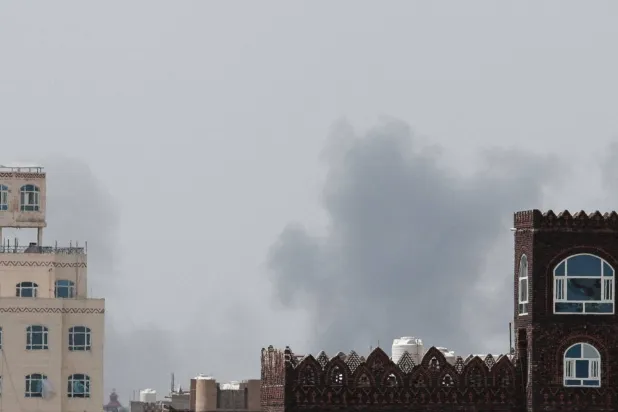
The crisis of the Iranian plane heading to Sanaa has brought the language of war back to the forefront after years of relative calm. Between those who see the region heading toward a new confrontation and those who view what is happening as mere mutual pressure messages, the most important question remains: Have the equations of the conflict truly changed, or does everyone realize that war is no longer the preferred option?
In reality, what we are witnessing today goes beyond the plane incident itself; it reflects the intertwining of the Yemeni file with regional tensions, particularly the relationship between Iran and the United States, the future of Red Sea security, and the calculations of international powers in the region. Therefore, the media and political escalation does not necessarily mean that the decision for war has been made, but rather represents an attempt by each party to strengthen its negotiating position and send deterrent messages to its adversaries. Since the cessation of large-scale military operations, Saudi Arabia has been keen to give the political track a real opportunity, based on the conviction that the stability of Yemen is part of the stability of the entire region. Moreover, the development priorities driven by Saudi Vision 2030 make a stable regional environment a strategic necessity, not merely a political choice. Thus, the openness to mediation efforts was not an expression of retreat, but a transition from managing military conflict to managing the conflict politically, while retaining full elements of strength and deterrence.
On the other hand, the Houthis realize that maintaining an image of strength is a fundamental part of their political and military project, so they seek to exploit every crisis to show their ability to impose equations or influence the calculations of their adversaries. However, this does not necessarily mean they desire to wage an all-out war, because they also recognize the scale of economic and military pressures on their areas of control and the challenges posed by regional changes over the past two years. If a military confrontation is imposed, the conditions today are vastly different from what they were at the start of the war. Saudi Arabia has significantly developed its defensive capabilities, whether in air defense systems, countering drones and missiles, or integrating command, control, and intelligence systems, benefiting from the lessons produced by years of conflict. It has also become more capable of managing military operations within an integrated strategic vision, rather than through immediate reactions. Talk of a swift military resolution seems closer to oversimplification than realistic assessment. It is true that the balance of power has changed compared to years ago, and it is true that Houthi capabilities have been notably depleted, but any wide-scale confrontation could once again turn into a prolonged war of attrition if it is not linked to clear political objectives and a plan to end the conflict, not just manage it. Moreover, any new war will not be isolated from its regional environment. The Red Sea, Bab el-Mandeb, and the safety of international navigation have become key elements in the equation of international security, and any escalation will have repercussions beyond Yemen's borders, affecting global trade and energy markets, which pushes international powers to prefer containing the crisis over expanding it. Therefore, the most likely scenario at this stage is not all-out war, but the continuation of a policy of mutual deterrence, coupled with political and media pressures and attempts to improve negotiating positions. If a military escalation occurs, it is likely to be limited and calculated, unless a major incident leads to a change in rules of engagement that becomes difficult to contain. The past years have proven that military force is necessary to protect national security, but it alone does not make peace. Sustainable peace requires a balance between deterrence and dialogue, between protecting sovereignty and reaching a viable political settlement. In this context, Saudi Arabia appears keen to maintain this balance: it neither compromises on its security nor rushes into a war it knows in advance will be costly for everyone.
Original source: Al-Madina



Comments (0)
Be the first to comment.