The Iranian Plane Brings Down the Houthi Illusion!

The incident of preventing the Iranian delegation's plane from landing at Sana'a International Airport marked a significant political and media turning point, as it completely undermined the claims that Tehran and the Houthi group sought to promote; that the decision over Yemeni airspace and the capital's airport was in their hands. The Houthi-Iranian alliance attempted to portray the scene as an announcement of sovereignty imposed by force of reality, but the field events proved that this narrative was nothing more than weak political propaganda that quickly collided with the reality of true sovereign arrangements. The Iranian and Houthi media machinery exploited the incident of the plane to serve its political agenda...
Ahmed Al-Jumai'a
The Iranian Plane Brings Down the Houthi Illusion!
July 15, 2026 - 00:08 | Last updated July 15, 2026 - 00:08
Follow Okaz channel on WhatsApp
The incident of preventing the Iranian delegation's plane from landing at Sana'a International Airport marked a significant political and media turning point, as it completely undermined the claims that Tehran and the Houthi group sought to promote; that the decision over Yemeni airspace and the capital's airport was in their hands. The Houthi-Iranian alliance attempted to portray the scene as an announcement of sovereignty imposed by force of reality, but the field events proved that this narrative was nothing more than weak political propaganda that quickly collided with the reality of true sovereign arrangements.
The Iranian and Houthi media machinery exploited the incident of the plane to serve its political agenda through four main propaganda strategies—according to an analysis of the reactions—aiming to cover up the field failure and transform it into an illusory victory. The first of these strategies was the claim of victimization from the siege, reviving the victim narrative to gain popular sympathy, and attempting to continue the escalation; only for the world to discover the falsity of this false claim, and that the reality of Yemeni sovereignty is stronger than attempts at deception and fabricated noise under any pretext.
The second strategy was the propaganda of "breaking the siege," attempting to impose a new political reality by announcing the flight in advance, aiming to mislead the popular base into believing that the Houthis possess absolute decision-making power over Yemeni airspace and airports. The reality proved the exact opposite, with the Houthis failing to secure the landing of a plane carrying an allied delegation, which represents a clear strategic failure that revealed the limits of their actual power on the ground.
As for the third strategy; it was an attempt to create confusion and shift the symbolic battle after the failure to land at Sana'a Airport (the capital and the symbol of sovereignty), where quick attempts were made to change the course and portray the landing at Hodeidah Airport as a success and a breakthrough to thwart the ban, downplaying the magnitude of the strategic failure at the capital's airport. The truth is that the Iranian plane's necessity to head towards Hodeidah Airport did not change the essence of the scene or its political outcome, as the real and symbolic battle revolved around Sana'a Airport as a sovereign gateway to the capital.
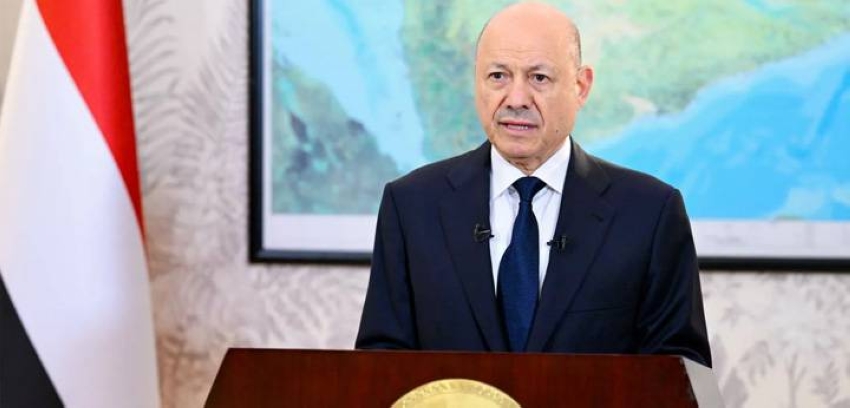
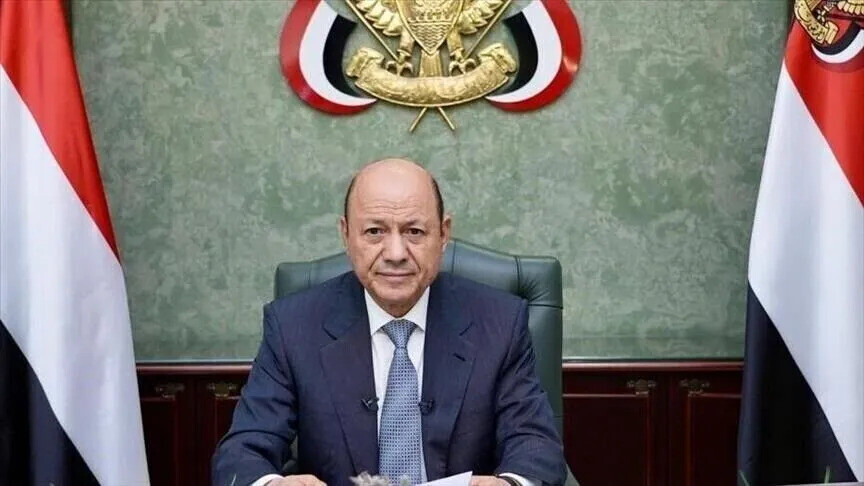
The fourth strategy of the plane incident was an attempt to exploit Yemen as a regional "message box," as Tehran used propaganda to assert its influence in the Yemeni file, and to send messages to the international community that it is capable of moving political and military cards in the region, and to establish the legitimacy of its allies as a fait accompli. But this time, the response came directly and clearly from the head of the Yemeni Presidential Leadership Council, Dr. Rashad al-Alimi, by not expanding the scope of military confrontation; to miss the opportunity for the goal that Iran seeks, namely dragging Yemen and its people into the furnace of absurd wars that serve Tehran's private interests, and using Yemen, land and people, as a "pressure card" in its comprehensive regional conflict. Another firm stance came from Dr. al-Alimi, stressing that the Yemeni state will not allow any plane to violate Yemeni airspace in the future, whether heading to Sana'a Airport or any other airport across Yemeni geography.
The position of the head of the Yemeni Presidential Leadership Council emerged as a safety valve protecting national sovereign decision-making with strict constitutional responsibility, and reflects political maturity in acting with a state mentality to protect lives and property, placing the international community before a clear fact that legitimacy alone is the owner of the land and airspace, and all media noise will not grant the militia recognition that reality cannot give.
The incident of preventing the Iranian delegation's plane from landing at Sana'a International Airport marked a significant political and media turning point, as it completely undermined the claims that Tehran and the Houthi group sought to promote; that the decision over Yemeni airspace and the capital's airport was in their hands. The Houthi-Iranian alliance attempted to portray the scene as an announcement of sovereignty imposed by force of reality, but the field events proved that this narrative was nothing more than weak political propaganda that quickly collided with the reality of true sovereign arrangements.
The Iranian and Houthi media machinery exploited the incident of the plane to serve its political agenda through four main propaganda strategies—according to an analysis of the reactions—aiming to cover up the field failure and transform it into an illusory victory. The first of these strategies was the claim of victimization from the siege, reviving the victim narrative to gain popular sympathy, and attempting to continue the escalation; only for the world to discover the falsity of this false claim, and that the reality of Yemeni sovereignty is stronger than attempts at deception and fabricated noise under any pretext.
The second strategy was the propaganda of "breaking the siege," attempting to impose a new political reality by announcing the flight in advance, aiming to mislead the popular base into believing that the Houthis possess absolute decision-making power over Yemeni airspace and airports. The reality proved the exact opposite, with the Houthis failing to secure the landing of a plane carrying an allied delegation, which represents a clear strategic failure that revealed the limits of their actual power on the ground.
As for the third strategy; it was an attempt to create confusion and shift the symbolic battle after the failure to land at Sana'a Airport (the capital and the symbol of sovereignty), where quick attempts were made to change the course and portray the landing at Hodeidah Airport as a success and a breakthrough to thwart the ban, downplaying the magnitude of the strategic failure at the capital's airport. The truth is that the Iranian plane's necessity to head towards Hodeidah Airport did not change the essence of the scene or its political outcome, as the real and symbolic battle revolved around Sana'a Airport as a sovereign gateway to the capital.
Original source: Okaz


Comments (0)
Be the first to comment.