How Yemen's government handled Iran's escalation over Sanaa airport
Yemen's legitimate government managed the Iranian plane crisis through parallel military, political, and diplomatic tracks, emphasizing protection of sovereignty and prevention of a new reality, without being dragged into broader escalation...
The Yemeni leadership did not treat the crisis of the Iranian plane that attempted to land at Sanaa airport last Monday as an aviation incident that could be overlooked to avoid further escalation, but rather viewed it as a direct test of state sovereignty, and an attempt to impose a new political and military reality outside its legitimate institutions, at a time of unprecedented regional tension.
Unlike previous crises that were characterized by less steady reactions, this time the crisis management came through an integrated system that combined a calculated military decision, organized political movement, and legal and diplomatic effort, while being careful not to be dragged into a broader confrontation that the government believed Tehran sought to turn Yemen again into a regional conflict arena.
During the crisis, a central message emerged that the Yemeni leadership was keen to establish from the first hours: that defending sovereignty does not contradict adherence to the peace option, and that the state is capable of imposing law without abandoning its responsibility to protect civilians or preserving opportunities for political settlement.
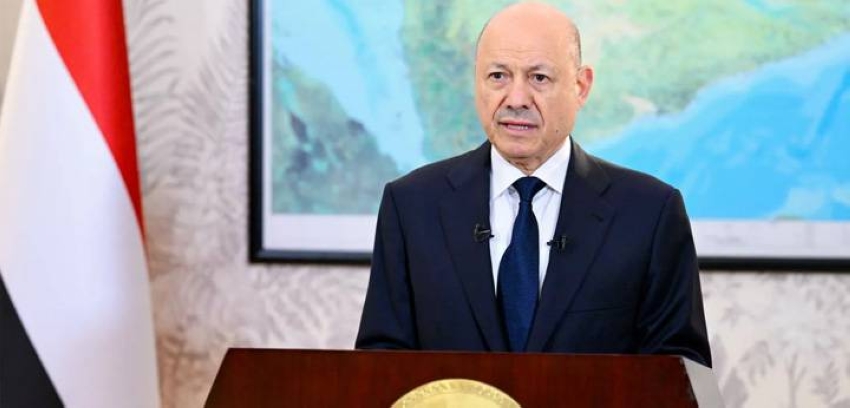
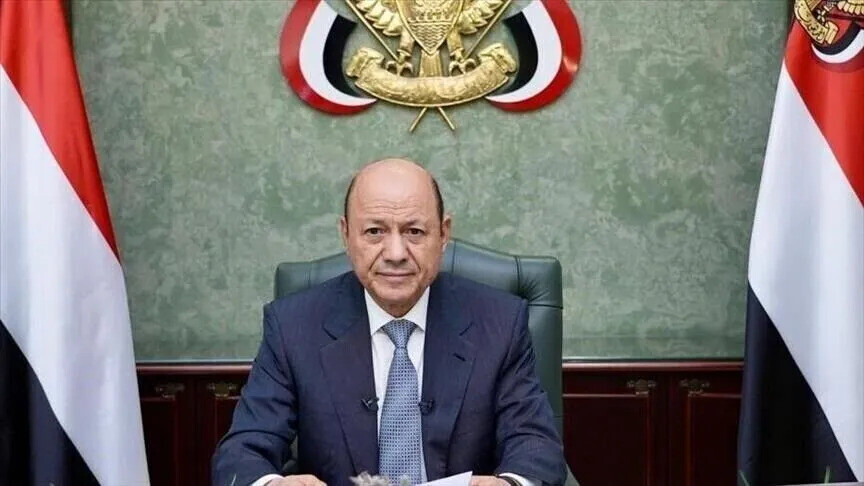
Al-Alimi during a meeting of the Yemeni National Defense Council (Government Media)
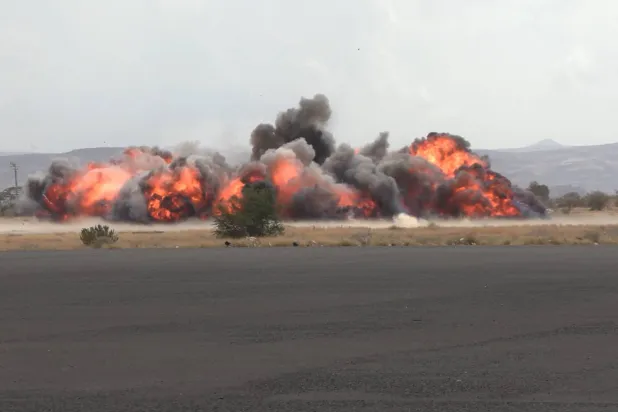
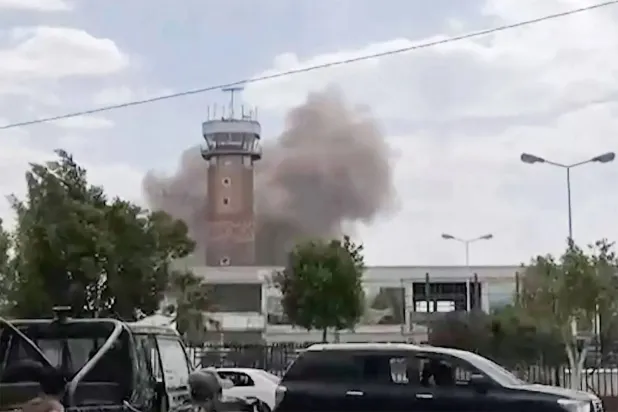
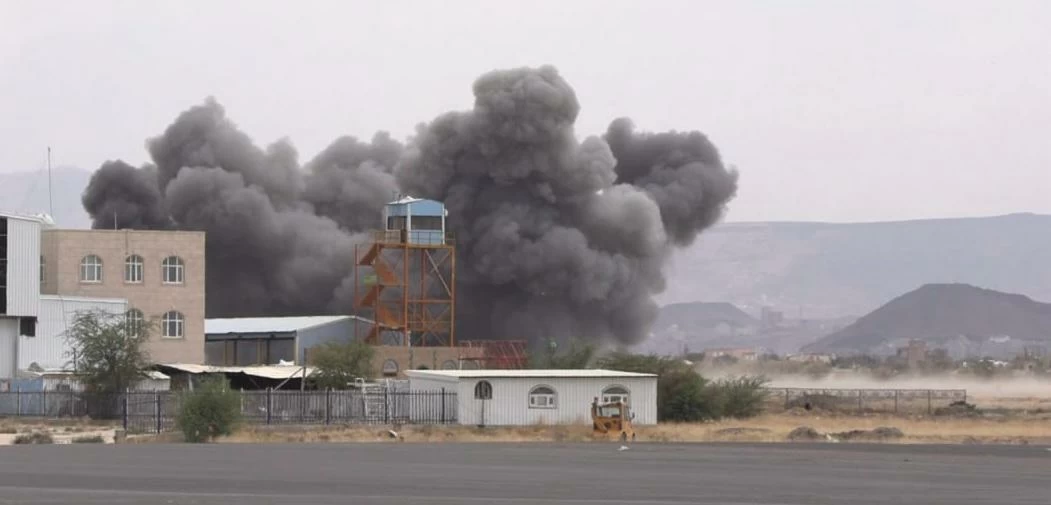
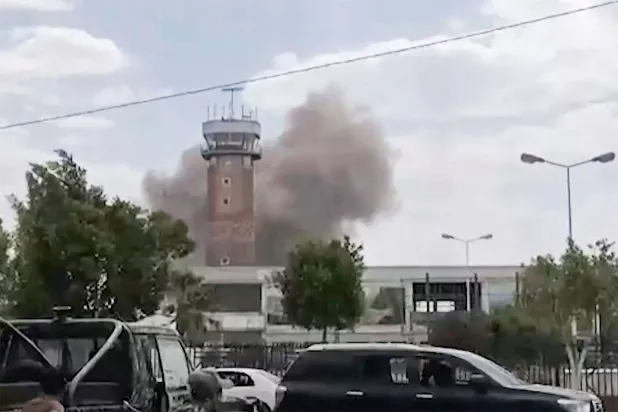
Therefore, targeting the runway of Sanaa airport – to prevent the Iranian plane from landing – was only the last link in a long chain of political and legal measures that preceded the use of force, after the government said it had exhausted all initiatives to operate the airport through official channels, and provided alternatives to ensure the continuation of civilian flights by 'Yemenia Airways' as the legally authorized national carrier.
What perhaps distinguished the performance of the Yemeni government during the crisis is that it did not merely respond to the event, but sought to manage the accompanying political narrative. From the first moment, official statements focused on the fact that the dispute is not about operating Sanaa airport or the travel of citizens, but rather about an attempt to usurp one of the most important sovereign powers of the state, namely control over airspace and international ports.
For this reason, the Yemeni leadership repeated in all its statements that the problem is not the plane itself, but rather operating international flights without the approval of the legitimate authorities, in violation of the 'Chicago Convention on International Civil Aviation' and relevant UN Security Council resolutions concerning Yemen.
Part of the bombing of Sanaa airport runway to prevent the Iranian plane from arriving (AFP)
The government also showed that it had provided practical solutions before escalation, including transferring the Houthi delegation from Tehran via a plane chartered by 'Yemenia Airways', an offer it said the group rejected, which strengthened its narrative to the international community that it only resorted to force after exhausting other options.
At the same time, the head of the Presidential Leadership Council, Rashad al-Alimi, was keen to emphasize that the priority was to protect the lives of civilians and public property, and not to expand the confrontation to achieve the goal sought by Iran of dragging Yemen into regional conflicts. This message aimed to reassure the domestic front and show that the military decision remained subject to precise political calculations, not emotional reactions.
The constant state of government convening, and the formation of a national team to manage the crisis, reflected the transition of state institutions to a unified management style combining military, political, diplomatic, and media aspects, which gave official performance a greater degree of coherence compared to previous crises.
Domestic and international support
During the crisis, observers believe that the Yemeni government also succeeded in transforming it from a bilateral confrontation between itself and the Houthis into an issue related to respect for the sovereignty of a UN member state.
Domestically, the House of Representatives, the Shura Council, the Consultation and Reconciliation Commission, and the national bloc of parties and political components quickly announced their full support for the measures taken by the Presidential Leadership Council, and considered what happened a violation of Yemeni sovereignty, not just a political dispute.
The importance of this alignment is that it came from the official and partisan institutions of the legitimate government, giving the leadership political cover in the face of any attempts to portray that the legitimate government lacks consensus among its components in facing the crisis.
Deputy US envoy during the UN Security Council session that discussed Iran's violation of Yemen's sovereignty (UN)
Externally, it was clear that the Yemeni diplomatic move preceded the UN Security Council session, after the government managed to push a number of major countries to adopt a discourse close to the official narrative.
The United States described the Iranian landing as a violation of Yemen's sovereignty, and linked it to the possible transfer of experts and military equipment to the Houthis, considering it a breach of Security Council resolutions, while Britain affirmed that any flights conducted without the approval of the legitimate government are a violation of international law, and called for an investigation through UN mechanisms.
France went even further when it linked the incident to Iran's destabilizing behavior in the region, and reiterated its demand to stop the transfer of military equipment to the Houthis, while affirming its commitment to the unity and sovereignty of Yemen.
Although the United Nations maintained its traditional discourse calling for de-escalation, it also stressed respect for the unity, sovereignty, and territorial integrity of Yemen, providing the government with additional political support in defending its position.
Multiple messages
The management of the Iranian plane crisis by the Yemeni legitimate government can be read as an attempt to convey three parallel messages: The first message to Iran, that Yemen is no longer an open arena for imposing facts through flights or sovereign ports, and that any attempt to bypass state institutions will be met with practical measures, even while adhering to the peace option.
The second message was directed at the Houthis, and its content is that using the suffering of civilians or Sanaa airport as a political card will not lead to recognition of parallel state authorities, and that the government will not allow the entrenchment of any sovereign powers outside its institutions.
Image of the Iranian plane that landed at Hodeidah airport after being prevented from reaching Sanaa (EPA)
In parallel, the third message had an international dimension; the government called on the Security Council to move from the condemnation phase to the deterrence phase, through strict application of sanctions and Council resolutions, especially resolutions 2140 and 2216, considering that continued disregard for violations encourages their repetition.
But despite the political and diplomatic gains achieved by the Yemeni legitimate government, the crisis has not actually ended, as it remains linked to the international community's ability to translate condemnation positions into practical measures that prevent the recurrence of such incidents and enforce respect for the sovereignty of the Yemeni state over all land, sea, and air ports.
UN Special Envoy to Yemen calls for de-escalation during his visit to Muscat Muscat, July 14, 2026 – The Special Envoy of the UN Secretary-General for Yemen, Hans Grundberg, held today a series of meetings in Muscat, Sultanate of Oman, as part of his ongoing engagement, which included senior officials... — @OSE_Yemen (@OSE_Yemen) July 14, 2026
Original source: Asharq Al-Awsat

Comments (0)
Be the first to comment.