Palestinian Body: Israel Issued 49 Military Orders Targeting 2093 Dunams in West Bank
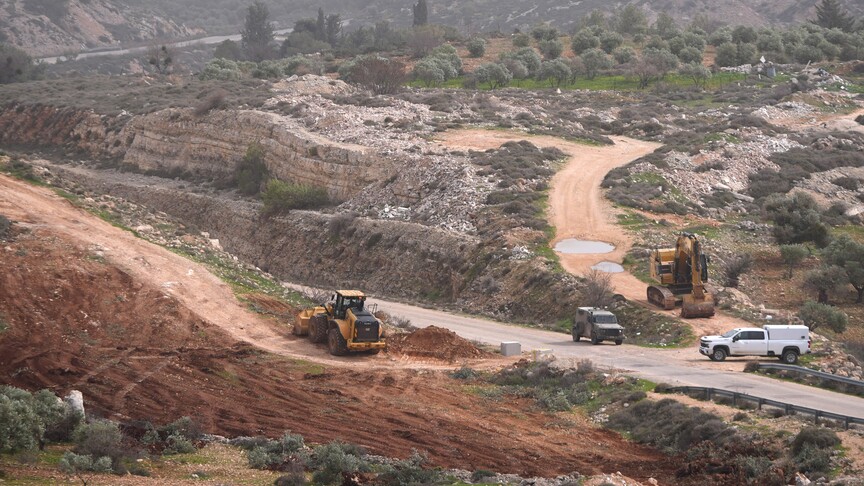
Ramallah / Anadolu
The Commission of Resistance to the Wall and Settlements said that 'the orders issued regarding these lands do not formally entail expropriation of the land or transfer of its registration from its Palestinian owners, but they impose extensive material and legal restrictions on its use and benefit through removing or pruning trees and crops.'
The (government) Commission of Resistance to the Wall and Settlements said on Saturday that Israeli authorities issued 49 Israeli military orders under the name 'Orders to Take Security Measures,' targeting 2093 dunams of Palestinian land in the occupied West Bank since the beginning of this year.
The commission said, in a statement received by Anadolu, that 'the orders issued regarding these lands do not formally entail expropriation of the land or transfer of its registration from its Palestinian owners, but they impose extensive material and legal restrictions on its use and benefit through removing or pruning trees and crops.'
These military orders also impose 'prevention of landowners from replanting or freely accessing them, and subjecting them to security arrangements that may extend for long periods,' according to the commission's statement.
It clarified: 'The land remains registered in the name of its owner, while his actual ability to use or invest it shrinks, producing a form of functional seizure or de facto control that does not require formal transfer of ownership.'
The commission explained that these orders were issued under the pretext of 'providing security and military requirements in areas adjacent to settlements, settlement roads, the annexation and expansion wall, checkpoints, and military sites.'
*Expanding the scope of de facto control
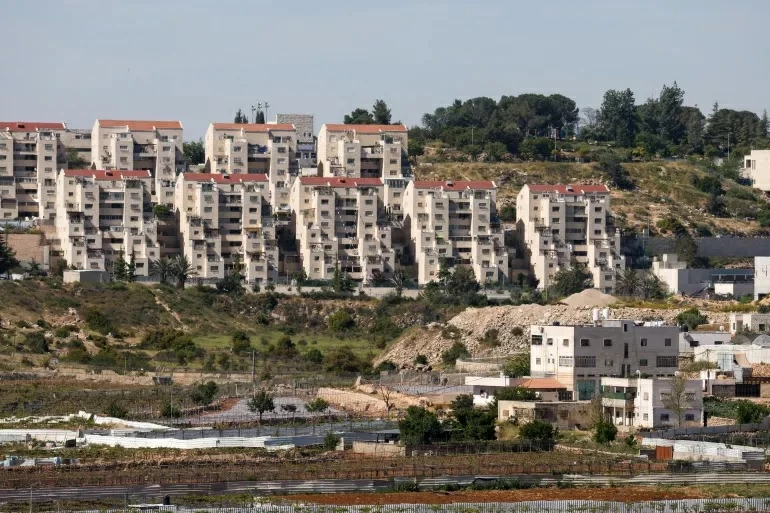
It added: 'However, reading their geographical distribution and sites of application reveals that their function exceeds the temporary security measure, turning into a tool to redesign the space surrounding the settlement structure, expand the scope of de facto control over it, and burden the Palestinian land and its owners with the cost of securing the movement of settlers and protecting their presence.'
The commission presented a comparison of the data on orders issued during the first half of this year with the total for the previous year.
It explained that Israeli authorities issued last year a total of 47 orders to take security measures targeting an area of 1613 dunams (one dunam equals 1,000 square meters), while during the first six months of 2026 alone they issued 49 orders targeting, according to the areas listed in the monitored orders, 2093 dunams.
The commission said that 'this comparison indicates a clear acceleration in the Israeli authorities' resort to this type of military orders, and its transformation from a measure used in limited cases to a more regular and widespread tool for removing the Palestinian tree cover, expanding protection zones around settlements, settlement roads, and military sites, and imposing additional restrictions on citizens' use of their lands.'
According to the Wall and Settlement Commission, the largest portion of Israeli orders focuses along roads used by settlers and around settlements and sites associated with the annexation and expansion wall.
*Securing the settler movement network
The issued Israeli orders aim to 'secure the settler movement network, expand control margins around roads and settlements, and reshape the surrounding areas to suit the needs of settlers and the military units that provide protection for them.'
Among the largest orders issued during the monitored period was order number 63/26, targeting 164.6 dunams of land from the towns of Marda, Iskaka, and Salfit in the northern West Bank, with the aim of removing trees in the area surrounding the settlement of 'Ariel.'
Stripping the land of trees surrounding the settlement, according to the commission, contributes to expanding its security and visual field, imposing further restrictions on the surrounding Palestinian villages, and enhancing spatial separation between them and their agricultural extensions.
The commission clarified in its statement that removing trees or preventing access to them 'weakens the Palestinian presence in the targeted areas, increases the likelihood of their turning into unexploited land, and later uses the absence of agricultural exploitation as a pretext for taking additional measures against them.'
Concurrently with these decisions, 'the Israeli authorities work on developing roads, infrastructure, and security areas that serve settlers, and grant settlements additional spaces for protection, expansion, and movement,' according to the commission's statement.
It added that the high number of these orders and their wide geographical spread indicate an escalating reliance on them as a flexible and swift tool to impose direct changes on the ground, without the need to officially announce their confiscation or change of ownership.
*Restrictions preventing benefit from the land
The commission clarified: 'The land may remain registered in the names of its Palestinian owners, but it becomes subject to restrictions that prevent benefiting from it, accessing it, or replanting it, which produces a form of de facto seizure not coupled with transfer of ownership.'
According to the Palestinian commission, the danger of this policy lies in the fact that it 'imposes a cumulative reality that may over time turn into a basis for additional measures, including road expansions, establishment of security facilities, or practical annexation of land to settlement zones.'
It stressed that 'targeting Palestinian trees and crops is no longer an incidental or limited measure, but has become a growing part of the system of control over land, securing settlement expansion, and reducing the agricultural space available to Palestinian communities.'
According to a semi-annual report by the Palestinian Commission of Resistance to the Wall and Settlements, settlers carried out 3,488 attacks during the first half of 2026, including attacking Palestinian communities, burning homes and vehicles, shooting at Palestinians, seizing land, and establishing outposts.
The Israeli leftist movement 'Peace Now' estimates the number of settlers in the West Bank at about half a million, in addition to about 250,000 in settlements built in occupied East Jerusalem.
Since October 8, 2023, until last June 29, Israeli army and settler attacks in the West Bank have resulted in the killing of 1,179 Palestinians and the injury of about 13,000, in addition to the arrest of about 24,000, according to data from the Palestinian Government Media Center.
Original source: Anadolu Agency



Comments (0)
Be the first to comment.