Iran and the Attempted Security Takeover of Hormuz!

Listen to the article: The audio text is automatically generated by an automated system.
0:00
3 minutes to read
During the week from July 7 to Sunday July 12, the US Central Command carried out three rounds of military strikes, targeting over 300 sites inside Iranian territory, in response to the Iranian Revolutionary Guard Corps' targeting of ships and tankers attempting to transit through the Strait of Hormuz, the latest being a container ship flying the Cypriot flag while crossing near the Omani coast in the strait. The Central Command reported that the ship sustained significant damage to its engine room, a fire broke out on board, and a crew member went missing. The Revolutionary Guard claimed that the ship did not follow the prescribed course and that they fired a 'warning shot' that stopped it. As part of this military escalation, Iran conducted a multi-phase operation involving ballistic missiles and drones, attacking sites in Qatar, Oman, Kuwait, Bahrain, and Jordan, coinciding with missile and drone threats that were countered by UAE defenses.
This military escalation and disruption of smooth and safe transit through Hormuz, while harming the economies of Gulf Arab states, also pressures Iran's ability to export oil, expands the number of affected countries globally, and brings Gulf, Asian, and European positions closer to the demand for freedom of navigation without Iranian control or conditions. It also gives Washington a political basis for continuing to target Iran's naval military capabilities, which pose a persistent threat.
Iranian politicians believe that Hormuz has now become a winning card to increase costs for adversaries. However, this belief overlooks an important fact: the negative impact of this tool extends beyond the US to Iran's Gulf neighbors and influential countries that buy oil through the strait, such as China and India. Consequently, the political and even economic costs in the medium and long term will also be high for Iran.
According to the Revolutionary Guard's vision, the strategic value of the strait lies in distributing attack tools against tankers, using missiles, drones, and fast boats, while simultaneously denying political responsibility. What this strategy aims for is to keep the strait in a state of 'uncertainty,' meaning limited passage of ships without a complete closure.
The US strikes targeted this equation, especially as some reports from Iran attributed the recent attacks to 'a rogue part of its system.' This narrative puts Tehran before a problem that is difficult to overcome practically and legally. If the 'leadership' does not have full control over the units operating in the strait, its commitments become worthless.
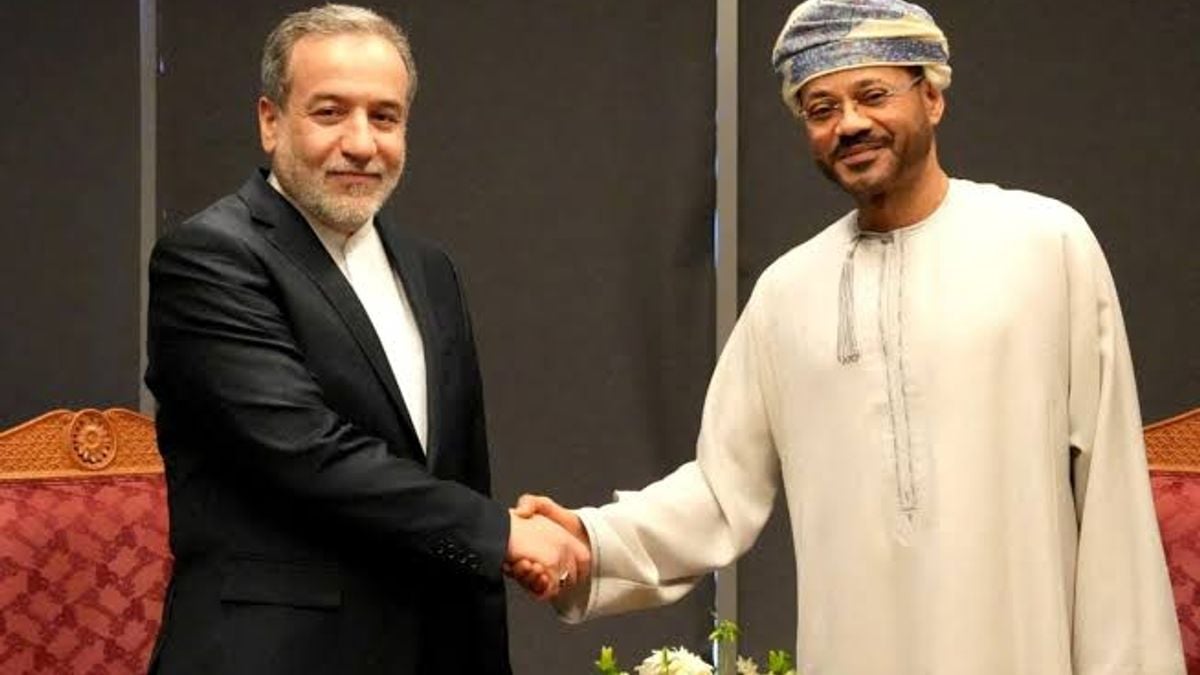
The diplomacy promoted by Iranian Foreign Minister Abbas Araghchi also loses its credibility in the face of the Revolutionary Guard's attacks on oil tankers and Gulf Arab states. Tehran exhibits a glaring contradiction in its external behavior, going beyond the division of roles as some believe, to a conflict in policies and decision-making between power centers, and the desire of the more hardline wing to establish a fait accompli. This is especially since a segment of politicians and security officials now believe that the focus should be on tightening the grip on Hormuz as a more durable and effective asset than the nuclear program, which has suffered extensive damage.
There is an influential current and part of the core of the Iranian regime that believes they must reap the political and military fruits of the war, thinking that Iran is the victor and that they are establishing a 'new deterrence equation.' They are oblivious to the high risks entailed by these policies that seek to impose a fait accompli by force on Arab neighbors, at a time when Iran will become more isolated if it continues the same approach. It will face resistance to this project from its neighbors, who have their own tools to pressure and prevent Hormuz from becoming a permanent hostage controlled by Iran.
As reported by Al-Nahar
Advertisement
Advertisement
Disclaimer: All published articles represent the views of their authors only.
Original source: Al Arabiya




Comments (0)
Be the first to comment.