New Hostile Drone Attack on Kuwait's Al-Abdali Border Crossing
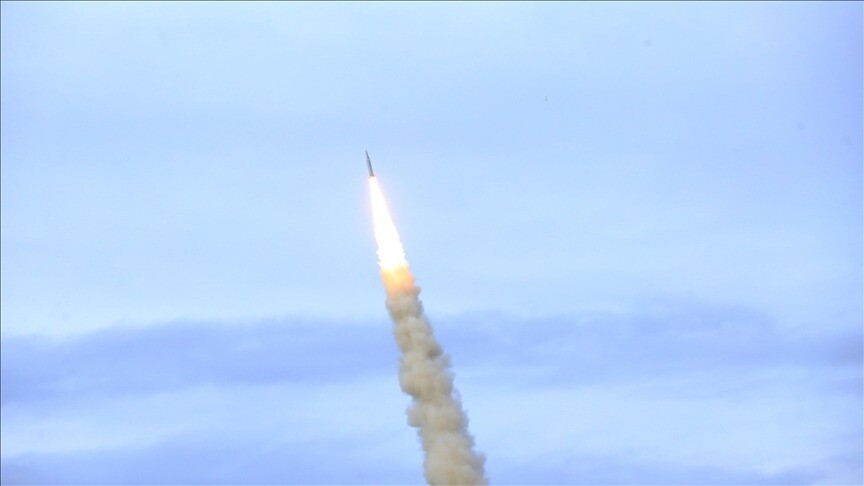
The Kuwaiti army announced that the Al-Abdali border crossing with Iraq was subjected to repeated targeting by hostile drones on Thursday evening, causing material damage without any casualties, following a similar attack earlier that afternoon.
ISTANBUL/ANADOLU AGENCY
The Kuwaiti army revealed that the Al-Abdali border crossing with Iraq was subjected to 'repeated targeting by hostile drones' on Thursday evening, resulting in 'material damage' without any casualties.
The attacks come amid regional tensions in the area, with Kuwait accusing Iran and its proxies of carrying out the attacks.
Colonel Staff Pilot Saud Al-Attwan, spokesman for the Ministry of Defense, said in a military statement that the Al-Abdali border crossing 'was subjected to repeated targeting by hostile drones on Thursday evening.'
He added that the targeting 'resulted in material damage, without any casualties.'
He noted that 'the competent authorities immediately took the necessary measures and dealt with the situation in coordination with relevant bodies.'
The Al-Abdali land crossing is located in Al-Jahra Governorate in northern Kuwait, opposite the Iraqi Safwan crossing, and is the main border crossing linking the two countries for passenger and goods traffic.
The crossing had been attacked at noon on Thursday by 'hostile' drones, causing material damage without any casualties, according to an earlier statement from the Ministry of Defense, while the Kuwait Fire Force announced in a statement that it had controlled a fire that broke out at the crossing as a result of the same targeting.
The Kuwaiti Ministry of Foreign Affairs expressed its strong condemnation and denunciation of 'the continuation of the sinful aggression waged by Iran and its proxies against the country, which today targeted the Al-Abdali border crossing through a number of hostile drone attacks.'
It said that what happened constitutes 'a flagrant violation of the sovereignty of the State of Kuwait, a direct threat to its security and stability, and a grave violation of the rules of international law, the United Nations Charter, and Security Council Resolution 2817.'
The ministry stressed that 'persisting in these blatant and repeated attacks constitutes a dangerous escalation and a direct threat to regional security and stability, and reflects a systematic hostile approach that is unjustifiable and unacceptable.'
The ministry reaffirmed 'the State of Kuwait's full and inherent right to self-defense, in accordance with Article 51 of the United Nations Charter, and to take all necessary measures to preserve its sovereignty, protect its territory and resources, and maintain its security and stability.'
Earlier on Thursday, Iran's Islamic Revolutionary Guard Corps announced that it had carried out drone attacks targeting 'American military positions' in Kuwait.
A source told the Iraqi News Agency (INA) that Baghdad received a notification from the Kuwaiti side to temporarily close the Al-Abdali border crossing after it was shelled by a drone.
In recent days, Kuwait along with other Arab countries has been subjected to Iranian attacks, while Tehran said it targeted what it claimed were American military bases and positions in Kuwait, Qatar, Bahrain, and Oman, in response to U.S. strikes against it.
The escalation comes despite Washington and Tehran signing a memorandum of understanding last June that included a cessation of hostilities and the start of negotiations to reach a broader agreement.
However, U.S. President Donald Trump announced on July 8 the end of the ceasefire, after tankers in the Strait of Hormuz were attacked, which Washington blamed on Tehran, leading the United States to resume its strikes on Iran amid escalating Iranian responses in the region.
Washington demands that Tehran stop attacking ships and guarantee freedom of navigation through the Strait of Hormuz, while Iran insists on subjecting the passage of ships to a mechanism regulated by it through the waterway overlooking its coasts, exacerbating fears of disruption of oil and gas exports from the region.
These attacks constitute a dangerous escalation threatening Kuwait's security and the stability of the region. Kuwait has affirmed its right to self-defense under international law. Kuwait is expected to take additional measures to protect its borders, including strengthening air defenses. The incident also renews pressure on the international community to take a decisive stance against repeated sovereignty violations. Amid this, all eyes remain on international and regional reactions.
Original source: Anadolu Agency




Comments (0)
Be the first to comment.