Seven Arab States Emphasize Right to Self-Defense Against Iranian Attacks
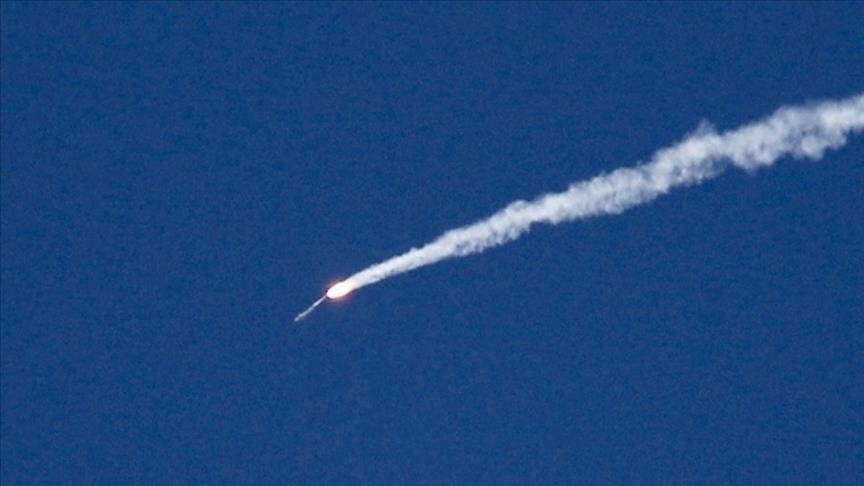
Seven Arab states have affirmed their legal right to defend themselves, individually or collectively, against attacks they attribute to Iran, and called on the United Nations to take urgent action to deter such acts.
Riyadh / Anadolu
Seven Arab states, in a joint statement, affirmed their legitimate right to self-defense individually or in coordination with each other, and to take necessary measures to protect their sovereignty and security, in light of what they describe as 'ongoing Iranian aggressions'.
These remarks come at a time of escalating tensions between Iran and Gulf states against the backdrop of repeated attacks on infrastructure.
This was stated in a joint statement published by the Gulf Cooperation Council on its website, in which the seven states condemned what they described as 'the sinful aggression carried out by Iran and its proxies on their territories'.
They said their position is based on resolutions of the GCC Ministerial Council and the Council of the Arab League, international law, and UN Security Council Resolution 2817 of 2026.
The statement noted that Iranian attacks have not stopped since February 28, 2026, even after the signing of the US-Iranian memorandum of understanding on June 17, 2026, and have targeted civilian infrastructure.
It indicated that the aggressions have particularly escalated against Bahrain, Kuwait, and Jordan, targeting energy facilities, water desalination plants, ports, airports, and other civilian assets.
The signatory states described the aggressions as a flagrant violation of the UN Charter and international law, and a threat to peace and security in the region.
They affirmed their inherent right to self-defense 'individually or collectively, in accordance with Article 51 of the UN Charter,' and to take all necessary legal measures to protect their sovereignty, lands, citizens, commercial vessels, and vital infrastructure.
** UN Action
The seven states called on the Security Council to adopt an immediate resolution obligating Iran to cease its attacks and recognizing the right of affected states to self-defense.
They also urged it to exercise its legal authority to consider additional measures if the 'systematic aggressions' do not stop.
They affirmed their commitment to freedom and safety of navigation in the Straits of Hormuz and Bab el-Mandeb, and to maintaining regional security and stability.
They expressed readiness to work with regional states and the International Maritime Organization to reach permanent arrangements consistent with international law and the UN Convention on the Law of the Sea, state sovereignty, and good neighborliness.
For about two weeks, Washington has been launching daily attacks on Iran, killing dozens and wounding hundreds, while Tehran responds with attacks targeting what it says are US military facilities and equipment in Arab countries, particularly Kuwait, Bahrain, and Jordan.
The escalation has disrupted navigation through the Strait of Hormuz and threatened air traffic and energy supplies, amid intermittent airspace closures and warnings of targeting US facilities and interests outside the Middle East.
** Iraq and Saudi Arabia
The seven states welcomed the Iraqi Prime Minister's decision to confine arms to the state by a deadline of September 30, 2026.
They announced their support for the Iraqi government's measures 'to prevent the continuation of hostile operations by factions, militias, and armed groups loyal to Iran against countries in the region.'
They also affirmed their full solidarity with Saudi Arabia and support for its measures to maintain its sovereignty, security, stability, and territorial integrity, following the Houthi group's threat to 'impose a navigation ban' on the kingdom.
They expressed appreciation for the diplomatic efforts of Saudi Arabia and Oman to reach a comprehensive and lasting political solution to the Yemeni crisis, and for Riyadh's developmental and humanitarian support to Yemen.
On Wednesday evening, the Houthi group announced targeting two Saudi oil tankers in the Red Sea with ballistic missiles and drones, stating that the attack caused a fire on them.
Despite the ceasefire in Yemen since April 2022, intermittent clashes continue in the war that began over 11 years ago between government forces and the Houthi group, which has controlled provinces and cities including Sanaa since September 21, 2014.
In recent days, tensions have escalated in Yemen, with Saudi Arabia supporting the Yemeni government through its leadership of the Coalition to Support Legitimacy, while Iran is accused of backing the Houthi group.
This joint statement comes at a time of increasing escalation in the region, with Iranian aggressions focusing on countries such as Bahrain, Kuwait, and Jordan. The statement also noted the continuation of attacks despite the signing of a memorandum of understanding between Washington and Tehran, indicating the failure of diplomatic efforts to stop them. The statement called on the Security Council to assume its responsibilities, warning that the international community's inaction could lead to further escalation. The seven states reaffirm their commitment to freedom of navigation in vital waterways, representing a strategic dimension of the conflict.
Original source: Anadolu Agency


Comments (0)
Be the first to comment.