Strait of Hormuz: The Knot of the US-Iran Conflict

Rami Al-Khalifa Al-Ali
Strait of Hormuz: The Knot of the US-Iran Conflict
July 15, 2026 - 00:08 | Last update July 15, 2026 - 00:08
Follow Okaz channel on WhatsApp
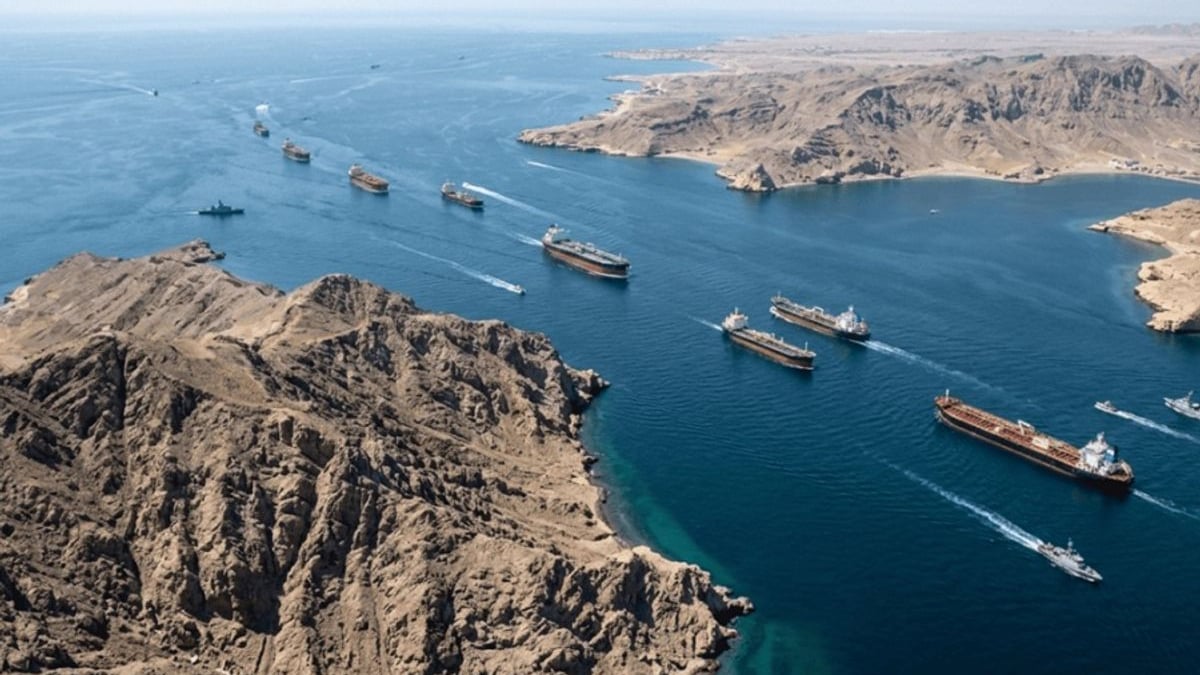
The US-Iran conflict is no longer just about the nuclear program, nor solely about sanctions or regional influence, but has moved to the heart of global geopolitical and economic geography, where the Strait of Hormuz today stands as the most complex knot in a confrontation neither side wants to turn into a full-scale war, yet neither can afford to back down without paying a heavy strategic price. Iran no longer views the strait as merely a threat card to be used when necessary, but seeks to turn it into a permanent source of power and influence, and to impose itself as the guardian of the passage through which a significant portion of global energy trade transits, giving it the ability to pressure the United States, regional countries, and international markets whenever sanctions tighten or its political and military options narrow. In contrast, Washington sees accepting this Iranian ambition not as a limited concession that can be accommodated within a temporary settlement, but as a defeat that strikes at the core of US naval hegemony and the principle of freedom of navigation on which the global trade network has been built for decades. Hence, the Strait of Hormuz has become the true stumbling block to any agreement; because the dispute is no longer technical over ship transit routes or interpretation of memorandum clauses, but has become a struggle over unspoken sovereignty: who decides, who protects, and who imposes passage conditions? The United States appears willing to launch strong, calculated strikes to weaken Iran's ability to target ships, but it does not want to go into an open ground war, especially before the upcoming US political milestones, due to the potential human losses, sharp rise in oil prices, and economic disruption that such a war could bring, reflecting on the president and the Republican Party. Iran, for its part, realizes it cannot achieve a direct military victory over the United States, but it is betting on time and turning the conflict into a prolonged attrition that raises insurance, shipping, and energy costs, re-pressuring the global economy, and testing Washington's patience in the face of an open crisis for which it has no quick solution. Therefore, the chances of reaching an agreement within the timeframe set for negotiations seem slim; because Tehran does not want to give up its new gains in the strait, and Washington cannot recognize its right to manage it or impose fees on passing ships. Comprehensive military resolution also seems unlikely in the near term; because its cost exceeds both sides' capacity to bear; and because Iran is not a theater that can be subdued with limited strikes, but has extended networks from the Houthis in Yemen to Hezbollah and the Popular Mobilization Forces, allowing it to open multiple fronts. Between an impossible agreement and an unwanted full-scale war, a third scenario emerges as the most realistic: continued skirmishes, reciprocal strikes, and naval threats, alongside negotiations that do not reach a final settlement, and mediations that prevent an explosion without ending its causes. This situation could last months or years; because the US-Iran dispute is deeper than a passing crisis—it is a struggle over the shape of the future Middle East, the future of Iranian presence and its military networks, and the ability of the United States and Israel to reduce this influence after coexistence with it, according to the current view in Washington, has become less acceptable than ever.
Original source: Okaz

Comments (0)
Be the first to comment.