US bombs Iran for ninth consecutive night as Hormuz tensions escalate

Iranian media report blasts in cities in the far north and far south, including Tabriz and Chabahar.

This report was compiled by Al Jazeera staff and Reuters.
The airstrikes mark a significant escalation in the ongoing conflict between the United States and Iran over control of the strategic Strait of Hormuz, a vital chokepoint for global oil shipments.
Published On 20 Jul 202620 Jul 2026
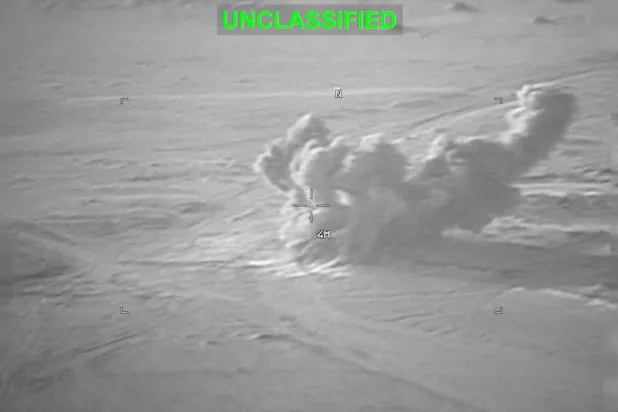
For the ninth straight night, the United States carried out airstrikes on Iran, as Iranian media reported blasts in several cities such as Sirik, Jask, Tabriz, and Chabahar.
The attacks on Monday came as the US military announced the death of a third soldier in recent days and as a month-old ceasefire agreement between Tehran and Washington unravelled amid a struggle for control of the Strait of Hormuz.
Recommended Stories
list of 4 items
- list 1 of 4US soldier killed in Iraq during ‘controlled detonation’ of Iranian drone
- list 2 of 4Iranians suffer from power blackouts during war and heatwave
- list 3 of 4US launches new Iran strikes after two soldiers killed: What’s the latest?
- list 4 of 4Iran attacks Bahrain, Kuwait and Jordan after US hits Iranian nuclear site
end of list
In a statement, the US military said the latest strikes were aimed at “degrading Iranian military capabilities used to attack commercial vessels and mariners transiting the Strait of Hormuz”.
According to Iran's IRIB state broadcaster, multiple explosions were heard in the port cities of Mahshahr and Imam Khomeini in southwestern Khuzestan province. Additional blasts were reported near Sirik and Jask in Hormozgan province on the southern coast, and near Khvormuj in Bushehr province.
Three explosions were also heard near the city of Tabriz in northwestern Iran, IRIB added, while air defences were activated in the southeastern cities of Konarak and Chabahar in the Sistan and Baluchestan province, according to the semi-official Fars news agency.
Tehran promises retaliation
Al Jazeera’s Tohid Asadi, reporting from the Iranian capital, Tehran, said the latest US strikes had again targeted Iran’s southern coast. He added that the explosions in Tabriz, if confirmed, mark the first time the northwestern city has come under attack since the recent escalation began.
“We are having yet another night of exchange of fire,” he said. “The Iranian side is also talking about retaliatory strikes, with Iranian media reporting a new wave of missiles from the province of Lorestan targeting US military assets across the region.”
Earlier, Kuwait reported confronting “hostile drone threats”, while air raid sirens sounded in Bahrain for a second time on Sunday. Sirens also sounded in Jordan, where the military said it shot down three Iranian missiles. Kuwait’s government said a desalination plant had been attacked for the second day running on Sunday, causing a fire, in what it said was a direct strike on vital civilian infrastructure.
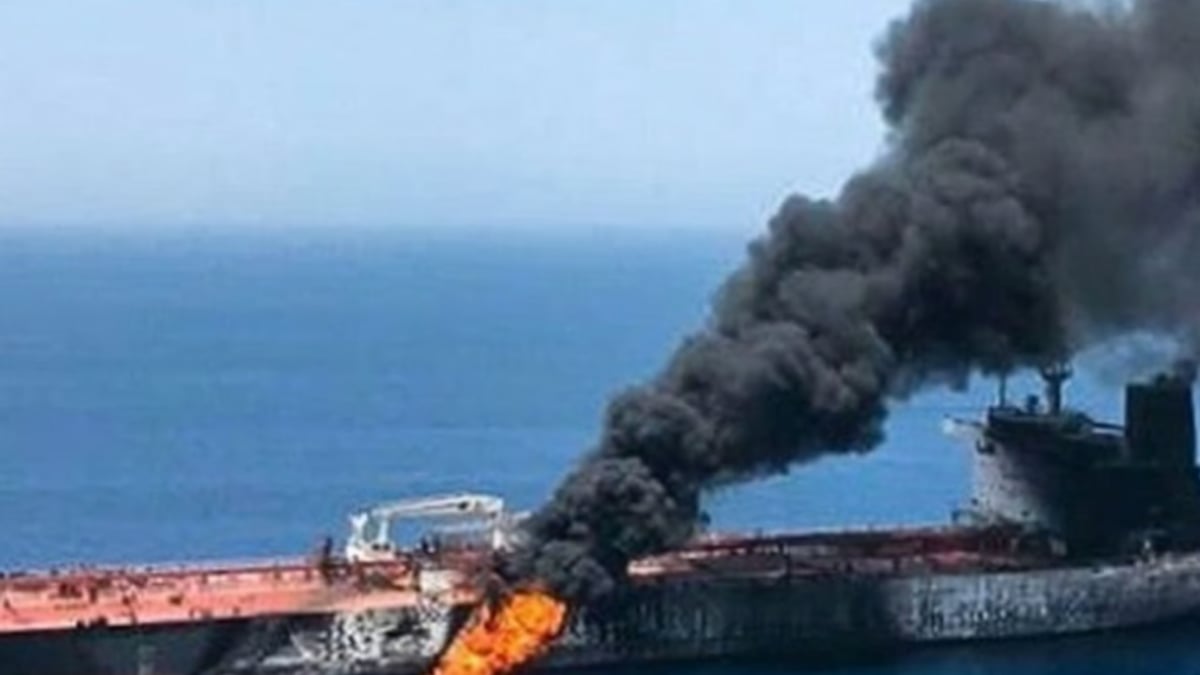
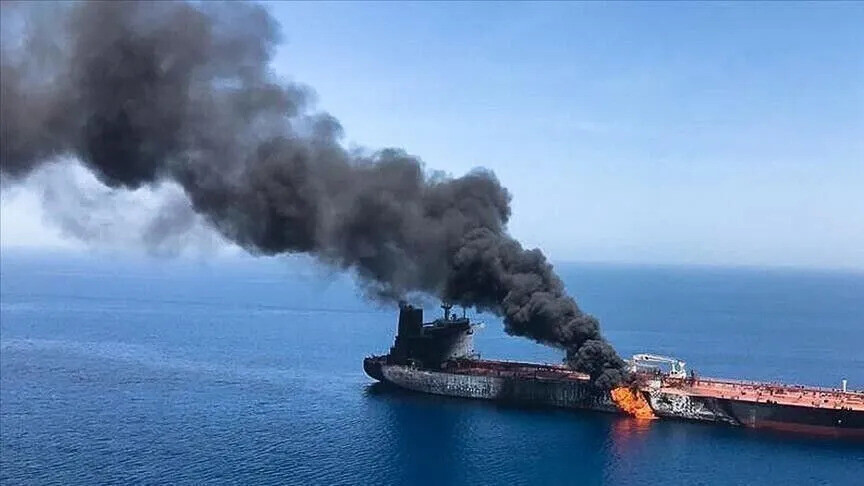
Both Iran and the US have also taken aim at shipping traffic, with Washington saying it is enforcing a naval blockade on Iranian ports, and Tehran saying it targets vessels violating its rules on navigating the Strait of Hormuz.
Iran’s Islamic Revolutionary Guard Corps (IRGC) said on Sunday that four vessels had attempted to transit the strait via an “unsafe route” with US backing after ignoring IRGC warnings. It said two had abandoned the attempt, while the other two were involved in an “accident”. It did not elaborate.
US Central Command (CENTCOM) said it has redirected six commercial vessels and disabled another ship to ensure “full compliance” with its blockade.
Earlier, CENTCOM also said that an American soldier was killed in northern Iraq on Saturday during a “controlled detonation of unexploded ordnance” from a downed Iranian drone. It added that “unidentified remains” had been found at the site of a deadly Iranian attack in Jordan on Friday and that “an examination process to verify the remains is ongoing”.
Two US soldiers died in Friday’s attack, while a third was reported missing in action.
The latest deaths bring the number of US service members killed since the war began to 17, while more than 420 have been wounded.
The conflict, which began when the US and Israel attacked Iran on February 28, has killed thousands of people, mostly in Iran and Lebanon, and led to major disruptions to energy supplies and fears over global inflation.
The breakdown of the month-old ceasefire and the continued military action raise fears of a wider regional war. With Kuwait and Bahrain also being drawn into the conflict, the stability of the entire Persian Gulf region is at stake. The targeting of civilian infrastructure, such as Kuwait's desalination plant, underscores the increasingly dangerous nature of the hostilities.
Original source: Al Jazeera

Comments (0)
Be the first to comment.