US Intelligence Rules Out Impact of Strikes on Tehran's Position
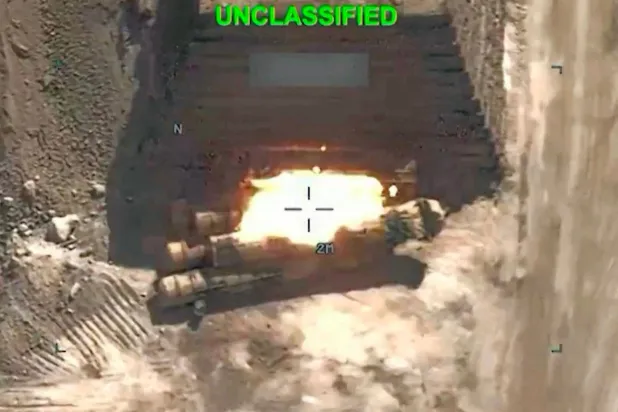
A US intelligence assessment ruled out that the negotiating position of the Iranian regime would be significantly affected by the new waves of strikes launched by the United States.
Current and former US officials ruled out that the negotiating position of the Iranian regime would be significantly affected by the new waves of strikes launched by the United States on military and economic sites in various parts of Iran.
According to an assessment whose results were published by The Washington Post, analysts in US spy agencies concluded that Tehran and Washington are 'currently stuck in a state of limbo between peace and war,' a situation described by officials as 'worrying given the escalating tensions in the mutual hostilities between the two countries.'
It added that the administration of President Donald Trump has been briefed on these findings, which 'highlight the dilemma' facing Trump in the war he started with Israeli Prime Minister Benjamin Netanyahu in late February.
A woman walks past a poster of former Iranian Supreme Leader Ali Khamenei and his son, current Supreme Leader Mojtaba Khamenei, in Tehran (AFP)
The assessment states that the escalatory path Trump is currently pursuing 'has led to a dead end,' adding that 'with growing popular discontent with the war at home, the continued escalation by the United States, such as the possibility of sending ground troops, poses political risks to the president without any guarantees of achieving a military victory.'
With the potential for the war to expand, officials in both the United States and Iran have expressed openness to new negotiations, although no progress has been reported.
US Secretary of State Marco Rubio confirmed that the United States remains open to a diplomatic solution with Iran, as 'they continue to send signals indicating their desire for dialogue and negotiation, but we respond to their behavior of launching missiles and drones at ships.'
The latest intelligence report was prepared primarily by the Central Intelligence Agency (CIA), whose analysts affirm 'the Iranian regime's ability to survive despite losing many of its prominent leaders and a large part of its military equipment due to US and Israeli attacks.'
The agency had concluded last May that 'Iran is capable of withstanding the US naval blockade for at least three to four months before facing more severe economic difficulties.'
Current and former intelligence officials say that the assessments regarding Iran 'are not definitive predictions of the future, but rather a picture of the current situation and possible future trends, based on all available classified intelligence information, including human intelligence and technical collection, as well as open sources.'
Vehicles on a busy road in Enghelab (Revolution) Square in Tehran (AFP)
Former Deputy Director of National Intelligence for the Near East, Jonathan Panikoff, said that the Trump administration 'seems to believe that if it continues to intensify military strikes on Iran, Tehran will eventually become more flexible,' adding that 'this assessment is almost certainly wrong.'
Panikoff believes that the explanation for Tehran's ability to withstand pressure lies in the fact that the regime's survival is its top priority, noting that the Iranian leadership has shown willingness to endure strikes and losses, despite the damage inflicted on the population and economy.
He added: 'I don't think the United States has many good options,' expressing doubt that Trump would order a ground invasion, but rather 'we will see a serious escalation,' followed by periods of calm and then renewed fighting, in the absence of clear options that allow either side to resolve the conflict.
At the same time, US officials note increasing tensions within the Tehran government between officials whom Washington considers more inclined to compromise and hardliners in the Revolutionary Guard and other institutions whose influence has grown.
This assessment was also reflected in Rubio's recent statements, where he referred to the 'tension' between those seeking a diplomatic solution and the hardliners who reject it.
Read also
Original source: Asharq Al-Awsat


Comments (0)
Be the first to comment.