Walid Faris | Is Yemen Approaching a New Scenario?

Summary: In Yemen, the Houthis represent direct Iranian influence, receiving their directives from Tehran, including decisions regarding war and peace. Over the past years, the ruling elite in Sanaa has engaged in multiple confrontations with the Yemeni state, components of Yemeni society, Saudi Arabia, Israel, and to a lesser extent with the US-led coalition. This analysis sees that all these confrontations were managed under the guidance of Tehran and the Iranian Revolutionary Guard Corps (IRGC), and that the Houthis have turned into an advanced base for the Khomeinist project on the Red Sea.
Since the Houthis threatened to target commercial navigation in the Red Sea, and later moved to disrupt ship movement in the Bab el-Mandeb Strait, the attention of observers and analysts around the world turned to what could become a second front in the Gulf war, hundreds of miles away from the main theater of confrontation. The alliance between the Islamic Republic in Iran and the Houthi Ansar Allah group in Yemen is so close that it can be described as an organic alliance, very similar to the relationship linking Hezbollah in Lebanon and the Popular Mobilization Forces in Iraq to the Iranian Revolutionary Guard Corps and the supreme leadership of the regime. Over the past years, the degree of integration between these forces has become clear, as these militias see themselves as part of the Islamic Republic's project and operate under the umbrella of Khomeinist leadership.
In Yemen, the Houthis represent direct Iranian influence, receiving their directives from Tehran, including decisions regarding war and peace. Over the past years, the ruling elite in Sanaa has engaged in multiple confrontations with the Yemeni state, components of Yemeni society, Saudi Arabia, Israel, and to a lesser extent with the US-led coalition. This analysis sees that all these confrontations were managed under the guidance of Tehran and the IRGC, and that the Houthis have turned into an advanced base for the Khomeinist project on the Red Sea.
The West has often witnessed debate over the extent of the Houthi movement's independence from Iran. One current, linked to the approach of the first nuclear deal under President Barack Obama, saw the Houthis as a Yemeni nationalist movement opposing Saudi Arabia and its American allies, and saw the possibility of containing them and integrating them into a political settlement leading to moderation. In contrast, another current viewed the Houthis as a Shiite Islamic movement, organically linked to the Khomeinist project in Iran, and moving regionally in a manner similar to the communist parties that coordinated with Moscow during the Cold War.
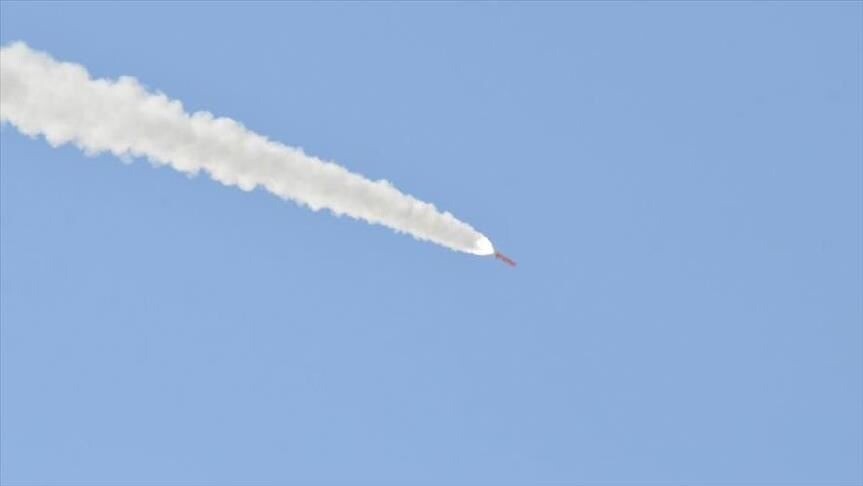
Since the attacks of October 7, 2023, the Khomeinist militias in Sanaa have actively participated in the campaign of mutual shelling between Iran and Israel, especially during the war that lasted 12 days, when they targeted Israeli cities with missiles launched from Yemen across the Red Sea, often passing over Saudi airspace.
But notably, during the war of 2026, which began in February after the bloody events of January, the Houthis refrained from targeting Israel, US forces, or even Saudi sites for several months, raising several questions: Why did the Houthis not participate in the Iranian bombing campaign against Israel? Why did they not close the Bab el-Mandeb Strait at a time when the IRGC closed the Strait of Hormuz and targeted American interests?
Several interpretations were put forward, but the geopolitical assessment indicates that Tehran wanted to keep the Houthis as a reserve force for a new front when needed, which explains their patience throughout that period. The Islamic Republic partially activated Hezbollah on the northern front of Israel, but kept the Houthis out of the direct battle until the appropriate conditions were ripe. At that stage, Tehran focused on its demands related to the survival of the regime, financial aspects, and ensuring the survival of Hezbollah in Lebanon, more than focusing on the Houthi role. Here another question arises: Why did Tehran not include the Houthi file in its talks with American envoys?
There are several explanations for this. First, the regime leadership sought first to guarantee its direct interests, foremost the release of frozen Iranian funds, especially the $24 billion that the US administration was said to have promised, as well as seeking to restore revenues from oil and gas exports after lifting restrictions, in addition to securing contracts within investments estimated at about $300 billion, which were supposed to be negotiated between the United States and the Islamic Republic.
According to this reading, the Iranian regime was focusing on obtaining financial packages and economic agreements stipulated in the memorandum of understanding, but the administration of President Donald Trump demanded that Tehran implement a number of commitments in the memorandum, foremost the reopening of the Strait of Hormuz, which Iran rejected. As a result, Washington froze fund transfers until Tehran implemented its commitments, prompting the latter to target ships, which was met with a firm response from President Trump, who threatened to cancel the agreement and ceasefire. At this stage, the Gulf region entered a new phase of tension, whose effects may extend to the entire region.
Read more
Houthis on a 'Gradual Response' Mission to Support Their Iranian Ally
New American Deadline, Field in Flames, and Eyes on the 'Popular Mobilization' and the Houthis
Information on Iraqi Sanctions on Networks Linked to ISIS and Hezbollah
With the deterioration of relations between the Iranian leadership and Washington, statements began to emerge from Iranian officials talking about the possibility of the Houthis closing the Bab el-Mandeb Strait as a pressure card on the United States and the West. The most escalatory scenario is the simultaneous closure of the Strait of Hormuz and Bab el-Mandeb, putting significant pressure on the global economy. It seems that the strategy of the IRGC is to push President Trump to ease pressures in the Gulf in exchange for calming the situation in the Red Sea, i.e., expanding the war front to accelerate a ceasefire and return to the first agreement with a focus on financial gains. From this perspective, escalation in Yemen may be a means to reopen the door for negotiations from a stronger position for the Iranian regime. However, this approach has caused dissatisfaction in the US administration, given its potential wide regional repercussions. Tehran, according to this analysis, is taking risks but making precise calculations that take into account the magnitude of potential dangers. The question remains: How could the reactivation of the Houthis on the ground be reflected? What are its strategic implications?
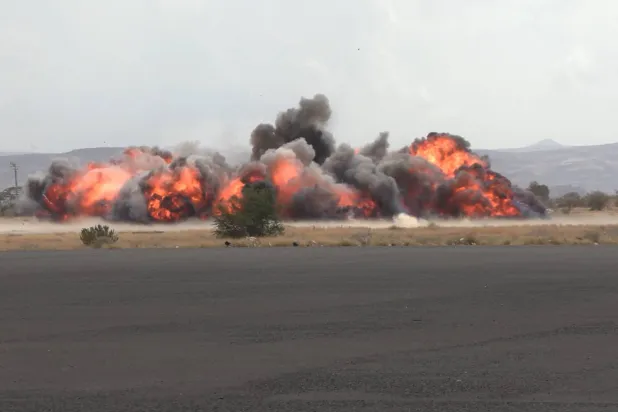
In the first phase, the Houthis may begin targeting ships crossing the Bab el-Mandeb Strait, leading the United States to strike the group's fast boats and missile launch platforms. In response, the Houthis may target Saudi and possibly Emirati facilities in the Arabian Peninsula. Then, Saudi forces might get a green light to expand their military operations against Houthi positions, potentially leading to a near-total paralysis of navigation in the Red Sea, and perhaps pushing pro-Iranian forces to attempt to advance again towards Aden to control a larger port on the Arabian Sea.
Original source: Independent Arabia


Comments (0)
Be the first to comment.