Washington considers resuming major combat operations in Iran, Arab states describe Tehran's attacks as 'blatant aggression'
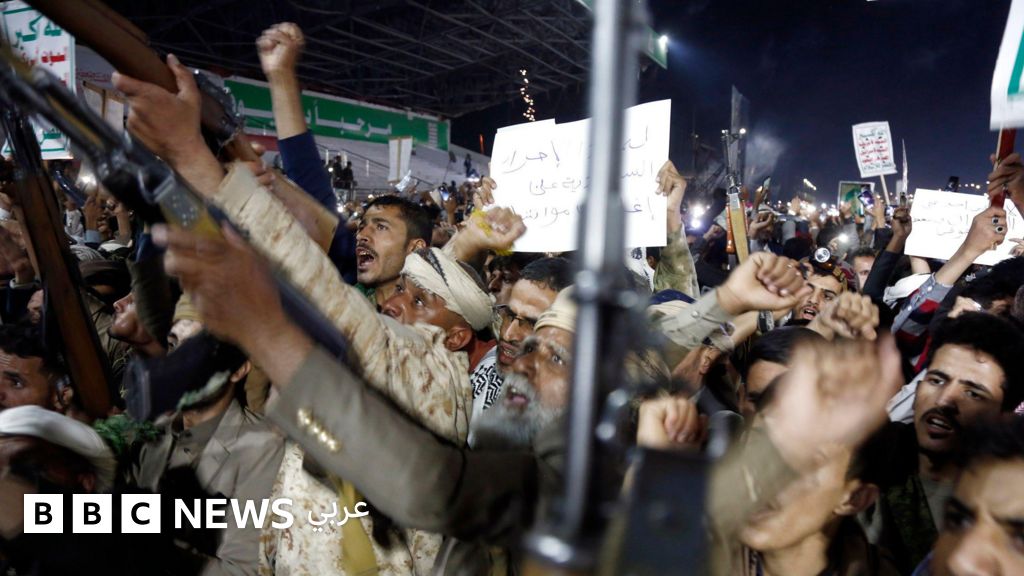
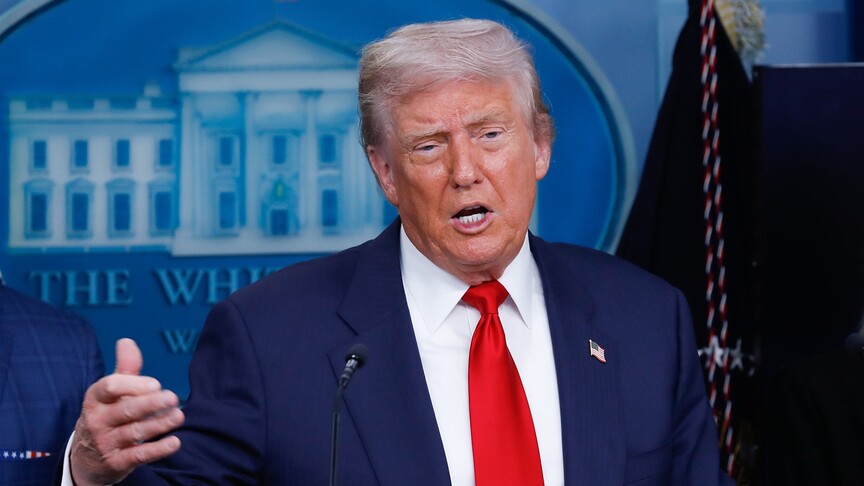
Trump tells Axios that Iranians 'haven't suffered enough yet', and a strongly-worded statement from Gulf Cooperation Council states and the Jordanian Kingdom condemns Iran's ongoing attacks on the region.
Houthis announce targeting two Saudi oil tankers, Iran says Strait of Hormuz 'completely closed'
Published 6 minutes ago
Maritime energy corridors are of paramount importance for the stability of global markets and the flow of oil supplies through major trade routes.
Reading time: 5 minutes
The Houthis in Yemen revealed on Thursday that they attacked two Saudi oil tankers using missiles and drones in the Red Sea, as part of a naval blockade they declared on Saudi Arabia, while the Iranian Revolutionary Guard announced the complete closure of the Strait of Hormuz and made the passage of tankers conditional on coordination with Tehran.
The Houthis identified the two tankers as 'Insilia' and 'Layla', and a maritime security source said that 'Insilia' sent a distress call, reporting that it was hit by a missile near the Saudi port of Jazan late on Wednesday.
The British maritime risk management group 'Vanguard' said that the tanker, which flies the Saudi flag, was hit by an unknown projectile on its starboard side about 70 nautical miles southwest of the Saudi city of Al-Shaqeeq, and the targeting of the tanker 'Layla' has not been independently confirmed.
This comes after the Houthis announced on Monday the imposition of a naval blockade against Saudi Arabia, as navigation traffic monitored five tankers changing course within the Red Sea to avoid the Bab el-Mandeb Strait on Wednesday, while three Saudi oil tankers heading towards China and India turned back on Tuesday.
Revolutionary Guard: One tanker caught fire, two turned back
In the Strait of Hormuz, the Iranian Revolutionary Guard said that one of three oil tankers caught fire after an explosion while attempting to pass through a path it described as mined in the south of the strait, while the other two tankers turned back.
The Guard's statement did not mention the names of the ships or the timing of the incident.
The Revolutionary Guard affirmed that the strait is under its control and 'completely closed' as long as US operations continue in the region, warning that no tanker will be allowed to enter or exit the strait without coordinating with Iran.
Millions of barrels of Saudi oil are heading daily to the port of Yanbu on the Red Sea to avoid the Strait of Hormuz, and if shipments cannot pass through Bab el-Mandeb, the only option left will be to head north via the Suez Canal, which will lengthen the journey and increase its cost.
Strait of Hormuz: Are alternative routes sufficient for exporting Gulf oil and gas?
Skip most read and continue reading
What happened to Egyptian boy 'Makari Younan', and was he excluded because of his religion?
Fashion talent scout linked to Jeffrey Epstein found dead at his home in France
Simultaneous photo and messages: Have Saudi Arabia and the UAE started to turn the page on tensions?
How did Kailey Hottel, star of 'Godzilla' and Hollywood's most famous deaf child, pass away?
Kuwait announces confronting drones
Concurrently, the Kuwaiti army announced early Thursday that its air defenses were confronting attacks by drones it described as 'hostile', amid continued Iranian strikes on the country.
The General Staff of the Kuwaiti Army said that 'if explosions are heard, they are the result of air defense systems intercepting hostile attacks'.
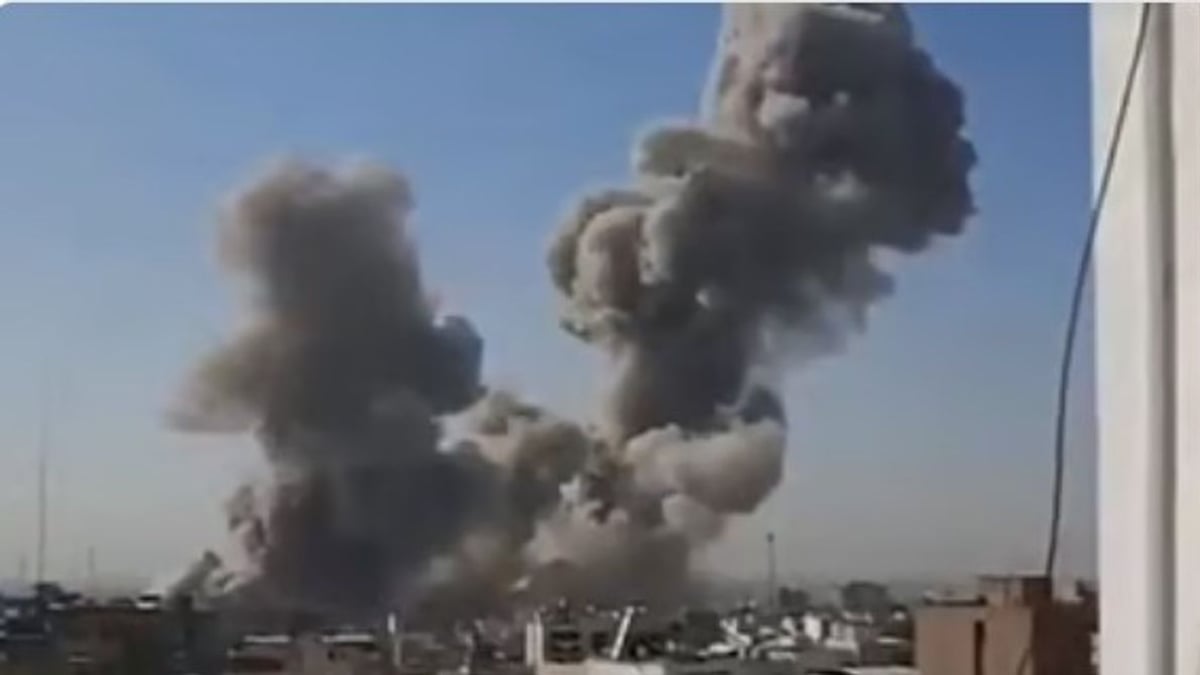
Iran had targeted this week vital water desalination and power generation facilities in Kuwait, as well as US military sites in Kuwait, Bahrain, and Jordan.
Twelfth night of US strikes
Skip podcast and continue reading
Worth noting
An in-depth explanation of the most prominent events and topics, to help you understand the most important changes around you and their impact on your life
Episodes
Podcast end
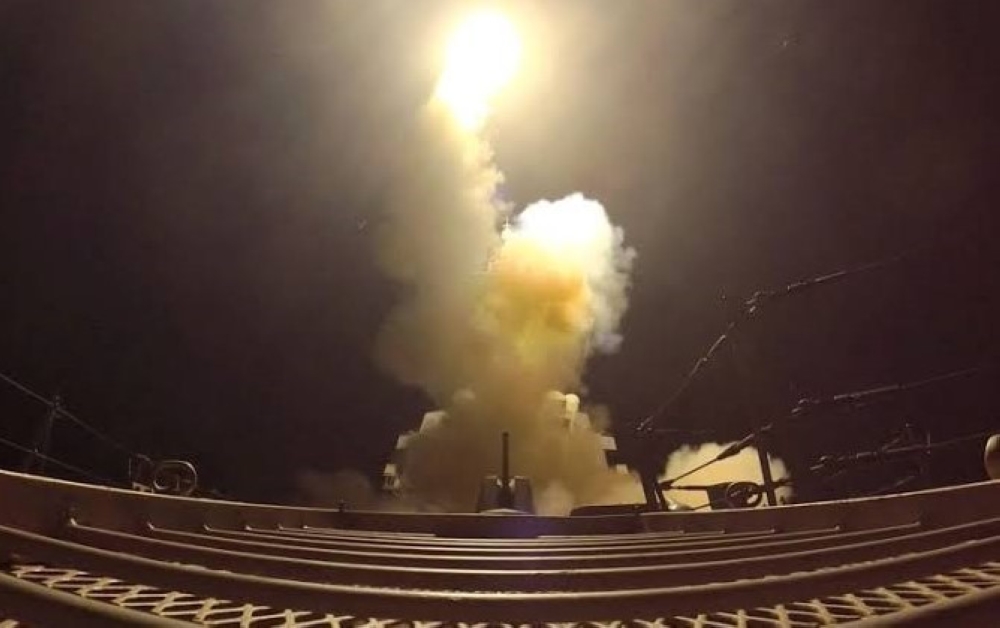
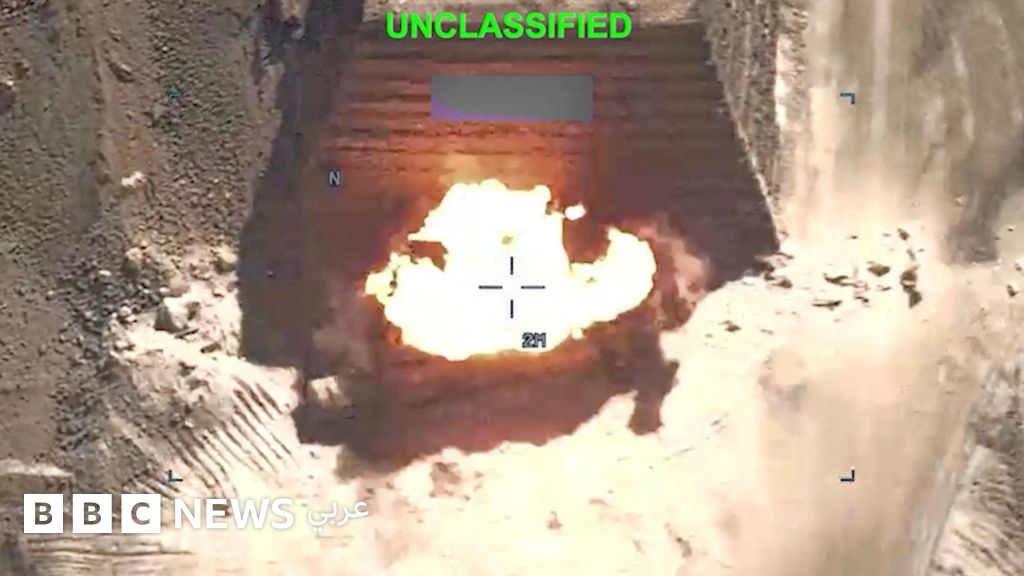
For its part, the US military announced a new round of strikes on Iran under the direction of President Donald Trump, on the twelfth consecutive night of US attacks.
US Central Command said the mission would continue with the aim of 'continuing to weaken Iran's ability to threaten civilian sailors and commercial vessels transiting regional waters'.
The US strikes, during the twelve days following the collapse of the ceasefire concluded in June, extended from southern Iran to its western and central regions.
Trump had vowed on Wednesday to destroy a bridge or a power station in Iran every time Tehran targets a ship in the Strait of Hormuz.
The Iranian Joint Military Command responded by warning that implementing Trump's threat would be met by targeting oil, gas, electricity facilities and economic infrastructure in the region, and preventing the export of 'a single drop of oil', according to Iranian official media.
Iranian Foreign Minister Abbas Araghchi said on platform X: 'Our defense doctrine is clear: an eye for an eye, and any aggression against Iran, including our infrastructure, will necessitate a strong and decisive response'.
Iran's Mount Axe facility: What do we know about the site the US President is threatening?
Will oil continue to rise after the current jump?
Rising casualty toll
An official at the Iranian Health Ministry said that 53 civilians have been killed and 592 others injured since late June.
Incoming data also reported that the war has resulted in the deaths of 18 US military personnel and injuries to more than 450 since the start of the war launched by the United States and Israel on Iran on February 28.
On Wednesday, Trump attended a ceremony at Dover Air Force Base in Delaware to receive the remains of four US military personnel killed in recent days in Iranian attacks on military bases, three of them in Jordan and one in Iraq.
Trump said before heading to the ceremony: 'For me, this is one of the hardest things to do as president, but it must be done,' and later described the war, during a speech in Georgia, as a 'skirmish'.
House of Representatives approves additional funding
In Washington, the US House of Representatives on Wednesday approved a budget framework worth $95 billion, by a vote of 216 to 214, and it will be sent to the Senate for consideration.
The framework includes allocating $73 billion to the armed forces and intelligence agencies, especially to fund operations related to the war on Iran, along with $12 billion to help farmers affected by the trade war waged by the Trump administration.
Hegseth: Cost of war on Iran reached $37.5 billion, and we do not rule out Tehran having hidden capabilities
It also allocates ten billion dollars for election-related programs, as part of the administration's efforts to impose new restrictions on voting at the national level.
The House also passed the annual defense policy bill, which authorizes a record budget of $1.15 trillion for the Pentagon.
Discover more
Skip short clips and continue
Short clips
End of short clips
What is driving Iran to war again? - Financial Times, July 17, 2026
'There is no grand plan on Iran' - Financial Times article, July 10, 2026
Iranian Supreme Leader absent from father's funeral attended by senior officials, July 5, 2026
The recent developments in vital maritime corridors are increasing pressure on global trade and energy supplies. The shipping sector relies mainly on the safety of strategic routes to avoid rising shipping and insurance costs. International markets are closely monitoring the impacts of these events on tanker movements and oil flows. Alternative shipping options remain limited and expensive compared to airports and usual routes.
Original source: BBC Arabic


Comments (0)
Be the first to comment.