Weapon Smuggling to Yemen: Hidden Routes Fueling the Country's Conflict
); googletag.cmd.push(function() { onDvtagReady(function () { googletag.display('div-gpt-ad-3341368-3'); }); }); }
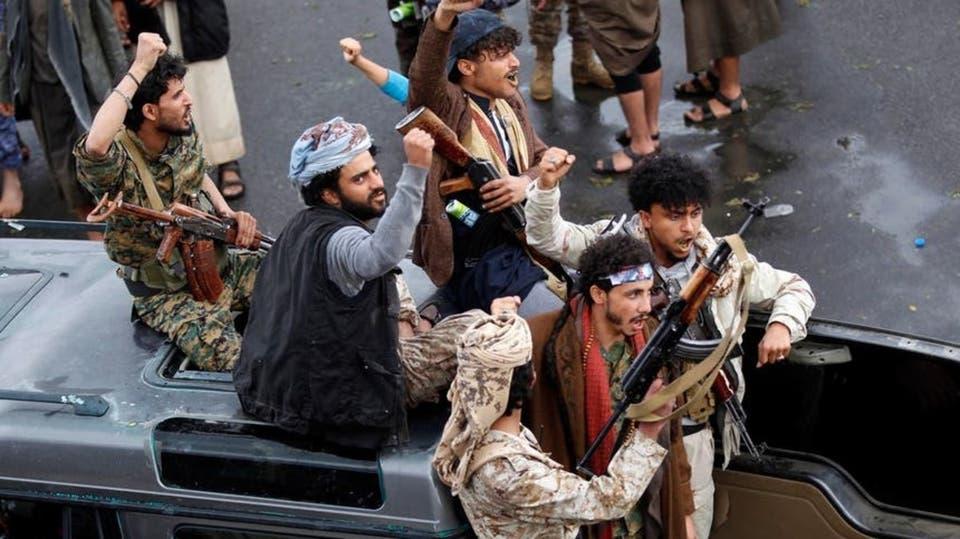
Weapon smuggling operations from various geographical locations toward Yemen have escalated despite the UN Security Council-imposed ban since April 2015, while the Houthi group insists it 'does not need to buy weapons' and has 'begun manufacturing some and developing them domestically.'
The Arab coalition supporting legitimacy in Yemen announced at the end of June two qualitative operations, during which large quantities of Iranian weapons were seized while en route to Houthi militias in Yemen—something Tehran consistently denies, asserting it 'has not provided military support to the Houthi group.'
In contrast to the Iranian denial, a report by the UN panel of international experts stated that the Houthi group 'has begun using a new type of Delta drone' in addition to 'a new model of land-attack cruise missiles'—weapons that were not part of the Yemeni military's arsenal before Houthi fighters entered Sanaa, which suggests Iranian involvement in supplying the Houthi group with various types of weapons, as well as the presence of dozens of Iranian specialists and members of Lebanese Hezbollah in areas under the group's control to oversee the reassembly and use of missiles.
The panel of international experts believes that two trends emerging in 2019 may constitute violations of the ban: the first is 'the transfer of commercially available spare parts from industrial countries,' such as drone engines, delivered to the Houthis through a network of intermediaries, while the second trend is 'the continued delivery of machine guns, bombs, anti-tank missiles, and more advanced cruise missile systems to the Houthis.'
The experts explained in their report that these weapons have technical characteristics similar to those manufactured in Iran, and that, in their estimation, both non-military and military parts were likely sent via a smuggling route passing through Oman and the southern coast of Yemen, through areas under the control of the Yemeni government, to Sanaa and Houthi-controlled areas.
Read more
This section contains related articles placed in the (Related Nodes field)
Despite some certainty about the presence of Iranian specialists in Yemen working with the Houthis, that is not necessary; according to the US-based Long War Journal, Iran has 'already exported weapons technology to the Houthis' to manufacture ballistic missiles, which is evident in the missiles the Houthis continuously fire toward the Yemeni-Saudi border, such as the Burkan missile, which matches the description of Iran's Shahab missile.
Photos published by the Arab coalition showed large quantities of diverse weapons, including night and day vision scopes, thermal imagers, devices for guiding drones, electrical parts for remote detonation, dozens of sniper rifles, and medium weapons and equipment.
In a television interview with the BBC, monitored by Independent Arabia, Houthi leader Mohammed Ali al-Houthi denied that his group obtained weapons through smuggling. He said, 'Any observer can refer to the parades of Yemeni forces in the periods before 2014 (before his group entered Sanaa and seized power by force) and will find that these forces had a military arsenal.'
He explained, 'Some weapons the group obtained as spoils of war from battles in which its forces achieved victories over government forces and loyalist factions, the most recent being Operation Victory from God, in which the group captured many advanced weapons, in addition to the battles of Nehm.'
He denied any reassembly of Iranian weapons or drones in Yemen, saying, 'If some people believe that everything the Yemeni people have is Iranian, then they should go to Iran and fight them.'
Seized Shipments
During the years of war, US Navy ships and vessels of the coalition supporting legitimacy frequently intercepted Iranian boats and other vessels of unknown origin carrying weapons and explosives headed to Yemen, believed to be destined for the Houthi group.
The most recent of these seized shipments was announced by the coalition in two operations. The first was on April 17, 2020, when coalition naval forces thwarted an attempt to smuggle a shipment of Iranian weapons on a dhow off the coast of Al-Mahra province in eastern Yemen, which was en route to the Houthi group.
The second operation was on June 24, 2020, in Hadramawt, where coalition naval forces intercepted an Iranian weapons shipment off the Yemeni coast destined for Houthi militias.
Meanwhile, US Central Command said that on February 9, 2020, the US Navy stopped a sailing vessel from the USS Normandy (CG 60) and discovered a large weapons cache while conducting maritime security operations in its area of operations.
The US Navy seized on board about 150 Dehlaviyeh anti-tank guided missiles (ATGMs), Iranian copies of Russian Kornet missiles, along with other Iranian-made weapons components, including three surface-to-air missiles, thermal imaging weapon scopes, Iranian components for aerial and surface unmanned vehicles, other ammunition, and advanced weapon parts.
US Central Command said many of these weapon systems were identical to advanced ones seized by the US guided-missile destroyer USS Forrest Sherman in the Arabian Sea on November 25, 2019.
In December 2019, the spokesman for the joint forces on Yemen's western coast, Wadah al-Dubish, announced that the US Navy had intercepted an Iranian-flagged ship in the Arabian Sea carrying Iranian missiles, equipment, and weapons heading toward the vicinity of the port of Salif in Hodeida to be unloaded onto Yemeni fishing boats and transported to the Houthis.
Al-Dubish explained that the crew of the Iranian ship admitted during preliminary investigations that they were to be received by fishing boats off Kamaran Island after the ship entered Yemeni territorial waters to unload its cargo at Salif.
Yemeni officials in Hodeida province had reported monitoring more than 12 fishing boats carrying weapons, ammunition, and equipment for the Houthi group that arrived at Hodeida port, likely transferred from unidentified ships in the Red Sea.
Smuggling Routes
Yemen has a long coastline along the Red Sea, the Arabian Sea, the Indian Ocean, and the Gulf of Aden. These vast shores are difficult to monitor precisely, so weapons reach the country through multiple routes, mostly by sea, then overland to the buyers.
Original source: Independent Arabia




Comments (0)
Be the first to comment.