Yemen links Red Sea security to ending Houthi threat

The Yemeni leadership linked Red Sea security to ending the Houthi threat through a political move to rally European support, and field messages that affirmed the readiness of forces to deter Iran-backed escalation.
The Yemeni leadership linked the future of peace in the country to Red Sea security, in a simultaneous political and military move aimed at strengthening international support for legitimacy, and conveying a message that the continued control of Iran-backed Houthis is no longer just an internal threat but has become a direct danger to international navigation, supply chains, and regional security.
This came during a meeting of Presidential Leadership Council President Rashad al-Alimi with a delegation from the European Parliament, coinciding with a Cabinet meeting in Aden to follow up on the repercussions of the recent Iranian escalation, and at a time when government forces announced the foiling of Houthi infiltration attempts in the Red Sea and western coast fronts.
Alimi told the European delegation, headed by Austrian MP Reinhold Lopatka, that the Yemeni government is dealing with recent developments from the standpoint of protecting state sovereignty, accusing Iran of continuing to violate Yemeni sovereignty by supporting Houthi attempts to impose flights outside state authority and approved legal frameworks.
The head of the Yemeni governing council praised the European Union's positions supporting the legitimate government, development programs, humanitarian response, and economic reforms, considering that these positions represent support for the path of restoring the state, not for a political party, and that investment in Yemeni state institutions is an investment in regional security and stability.
Alimi during his reception of the European Parliament delegation (Saba)
Alimi sought to expand the framework of discussion with the European delegation from internal Yemeni affairs to the regional and international dimension, stressing that stability in Yemen means protecting one of the most important global maritime corridors, ensuring the security of international trade and supply chains, and reducing terrorism, organized crime, and irregular migration.
He said the government views the European Union's role as a key partner in strengthening the balance of power in favor of peace and stability projects and defending the international order based on respect for state sovereignty, calling for more pressure on the Houthis to release abducted UN staff and humanitarian workers, and ensuring that those responsible for human rights violations do not escape accountability.
The desired peace
Alimi reiterated the government's commitment to the peace option, but stressed that the desired peace must end the causes of war, not give the coup a new opportunity to reproduce itself, affirming that any future settlement should be based on restoring state institutions, their monopoly on weapons, respect for the constitution, the rule of law, and criminalizing racism, sectarianism, and violence as the true roots of the conflict.
He also reviewed the measures taken by the legitimate government to confront Houthi escalation, explaining that they combined military deterrence and welcoming the Jordanian initiative to resume flights between Sanaa and Amman, as a humanitarian and legal solution that preserves citizens' right to travel, while respecting state sovereignty, and ending Houthi attempts to impose new facts in the civil aviation file.
Alimi accused the Houthi group of being responsible for exacerbating the humanitarian crisis, through rejecting initiatives related to paying salaries and operating Sanaa airport legally, in addition to targeting oil facilities, destroying the capabilities of Yemen Airways, confiscating its assets, and using civilians as a means to achieve political gains.
Government management of the crisis
Parallel to the political move, the Yemeni Cabinet held a meeting in the temporary capital Aden, chaired by Prime Minister and Foreign Minister Shaya al-Zindani, to review various political, military, security, economic, and media measures related to recent developments.
Al-Zindani affirmed that the government is dealing with the current phase with state logic, away from reactions, placing protection of national sovereignty, preserving citizens' interests, and preventing exploitation of their suffering to impose facts that affect state competencies at the top of its priorities.
Al-Zindani directed ministries and local authorities to enhance coordination with military, security, and intelligence agencies, raise readiness levels to protect facilities, ports, and sovereign outlets, in addition to combating terrorism, smuggling, and corruption, ensuring continuity of basic services, and tightening market oversight to prevent monopolization or price hikes under exceptional circumstances.
Latest Yemeni Cabinet meeting in Aden (Saba)
In his message to the international community, the Yemeni prime minister said that protecting the country's sovereignty is not only an internal issue but a collective responsibility linked to regional security and respect for international law, warning that any leniency with Iranian violations or Houthi attempts to impose a fait accompli will lead to further escalation and undermine peace opportunities.
The Yemeni Cabinet affirmed its welcome of humanitarian initiatives, foremost the Jordanian initiative to resume flights, but stressed that humanitarian considerations cannot be a gateway to bypass state institutions or infringe on their exclusive competence in managing airspace and airports.
Political and field messages
Meanwhile, the Yemeni government sent political and field messages, holding the Houthis responsible for continued escalation and failure of humanitarian initiatives, accusing the group of harnessing state resources to serve its coup project, and reaffirming continued coordination with the Presidential Leadership Council to complete the path of restoring state institutions.
The Yemeni Cabinet praised Saudi political, economic, and humanitarian support, considering it one of the most important factors of the state's resilience, and condemned Iranian attacks targeting Kuwait, Bahrain, and Jordan, deeming them an extension of policies threatening regional security and stability.
Yemeni forces thwarted a Houthi infiltration attempt to one of the Red Sea islands (Saba)
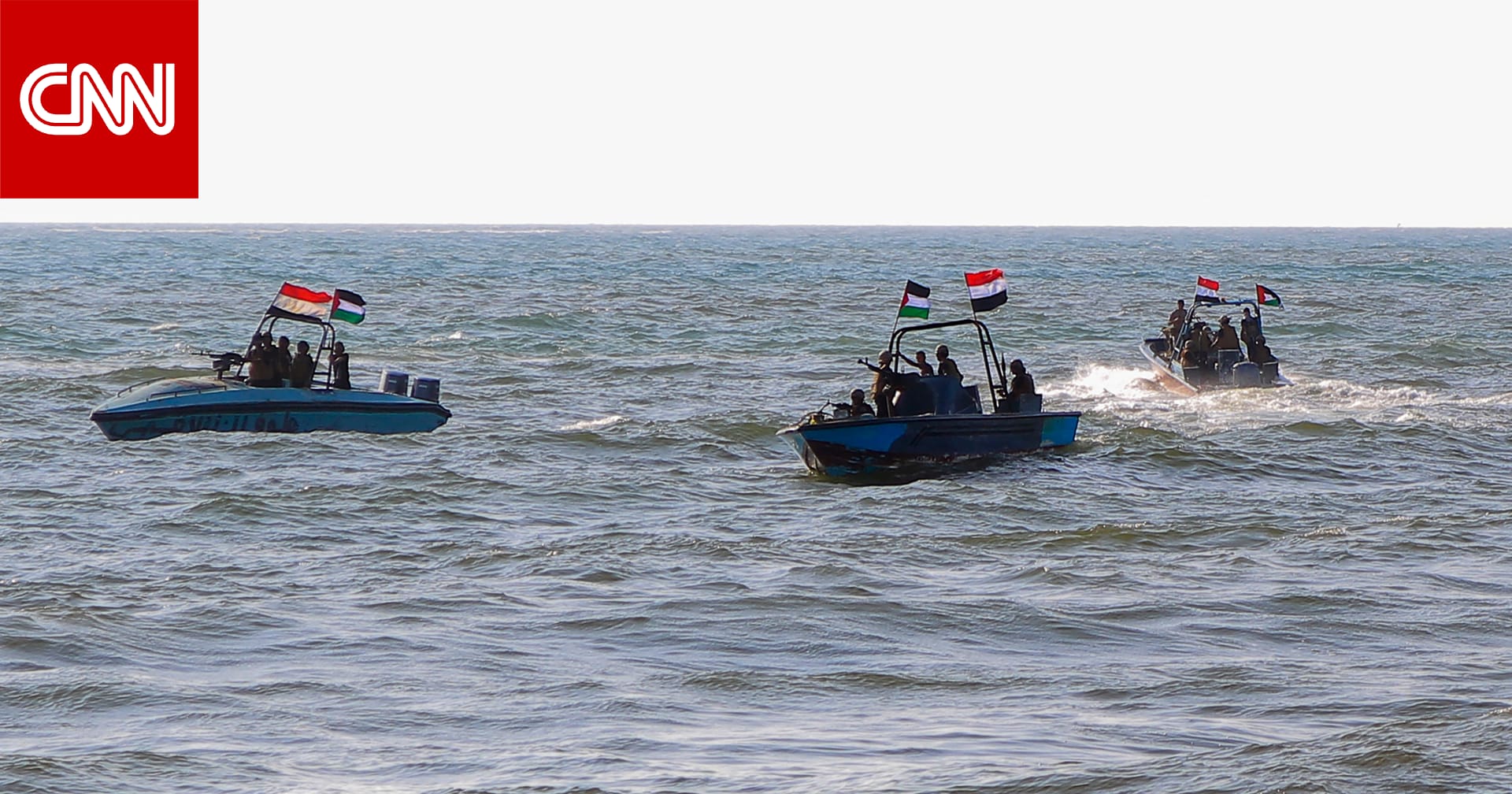
On the ground, government forces were keen to back political messages with field moves, as naval forces of the National Resistance in the western coast announced foiling an attempt by armed Houthi boats to approach Zuqar Island from the international corridor in the Red Sea.
Military media explained that naval forces spotted the boats and dealt with them immediately, forcing them to withdraw toward the Al-Faza area, in an operation that reflected continued military vigilance to protect international navigation lines in the Red Sea.
On the Hodeidah front, government forces also announced foiling a Houthi advance attempt toward Jabal Dabas south of the province, confirming that forces of the 14th Infantry Brigade clashed with the attackers and forced them to retreat after inflicting direct losses.
Read also
Original source: Asharq Al-Awsat




Comments (0)
Be the first to comment.