A journey that began with crossing the desert... and ended with the World Cup triumph

The story of brothers Nico and Inaki Williams embodied the human side of Spain's World Cup-winning team.
The story of brothers Nico and Inaki Williams embodied the human side of Spain's World Cup-winning team, as their family's journey from migration and fear turned into one of the most inspiring success stories in football.
Years before the brothers were born, their parents Felix and Maria decided to leave Ghana in search of a better future. The journey was extremely harsh; they traveled thousands of kilometers across the Sahara Desert, on foot and in overcrowded trucks, amid temperatures exceeding 40 and 50 degrees Celsius, before reaching Melilla, the Spanish enclave in North Africa. During that journey, the mother was pregnant with her first son, Inaki, while the scorching sand left permanent damage on the father's feet, who continued to suffer from walking even years later.
Inaki Williams celebrates with his brother Nico Williams after the match between Athletic Bilbao and Atletico Madrid in the semifinal of the Copa del Rey (Reuters)
The suffering did not end upon arrival in Spain; the Spanish authorities detained the couple after they crossed the border, before they later obtained asylum with the help of a priest in Bilbao, who secured housing for the family and later became Inaki's godfather, after whom he was named. Years later, the family moved to Pamplona, where Nico was born, while the father had to travel to London and work for years in modest jobs, including electrical maintenance, security guarding, and even at Chelsea's Stamford Bridge, to support his family and send money home. In his absence, Inaki, despite his young age, took on much of the responsibility of raising his younger brother, becoming both a brother and a father to him.
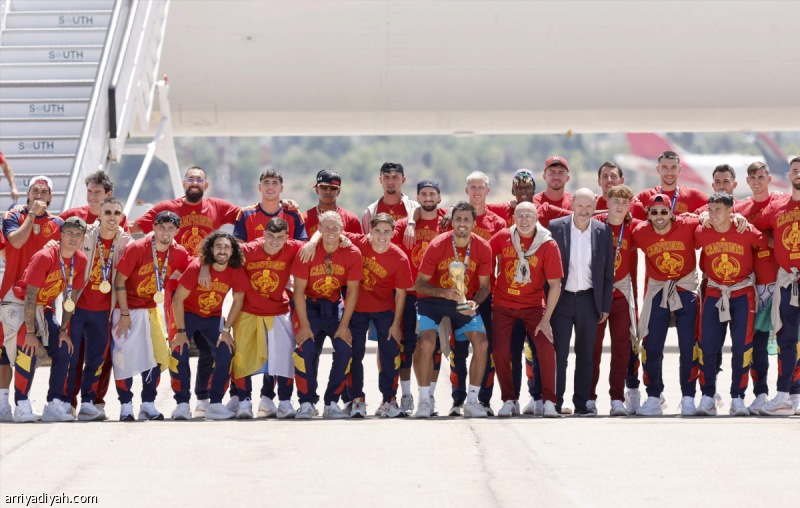
Nico Williams greets fans during Spain's celebrations in Plaza de Cibeles in Madrid after winning the World Cup (AP)
Despite the difficult circumstances, the family did not abandon their values. The brothers grew up respecting others and working hard, principles that Nico says his parents instilled in him from a young age. He also always emphasizes that everything he achieves in football is an attempt to repay a small part of the debt to his parents, who risked their lives so that he and his brother could have a better future. He said in one of his statements: 'Everything we do is for our parents; they risked their lives so we could have a better chance, and I will never be able to repay what they have given us.'
Each brother chose a different path internationally: Inaki decided to represent Ghana in honor of the family's roots, while Nico chose to defend the colors of Spain, the country where he grew up, later becoming one of the key stars of the World Cup-winning team.
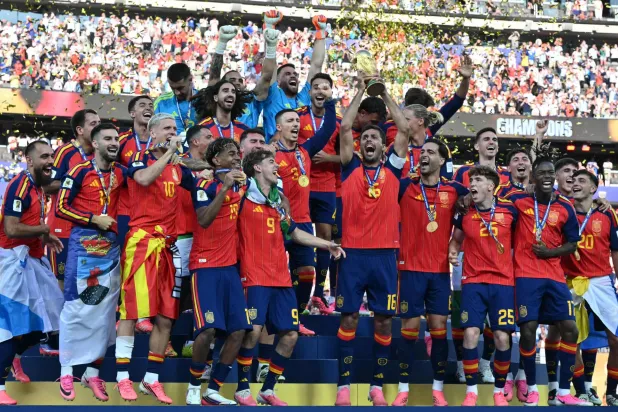
Despite suffering a muscle injury during the tournament that threatened his participation, Nico returned in the knockout stages and delivered outstanding performances, before taking part in the attack that led to the winning goal in the final against Argentina, contributing to Spain's second world title.
Nico Williams celebrates with Lamine Yamal after winning the 2026 World Cup (EPA)
But the most moving scene came after the final whistle, when Nico went up into the stands, took off his gold medal, and placed it around his mother's neck. It was not just a celebratory moment, but a message of gratitude to a woman who crossed the desert while pregnant, enduring hunger, fear, cold, and heat, in order to give her children the life she dreamed of for them. That moment went viral, becoming a symbol of the triumph of will over suffering, and a reminder that behind every hero there is a story that the audience does not see on the pitch.
Nico's World Cup triumph was not just an individual achievement; it was the culmination of a whole family's journey that began on the desert sands, went through stages of fear, poverty, and hard work, before ending on the podium, where the parents' sacrifices turned into a gold medal and one of the most beautiful human stories in modern football history.
Original source: Asharq Al-Awsat




Comments (0)
Be the first to comment.