Maradona's Death Trial Sees Judicial Developments
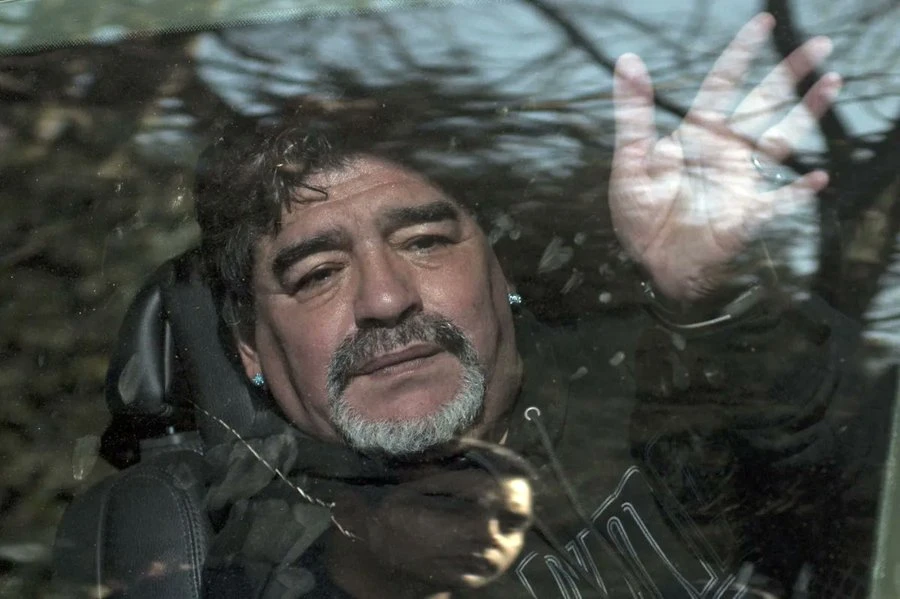
The judicial proceedings related to the death of Argentine football legend Diego Maradona continue, with seven medical professionals facing charges of negligence that allegedly contributed to his death in 2020. Maradona died from heart failure and acute pulmonary edema two weeks after undergoing surgery, raising questions about the medical care he received.
The trial was originally scheduled to conclude in August last year, but it has continued for additional months after more than 70 witness and defendant statements, along with 25 court sessions, according to AFP. The defendants maintain that Maradona's death was due to natural causes, while the former player's daughters attend court sessions.
Maradona's personal doctor, Leopoldo Luque, the main defendant in the case, has adopted a very precise defensive strategy, attending all sessions and asking to speak when his responsibility is mentioned. Luque made nine interventions, during which he presented audio recordings and scientific research, pointing out contradictions in witness testimonies.
Luque's team succeeded in showing footage of Maradona's autopsy, which shocked one of his daughters, who left the courtroom crying after shouting at the defendant, leading to the suspension of the session. Luque claims he was unaware she was in the room, but Maradona's family doubts this claim.
Judges have repeatedly had to intervene to resolve sharp disputes between legal representatives. Judge Alberto Gayeg noted the difficulty of stopping them and described their behavior as childish. The intense rivalry continues between Maradona's daughters' lawyer, Fernando Burlando, and the defendants' lawyer, Francisco Oneto.
Lawyers Burlando and Oneto exchanged harsh words; Burlando asked his opponent to go back to elementary school, and Oneto responded by asking to open a dictionary. Their arguments caused one session to be suspended, and they did not refrain from exchanging insults outside the courtroom in front of attendees.
Others tried to ease the tension in court by offering food gifts. Last June, one defense lawyer brought a bag full of traditional Argentine 'alfajores' candy. A month earlier, another lawyer brought Paraguayan cheese buns known as 'chipas' from a bakery owned by his wife.
This initiative proved to be a smart business move, as lawyers from both legal teams followed the bakery's brand account on Instagram. This unexpected aspect highlights how personal and commercial matters sometimes intertwine with formal judicial proceedings.
In a surprising development, a miniature model of the house where Maradona died in Tigre, north of Buenos Aires, has become a key element in the trial. Students from Belgrano University built this model replicating the player's home, measuring about two meters long and one meter wide.
This heavy model requires four people to carry it back and forth whenever a witness needs to point to different parts of the building. This detail is part of the complexities of the proceedings, which were supposed to end last year.
The first trial track was canceled after it was revealed that one of the presiding judges, Julieta Makintash, was secretly participating in a documentary about this case involving a famous figure. This trial continues to reveal more unexpected aspects, underscoring the complexity of cases involving public figures.
Original source: Akhbaar24


Comments (0)
Be the first to comment.