Which countries have banned social media for children and adolescents?
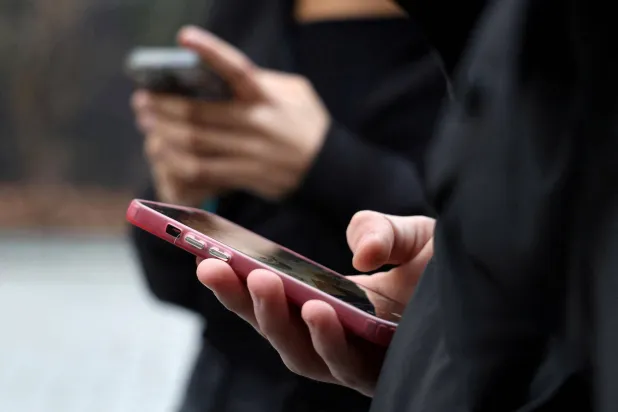
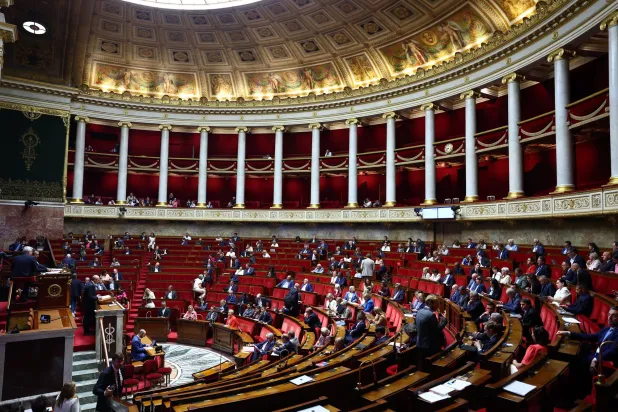
France has joined the list of countries banning social media use for those under 15, following several European nations. The French parliament has definitively approved a draft law banning social media use for those under 15, with the reform set to take effect in September to protect the health of children and adolescents. After a Senate vote in the afternoon, deputies approved the reform with a majority of 279 votes to 81, according to AFP.
Australia first in ban. In recent years, Australia was the first in the world to decide to ban social media for children as part of a campaign for families to regain power from tech giants and protect their teenage children. The Australian government had previously stated last year that it would double the maximum fine that can be imposed on technology companies found to be non-compliant with an unprecedented ban on children's use of social media, amid growing evidence that the ban had little effect on children's use of these platforms.
According to Reuters, the government will increase the information-gathering powers granted to the eSafety Commissioner, the internet regulatory body, allowing it to force social media companies to provide evidence of the measures they have taken to prevent those under 16 from creating accounts.
Under these amendments, the maximum fine for repeated non-compliance with the ban rises from 49.5 million Australian dollars to 99 million (68 million US dollars).
The government reaffirmed that the eSafety Commissioner is currently conducting intensive investigations into the potential non-compliance of five platforms: Instagram and Facebook, owned by Meta; YouTube, owned by Google; Snapchat, owned by Snap; and TikTok.
Countries that preceded France's decision. Last month, Britain announced it would ban those under 16 from using a range of social media apps.
Then-British Prime Minister Keir Starmer affirmed that he would confront this decision if resisted by tech companies, stressing that he is 'not willing to compromise the safety and happiness of our children.' With this move, the UK joins a growing global movement to enhance child safety online. Australia, Canada, Brazil, and Indonesia have enacted legislation or announced restrictions or age requirements for children's use of social media, according to the Associated Press.
Starmer had stated: 'How to protect children online is one of the biggest controversial issues of our time. It is a choice between standing with families across the country, or with a status quo that is not working.'
The Sunday Times reported that the UK will also impose restrictions on chatbots and features in some gaming apps, as well as a curfew aimed at preventing older teens from browsing late at night. The newspaper stated that the ban on internet use for those under 16 would include apps TikTok, Instagram, Facebook, X, YouTube, Snapchat, as well as Threads, Twitch, Kick, and Reddit. This decision comes after a public consultation period during which the government received 116,000 responses from parents, the tech sector, and children.
Culture Minister Lisa Nandy said the vast majority of respondents to the survey supported banning social media use for those under 16, including young people, adding that the ban should be part of other measures.
Nandy told the BBC: 'I don't think banning social media alone is the perfect solution, but I think Australia has clearly shown its important role in this regard.'
According to a statement from the US Embassy in London, the ban could heighten tensions with the United States, which warned that regulations must be limited in scope and not violate free speech protections. The embassy added that it is also concerned that the regulations could place additional burdens on US tech companies.
John Crocroft, professor of communication systems at the University of Cambridge, affirmed that supporters of banning social media are well-intentioned but may be wrong, and that the changes could prevent children from accessing the sites they need.
Crocroft said: 'There is a real risk that this could push some users to worse sites, and monitoring devices is technically nearly impossible. Monitoring platforms is much easier, if regulators cared about that.'
European countries are escalating pressure on social media companies, risking a backlash from the United States. US President Donald Trump is threatening to impose tariffs and sanctions if EU countries impose new tech taxes or set internet regulations that harm US companies.
In 2026, the ruling coalition in Austria announced plans to ban social media use for children under 14, joining a series of other countries in imposing such restrictions on minors.
Alexander Pröll, digitalization officer in the office of Austrian Chancellor Christian Stocker, said that a draft law will be introduced on the matter. He added that 'technically modern methods of age verification will be applied to allow verification of users' ages while respecting their privacy.' It was not immediately clear when the plan to set a minimum age might take effect, which would require parliamentary approval. In the same year, the Portuguese parliament approved a bill in its first reading that requires explicit parental consent before children aged 13 to 16 use social media, in one of the first tangible legislative steps in Europe to impose such restrictions.
The bill's sponsors from the ruling Social Democratic Party say it is necessary to protect children from cyberbullying, harmful online content, and trolls, according to Reuters.
Parents will use a public system known as the 'Mobile Digital Key' to give consent, which also helps enforce the existing ban on children under 13 using digital social media, video and photo sharing platforms, or online gambling sites. Technology service providers will be required to provide an age verification system compatible with the 'Mobile Digital Key'.
Logo of 'Facebook' and 'Meta'
Greece and the ban. On January 1, 2027, Greece banned social media use for those under 15. The Prime Minister attributed the decision to increased rates of anxiety, sleep problems, as well as the design of online platforms in a way that leads to addiction.
He added in a message addressed to young people that children spending long hours in front of screens does not allow their brains to rest and exposes them to increased pressure from constant comparison and online comments.
Original source: Asharq Al-Awsat


Comments (0)
Be the first to comment.