Is the AI Boom Leading Samsung to Unprecedented Record Profits?
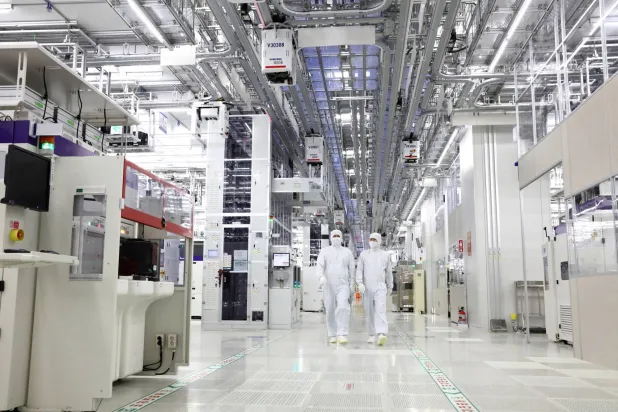
Samsung Electronics is expected to report a massive surge in operating profit for the second quarter, up about 18-fold, reaching a new unprecedented record, amid the continued rapid growth of the AI sector, which is putting strong pressure on memory chip supplies and pushing prices higher.
The company, the world's largest memory chipmaker by sales, is likely to announce on Tuesday an operating profit of up to 86 trillion won ($56.35 billion) for the period from April to June, according to estimates from LSEG SmartEstimate based on 30 analysts' forecasts.
This figure represents a staggering leap from just 4.7 trillion won recorded in the same period last year, marking the third consecutive quarter that Samsung has broken its own records. This reflects the prolonged global shortage of memory supply, as explosive demand for AI inference infrastructure exceeds manufacturers' capacity, amid expectations that the shortage will continue at least until next year.
'Agent AI' Changes the Game
Strong growth is no longer limited to high-bandwidth memory (HBM) chips alone, but has extended to increased demand for traditional memory products such as DRAM and NAND. This is due to the expansion of AI applications, particularly 'Agent AI,' into broader computing operations.
Unlike previous applications that focused only on training large models, 'Agent AI' systems perform complex, multi-step tasks that require additional memory for server processors and larger storage capacities for data retrieval during inference. Samsung is a key supplier of these chips to tech giants such as Nvidia, Google, and Apple.
Data from Citigroup Research showed that average selling prices for DRAM and NAND chips surged by 44% and 53%, respectively, in the second quarter compared to the first quarter. This shortage has ignited a historic rally in chip stocks this year, with shares of Samsung, SK Hynix, and Micron soaring by 158%, 273%, and 242%, respectively, pushing each company's market capitalization above $1 trillion.
Employee Bonuses and Future Risks
Despite this boom, analysts warn that actual profits may fall short of expectations if Samsung allocates more funds than expected for employee bonuses. The company avoided a large-scale strike at the end of May after an agreement to allocate 10.5% of operating profit from its semiconductor division as special bonuses for workers, with estimates suggesting these allocations could exceed 40 trillion won.
As for future risks, experts see a potential slowdown in AI infrastructure investments as the biggest threat. JPMorgan Chase noted that AI memory's massive share of capital expenditures for cloud service providers (estimated at 52% this year and expected to exceed 70% next year) raises questions about the sustainability of this spending.
Any decline in such spending could challenge Samsung and SK Hynix, which last week pledged huge investments of up to 3,200 trillion won (about $2.07 trillion) to expand chip production capacity in South Korea through 2040.
In contrast, Nomura expects DRAM chip prices to continue rising by 24% and NAND by 25% in the quarter from July to September. Meanwhile, Samsung's mobile phone segment faces increasing pressure on profit margins, as high component costs have eaten into the recent price increases the company implemented for its smartphones, potentially prompting further hikes in the second half of the year, following competitor Apple, which raised prices on iPads and MacBooks last month.
Original source: Asharq Al-Awsat






Comments (0)
Be the first to comment.