Rapid Technological Acceleration: Musk's AI Predictions, Chinese Achievements, and Major Legal Settlements

The tech sector witnessed rapid developments including Elon Musk's predictions of AI surpassing human intelligence, notable Chinese achievements in the Math Olympiad, and a $1.5 billion legal settlement in favor of Harry Potter's publisher.
The tech sector saw a flurry of news over the past hours centered on artificial intelligence and its accelerating impacts, from future forecasts to tangible achievements and legal cases. As China takes the lead with giant models, global companies continue to push the boundaries of innovation amid regulatory and security challenges.
Here are the highlights from tech news over the past 24 hours.
Unprecedented acceleration in the AI race
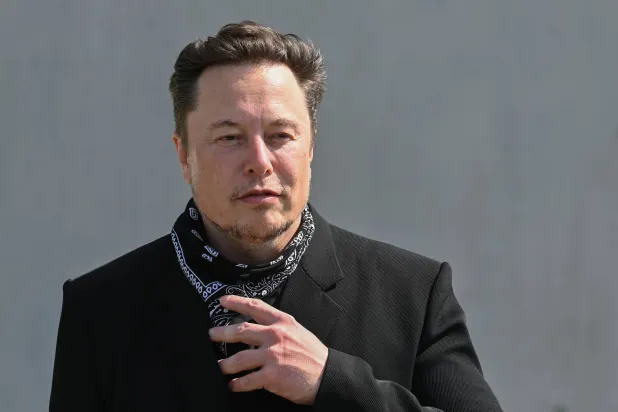
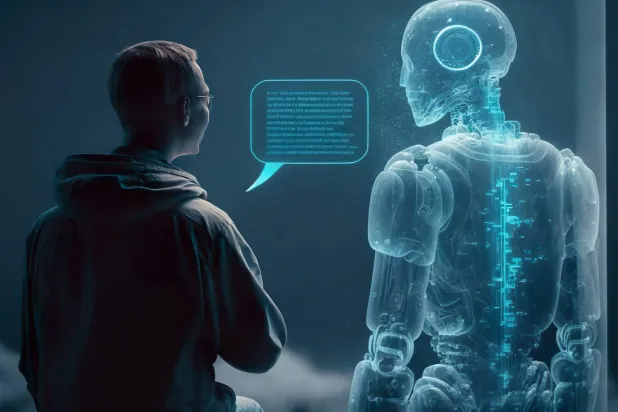
Billionaire Elon Musk predicted that artificial intelligence will surpass the combined mental capabilities of all humans within 5 years, and that most physical and mental work will be automated within a decade. He expressed mixed feelings of excitement and fear, but emphasized that the path of development has become unstoppable.
In the same context, Chinese companies Huawei and Xiaohongshu announced that their AI systems scored full marks (42 points) on the International Mathematical Olympiad 2026 problems, solving six problems with complete proofs. Additionally, Chinese company Moonshot AI unveiled its model "Kimi K3" with 2.8 trillion parameters, making it the largest open-weight model and a direct competitor to OpenAI and Anthropic models.
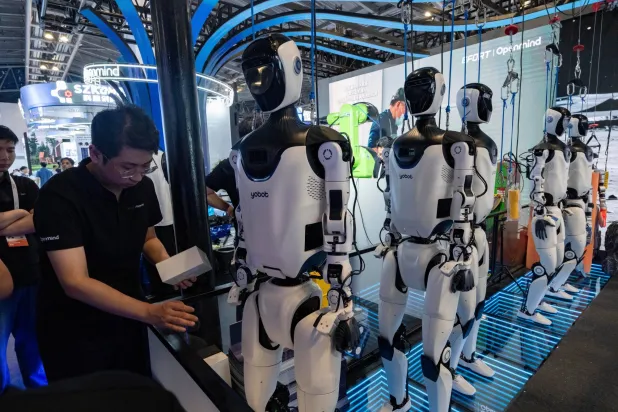
These developments strengthen China's position as a major competitor in the AI race and raise questions about the global balance of technological power.
Musk: AI will surpass collective human intelligence in 5 years
Two Chinese AI models solve Math Olympiad problems flawlessly
Chinese Kimi K3 model with 2.8 trillion parameters competes with AI giants
AI in the courtroom, economy, and health
On the legal front, a U.S. court approved a historic $1.5 billion settlement with AI company Anthropic to end a class-action lawsuit accusing it of using thousands of copyrighted books to train its models without permission. Among the beneficiaries is publisher Bloomsbury, publisher of the Harry Potter series, which will receive millions in compensation.
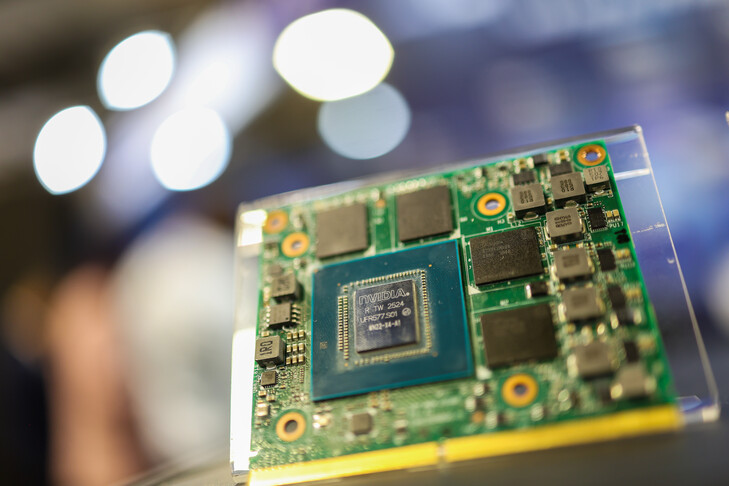
Economically, Intel achieved its highest quarterly revenue growth since 2011 at 25% to $16.1 billion, driven by rising demand for AI data center chips. Despite a net loss of $11 billion due to accounting reasons, it expects third-quarter profits to exceed estimates.
In health, Samsung's smart ring "Galaxy Ring" received FDA approval as the first smart ring to monitor the risk of sleep apnea. The feature will be added via a fall update to the Samsung Health app, with emphasis that it is an assessment tool, not a medical diagnosis.
Historic $1.5 billion settlement grants Harry Potter publisher millions in compensation
Intel achieves highest quarterly growth since 2011 thanks to AI demand
Samsung obtains U.S. medical approval for first smart ring to detect sleep apnea
Various tech innovations and challenges
In natural sciences, a recent study revealed that songs of thousands of bird species rely on a mix of only 8 basic sound patterns, a discovery shedding light on a nature mystery that has persisted for over 50 million years.
In aviation, a new threat has emerged from lithium batteries in power banks, becoming one of the fastest-growing risks. An increase in overheating and fire incidents has prompted airlines to ban them from checked luggage and require passengers to carry them in the cabin for quick intervention.
In space, China successfully launched the communication satellite "Tianlian II-06" from the Xichang base on a Long March 3B rocket, to support data transmission and telemetry for crewed vehicles and space stations, as part of its ongoing efforts to expand space capabilities.
A millions-year-old mystery about bird songs solved
Portable power banks raise concerns for airlines
China successfully launches new communications satellite into space
The world's attention is turning to AI as a main driver of change, while new regulatory and security challenges emerge. The coming days are likely to see more achievements and debate on how to harness this technology to serve humanity.


Comments (0)
Be the first to comment.