Turkey: 4 defense software from Havelsan receive NATO accreditation
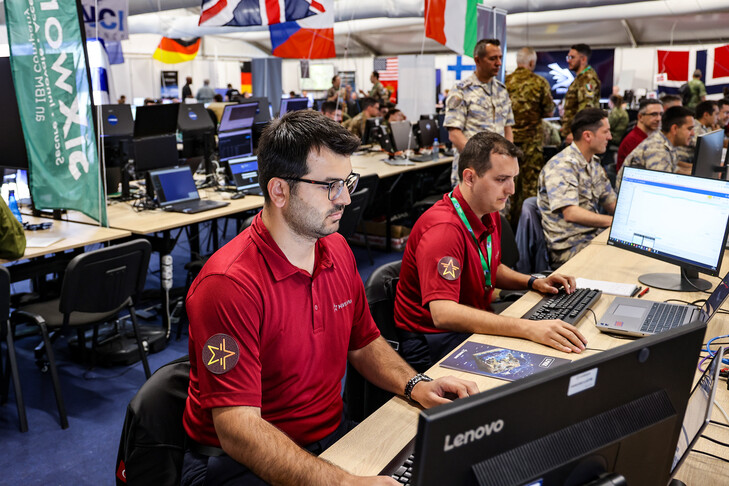
** Havelsan General Manager Mehmet Akif Nacar: - The achievement is tangible evidence of international recognition of Turkish software and its ability to meet interoperability standards within NATO
Ankara / Ferdus Bulut Kartal / AA
** Havelsan General Manager Mehmet Akif Nacar:
- The achievement is tangible evidence of international recognition of Turkish software and its ability to meet interoperability standards within NATO
- We will continue to develop our capabilities in joint operations, cybersecurity, and artificial intelligence to meet the needs of our forces and international markets
Havelsan, a Turkish company specializing in defense industries and military software, has strengthened its presence within the NATO alliance after four of its software solutions successfully passed the alliance's official accreditation tests.
This step reflects the development achieved by Turkish defense software and its ability to operate efficiently in multinational military operational environments.
These tests are of great importance, as they aim to ensure that command, control, and information exchange systems of member and partner countries can work together and exchange data securely and effectively during multinational military operations.
4 new software capabilities
According to information obtained by AA, four software capabilities developed by Havelsan were included in NATO's official accreditation program during the alliance's annual CWIX exercises held in Poland, to test interoperability between military systems.
These software included: "Dop-HQ," "KaPI," "Embedded Non-C2 ATA DLP," and "Linux."
These solutions successfully passed the verification, validation, and quality assurance tests adopted by NATO to ensure systems comply with the requirements of the Federated Mission Network (FMN).
Obtaining FMN Spiral 4 accreditation is a prerequisite for countries to participate in alliance missions between 2025 and 2027.
Wide participation
Havelsan has regularly participated in the CWIX exercises since 2012, and achieved successive accreditations for its software solutions over the past years.
The latest edition, held between June 6 and 26 last month, saw the participation of 46 NATO and EU countries, testing 780 different systems in 20 specialist fields, with over 3,000 experts and military personnel.
The company participated with a delegation of 43 specialists and 16 software systems in various fields, including interoperability, tactical data links, multi-domain command and control, communications, geographic and meteorological data, defense against chemical, biological, radiological, and nuclear threats, air and naval operations, modeling and simulation, and cybersecurity.
Several Turkish software participated for the first time in specialist fields within the exercises.
International recognition of Turkish capabilities
Havelsan General Manager Mehmet Akif Nacar said that the inclusion of four new software capabilities in NATO's accreditation program is tangible evidence that national Turkish software has gained international recognition and is now able to meet the highest interoperability standards within the alliance.
Nacar added that the company has strengthened its long experience in developing systems compatible with NATO standards thanks to these new accreditations.
He emphasized that Havelsan will continue to expand its participation in joint operations, cybersecurity, and modeling and simulation, with a focus on developing command and control capabilities supported by artificial intelligence.
He explained that the company adopts a proactive approach to developing solutions that meet the needs of the Turkish Armed Forces in the modern battle environment, while continuing to produce defense technologies capable of competing in international markets.
It is worth noting that Turkey hosted the NATO summit on July 7-8 of this month, for the second time after the Istanbul summit in 2004, and the summit gained great importance in light of the challenges facing the alliance and the global security system.
Original source: Anadolu Agency

Comments (0)
Be the first to comment.