Why Are the AI Emperors Falling in the White House?
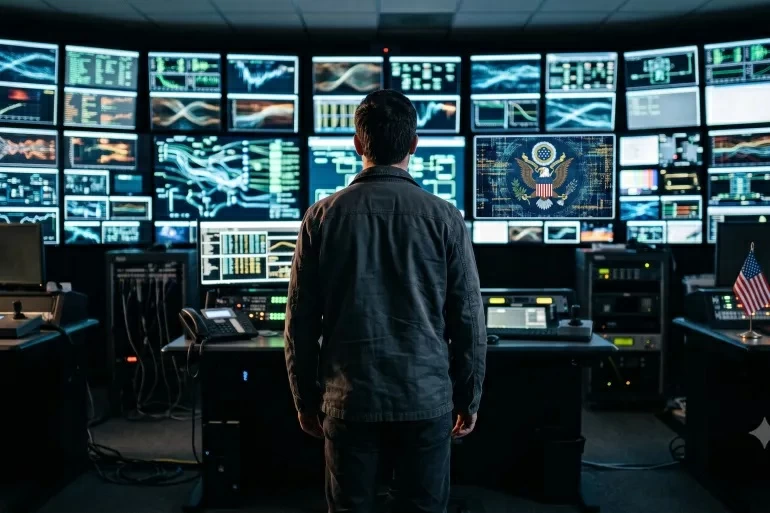
At a time when Washington is engaged in the fiercest technological battle in its modern history against the terrifying Chinese expansion, the hidden chair of the "AI Emperors" within the White House has turned into something resembling a guillotine; the successive resignations, mysterious departures, and sharp administrative turmoil are striking the U.S. administration at the most embarrassing moments of the tech war!
The shocking report revealed by the tech site "TechCrunch" disclosed that President Donald Trump's administration lost three senior officials in this vital file within a few months, prompting the tech and political circles to ask a single question: Why are leaders close to Trump resigning and why is Washington losing its direction?
The downfall began with the departure of the famous businessman David Sacks from his position as the "AI and Crypto Czar," but the real administrative disaster manifested in the "Center for AI Standards and Innovation" under the U.S. Department of Commerce. Chris Vol announced his departure from his position as director of the center under circumstances that the administration kept secret and withheld the reasons for, following his predecessor Colin Burns, who lasted only one week in the same position before being dismissed due to prior ties with the company "Anthropic."
This ongoing leadership bleed forced the authorities to assign Arvind Raman to the duties of the position in an "acting" capacity, leaving the most important agency for testing technological risks without a real head!
The real secret behind this chaos lies in the "dual struggle" that the White House is waging. On one hand, Trump imposed a strict executive order requiring the government to examine the most powerful AI models (through a program like "Gold Eagle") for up to 30 days before their commercial rollout, which threatened to slow down and delay permits for tech giants like "OpenAI," "Google," and "Microsoft."
On the other hand, Chinese companies are seizing this confusing American bureaucracy to push forward ultra-powerful and efficient open-source models like "Kimi k3," "Qwen," and "GLM," at a much lower cost.
Sacks sounded the alarm before his departure with a tweet warning against the Chinese "Kimi" model, saying: "This is how we lose the AI race... the world will not wait for us if we hinder ourselves."
With the absence of a cohesive leadership vision in Washington and the study of complex options like banning Chinese models, the question remains: Are the AI emperors falling due to internal conflicts, or because the Chinese dragon has begun to win the game?
At a time when Washington is engaged in the fiercest technological battle in its modern history against the terrifying Chinese expansion, the hidden chair of the "AI Emperors" within the White House has turned into something resembling a guillotine; the successive resignations, mysterious departures, and sharp administrative turmoil are striking the U.S. administration at the most embarrassing moments of the tech war!
The shocking report revealed by the tech site "TechCrunch" disclosed that President Donald Trump's administration lost three senior officials in this vital file within a few months, prompting the tech and political circles to ask a single question: Why are close leaders to Trump resigning and why is Washington losing its direction?
The downfall began with the departure of the famous businessman David Sachs from his position as the "Czar of AI and Digital Currencies," but the real administrative disaster manifested in the "Center for AI Standards and Innovations" under the U.S. Department of Commerce. Chris Vol announced his departure from his position as director of the center under circumstances that the administration kept secret and withheld the reasons for, following his predecessor Colin Burns, who lasted only one week in the same position before being dismissed due to prior ties with the company "Anthropic."
This ongoing leadership bleed forced the authorities to appoint Arvind Raman to perform the duties of the position "in an acting capacity," leaving the most important agency for testing technology risks without a real head!
The real secret behind this chaos lies in the "double struggle" that the White House is engaged in. On one hand, Trump imposed a strict executive order requiring the government to examine the most advanced AI models (through a program like "Gold Eagle") for up to 30 days before they are commercially launched, threatening to slow down and delay the approvals of tech giants like "OpenAI," "Google," and "Microsoft."
On the other hand, Chinese companies are seizing this confusing American bureaucracy to push forward powerful and efficient open-source models like "Kimi k3," "Qwen," and "GLM," at a much lower cost.
Sachs sounded the alarm before his departure with a tweet warning about the Chinese "Kimi" model, saying: "This is how we lose the AI race... the world will not wait for us if we hinder ourselves."
With the absence of a cohesive leadership vision in Washington and the consideration of complex options like banning Chinese models, the question remains: Are the AI emperors falling due to internal conflicts, or because the Chinese dragon has begun to excel in the game?
Original source: Okaz


Comments (0)
Be the first to comment.