A dilemma similar to the Strait of Hormuz crisis looms for Russia... What do we know?
Russia's grip on its gateway to the Black Sea is loosening; a series of Ukrainian attacks have forced Moscow to suspend navigation through this vital waterway this week, limiting the Kremlin's ability to trade with the rest of the world.
(CNN)-- Russia's grip on its gateway to the Black Sea is loosening; a series of Ukrainian attacks have forced Moscow to suspend navigation through this vital waterway this week, limiting the Kremlin's ability to trade with the rest of the world.
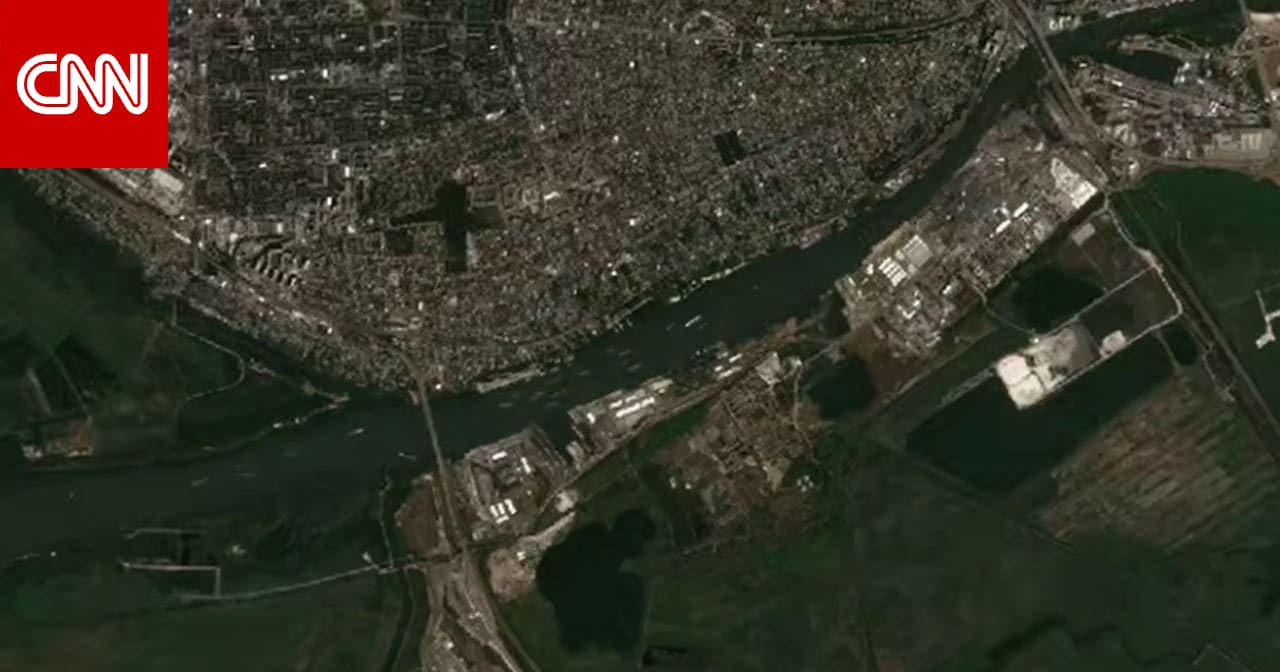
Satellite images of the Russian port of Rostov-on-Don show a buildup of waiting ships in recent days. Credit: Planet Labs PBC
This development represents a radical shift in Russia's position; for years, the Sea of Azov had been out of Kyiv's reach and served as a convenient launchpad for Russia to attack Ukraine, in addition to connecting vast areas of southern Russia to the world's oceans.
However, recent developments in the Ukrainian drone program have changed this reality. Robert Brovdi, commander of Ukraine's unmanned systems forces, stated Wednesday that Kyiv had hit 116 Russian ships in the Sea of Azov in the past nine days alone, a sharp increase in the pace of targeting.
Ukraine's Commander of the Unmanned Systems Forces, Robert Brovdi, shared this video of strikes targeting Russian ships in the Sea of Azov. Credit: Ukraine's Commander of the Unmanned Systems Forces, Robert Brovdi
Previously, strikes on Russian ships were mostly limited to the 'shadow fleet' (cargo ships operating outside sanctions) and military vessels. Although CNN cannot independently verify Brovdi's claims, videos of some recent strikes - published by Ukrainian officials - show direct hits.
These sustained attacks have forced Russia to suspend navigation through the Sea of Azov by closing two narrow strategic passages at its edges: the Don-Azov Canal, which connects the sea to inland waterways, and the Kerch Strait, which connects it to the Black Sea.
Satellite images and ship tracking services show long queues of ships waiting on both sides of the sea.
Ukraine has achieved increasing success in targeting Russia's 'shadow fleet' of oil tankers transporting sanctioned fuel, but imposing a blockade on the Sea of Azov could have wider repercussions, including affecting non-sanctioned exports such as wheat and sunflower oil.
The Institute for the Study of War, an American conflict monitoring center, stated Tuesday that Ukrainian strikes in the Sea of Azov 'represent a new phase in Ukraine's efforts to isolate occupied Crimea from the Russian logistics network and disrupt Russian maritime shipping routes, particularly those related to oil and grain products.'
Major Yevhen Karas, commander of the 413th Independent Battalion of Unmanned Systems of the Ukrainian Armed Forces - a unit involved in the operation - said that Russia has turned Crimea into a huge military base with units that supply forces trying to advance deeper into Ukrainian territory.
Karas added to CNN: 'We are cutting off all logistics supply lines,' noting that Ukraine's ability to strike at longer distances and lower cost 'has become a problem the Russians cannot solve.'
He continued: 'We will increase this pressure and expand its scope to the maximum extent we can reach... and this is just the beginning.'
It is worth noting that Russia is the world's largest grain exporter, accounting for about a fifth of global wheat exports, according to the Foreign Agricultural Service of the US Department of Agriculture.
Original source: CNN Arabic




Comments (0)
Be the first to comment.