After Major Restrictions, Israel Moves Inspection of Returnees to Gaza to Kerem Shalom
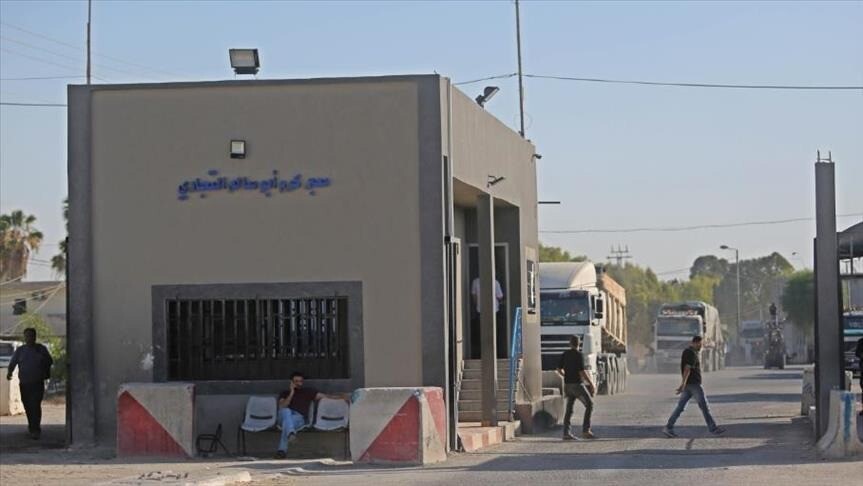
Israeli sources claim the reason is attempts to smuggle goods, according to the Israeli Broadcasting Authority...
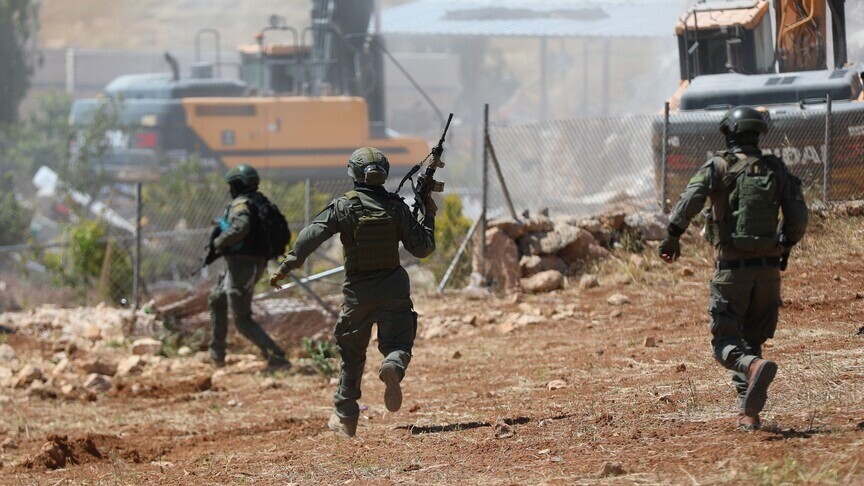
Zain Khalil / Anadolu
Israel has decided to move the inspection center for Palestinians returning to the Gaza Strip from the Rafah crossing in the south to the commercial Kerem Shalom crossing, following extensive restrictions reported by returnees.
The official Israeli Broadcasting Authority said Sunday that 'the Israeli security establishment decided to move the Regavim inspection center, established near the Rafah crossing to inspect Gaza Strip residents returning from Egypt, to the Kerem Shalom crossing.'
Kerem Shalom crossing is close to Rafah crossing and is a commercial crossing subject to a special inspection mechanism.
The authority quoted unnamed sources claiming that the decision came following smuggling attempts detected at the checkpoints.
Although it was expected, according to Egyptian and Israeli media, that 50 Palestinians would cross into Gaza daily and the same number to Egypt, the authority said: 'About 4,500 residents of the Gaza Strip left for Egypt, while about 4,200 returned to the Strip.'
On February 2 last, Israel reopened the Palestinian side of the crossing, which it has occupied since May 2024, in a very limited manner with extremely strict restrictions.
In this context, the authority said: 'Returnees registered on approved lists are allowed, with luggage subjected to comprehensive security inspection to prevent smuggling of prohibited materials or equipment into Gaza.'
The Israeli security establishment claimed that 'several attempts to bring unauthorized luggage into the Gaza Strip have been thwarted in recent months,' according to the authority.
It claimed that 'among the confiscated items were cigarettes and tobacco, as well as electronic equipment, including mobile phones, SIM cards, USB flash drives, portable charging batteries, and other accessories.'
To justify this measure, sources in the Israeli security establishment told the authority that 'it is merely an operational change aimed at improving the quality of inspections, enhancing the ability to thwart smuggling attempts, and ensuring the continued operation of the crossing mechanism in a safe and efficient manner.'
It claimed that there would be no change in the movement mechanism that was via the Rafah crossing, in coordination with Egypt and the World Health Organization, after obtaining Israeli security approval, and under the supervision of the European Union Border Assistance Mission.
Since the reopening of the Rafah border crossing with Egypt after the genocidal war launched by Israel on the Strip, Palestinians have complained about Israel confiscating their property and personal belongings, including mobile phones and gold jewelry.
Semi-official data indicates that about 80,000 Palestinians have registered their names to return to Gaza, a clear sign of the Palestinians' insistence on rejecting displacement and clinging to return despite the destruction.
Testimonies from returnees, including elderly and children, reported being subjected to harsh Israeli military interrogation, while emphasizing their attachment to their land and rejection of any attempt to displace them.
Before the genocidal war, hundreds of Palestinians would leave Gaza daily through the crossing to Egypt, and hundreds would return to the Strip in a normal movement, with the crossing's operation governed by the Gaza Ministry of Interior and the Egyptian side, without Israeli interference.
Israel was supposed to reopen the crossing in the first phase of the ceasefire agreement, which came into effect on October 10, 2025, but it reneged on that.
Since the ceasefire agreement took effect on October 10, 2025, the Israeli army has continued to carry out raids, gunfire, and demolition operations in various areas of the Strip, while Israel has expanded its occupation to about 70 percent of its area, confining Palestinians to no more than 30 percent.
The Israeli genocidal war in Gaza, which began on October 8, 2023, with American support, has left more than 73,000 Palestinian martyrs and over 173,000 wounded, in addition to widespread destruction affecting about 90 percent of civilian infrastructure.
Original source: Anadolu Agency

Comments (0)
Be the first to comment.