After the End of the Memorandum's Mission: Decisive Confrontation or Conditional Negotiation?
After the End of the Memorandum's Mission: Decisive Confrontation or Conditional Negotiation?
July 24, 2026 - 00:17 | Last update July 24, 2026 - 00:17
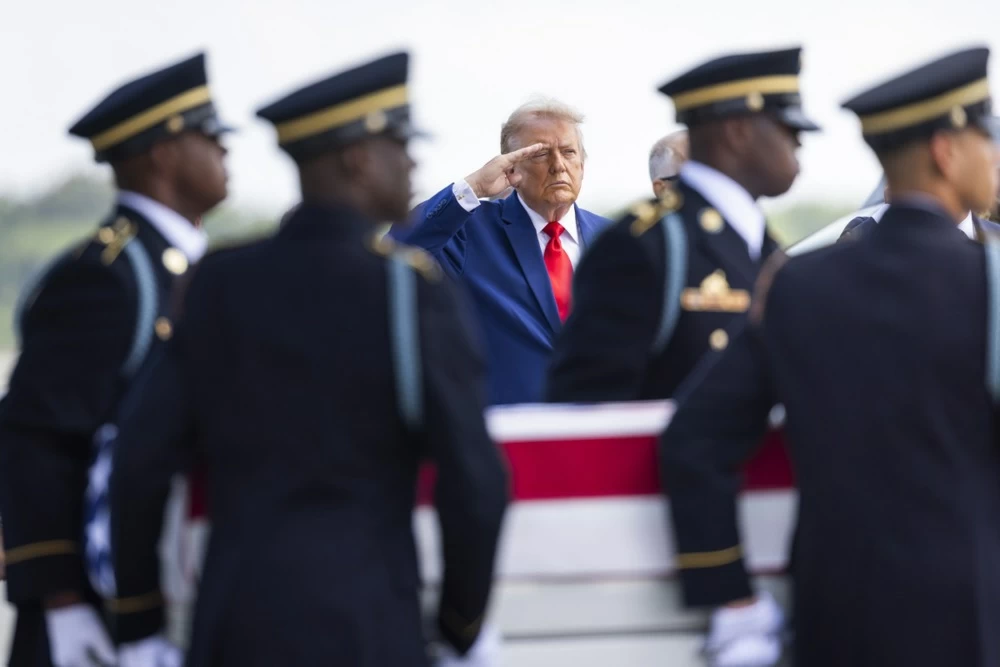
Trump during his reception of the bodies of soldiers killed in the Iranian attack on Jordan (AP)
--:--
Follow Okaz channel on WhatsApp
Rawiya Hechmi (Beirut) HechmiRawiya@
The Memorandum of Understanding between Washington and Tehran did not fall apart before the end of the 60-day deadline because one of the parties rushed to overturn it, but rather because it had exhausted the purpose for which it was created. Here lies the difference between those who read it as the beginning of a new political path and those who understood it as a temporary station in a war that has not actually stopped.
After 40 days of war, the region needed a truce. Energy prices exceeded expectations, financial markets entered a phase of confusion, and fears began to widen from the Strait of Hormuz to a direct confrontation threatening the global economy. At that moment, it became clear that continuing the war at the same pace would make its political and economic costs higher than its military gains; thus, the Memorandum of Understanding came to freeze the conflict, not to end it.
Many treated the memorandum as an American retreat, with some even considering it an acknowledgment of Iran's victory and a shift in the balance of power in the region. It soon became apparent that this reading was hasty. President Donald Trump has never been known for allowing his adversaries to dictate the timing of the battle or its conclusion. The man who views politics in terms of deals understands that power does not mean continuing to shoot, but rather choosing the moment when the use of force is most impactful and least costly.
The Bank of American Targets
In the weeks following the signing of the memorandum, markets calmed, oil prices fell, and the U.S. administration regained the maneuvering room it had lost during the first war. At the same time, the world became preoccupied with other issues, while military institutions reevaluated the results of the previous round, reviewing what was achieved and what was not, and redrawing the bank of targets in light of the lessons learned. Major wars are managed in phases, and what appears to be a political truce may actually be a break during which preparations for the next round are made.
In contrast, Tehran dealt with the calm differently. Instead of investing it to turn the temporary truce into a more stable political path, it raised the tone of its rhetoric to a level suggesting that it considered the results of the confrontation had changed the rules of the game, and that the balance of power was tilting in its favor. It was not limited to celebration, but extended to messages related to the Strait of Hormuz and the Iranian regional role. These messages, although aimed at establishing new deterrence equations, gave Iran's opponents additional material to say that the threat had not receded but had taken a different form.
The Puzzle of Trump and Netanyahu's Disputes
In details as well, it is difficult to ignore the way in which the contrast between Trump and Israeli Prime Minister Benjamin Netanyahu was read. Many rushed to talk about a strategic rift between the two men, and a deep disagreement within the U.S. administration itself about continuing the war. However, experience with successive U.S. administrations indicates that a difference in style does not necessarily mean a difference in goal.
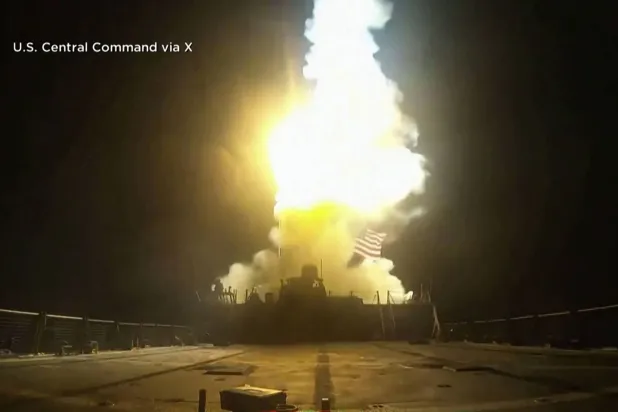
Perhaps what happened during the period of the memorandum confirms this hypothesis. Military reports, the movement of naval vessels, and repositioning in more than one area all indicated that the preparation phase for a new military round had not stopped, but had moved from the public to behind the scenes. Even the strikes carried out later seemed different in nature, focusing on logistics infrastructure, transport networks, and supply lines, indicating that the new round does not replicate the first but builds on it. This shift reveals that the current round seems closer to an attempt to capitalize on the results that Washington came out with after the first war, whether in terms of intelligence information, the nature of Iranian defenses, or the method of dealing with the repercussions of any new escalation.
So how will the next phase be managed after the role of the temporary truce has ended? Will the new calculations lead to a more decisive round? Or to a negotiation path with different conditions?
The Memorandum of Understanding between Washington and Tehran did not fall apart before the end of the 60-day deadline because one of the parties rushed to overturn it, but rather because it had exhausted the purpose for which it was created. Here lies the difference between those who read it as the beginning of a new political path and those who understood it as a temporary station in a war that has not actually stopped.
After 40 days of war, the region needed a truce. Energy prices exceeded expectations, financial markets entered a phase of confusion, and fears began to widen from the Strait of Hormuz to a direct confrontation threatening the global economy. At that moment, it became clear that continuing the war at the same pace would make its political and economic costs higher than its military gains; thus, the Memorandum of Understanding came to freeze the conflict, not to end it.
Many treated the memorandum as an American retreat, with some even considering it an acknowledgment of Iran's victory and a shift in the balance of power in the region. It soon became apparent that this reading was hasty. President Donald Trump has never been known for allowing his adversaries to dictate the timing of the battle or its conclusion. The man who views politics in terms of deals understands that power does not mean continuing to shoot, but rather choosing the moment when the use of force is most impactful and least costly.
The Bank of American Targets
In the weeks following the signing of the memorandum, markets calmed, oil prices fell, and the U.S. administration regained the maneuvering room it had lost during the first war. At the same time, the world became preoccupied with other issues, while military institutions reevaluated the results of the previous round, reviewing what was achieved and what was not, and redrawing the bank of targets in light of the lessons learned. Major wars are managed in phases, and what appears to be a political truce may actually be a break during which preparations for the next round are made.
Original source: Okaz



Comments (0)
Be the first to comment.