Kuwait and Pakistan discuss regional developments and de-escalation efforts
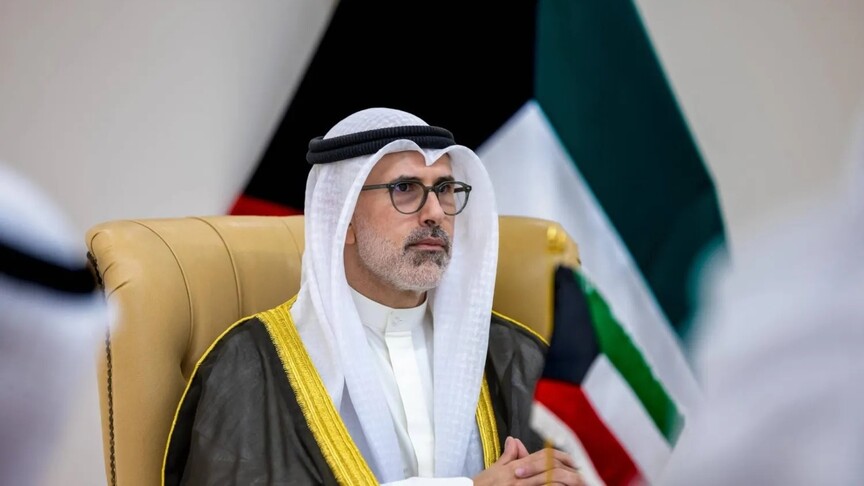
During a phone call between Kuwaiti Foreign Minister Jarah Jaber Al-Ahmad Al-Sabah and his Pakistani counterpart Mohammad Ishaq Dar...
Istanbul / Anadolu
Kuwaiti Foreign Minister Jarah Jaber Al-Ahmad Al-Sabah discussed on Saturday with Pakistani Deputy Prime Minister and Foreign Minister Mohammad Ishaq Dar the current regional developments and efforts to de-escalate tensions in the region.
The Kuwaiti Foreign Ministry said in a statement that Minister Al-Sabah discussed during a phone call with his Pakistani counterpart 'the latest developments in the region, particularly the current escalation and its repercussions.'
It added that the talks covered 'efforts aimed at de-escalation, containing tensions, and promoting diplomatic solutions to contribute to maintaining regional security and stability.'
The call comes amid rising security and military tensions in the region in recent days, as Kuwait was subjected to Iranian attacks with missiles and drones on Saturday morning.
At dawn on Saturday, the Kuwaiti army announced in a statement that the armed forces dealt with 'hostile ballistic missiles and drones within Kuwaiti airspace.'
It explained that this was part of 'a sinful Iranian aggression that continued to target a number of military and security installations, as well as several vital and civilian facilities in the country.'
It said the Iranian attacks 'targeted facilities belonging to the oil, electricity, and water sectors, causing fires and severe damage to a number of facilities and installations.'
It noted that a number of firefighters and oil sector workers were injured while carrying out repair work.
The interception of the 'hostile attacks' also resulted in falling shrapnel in several locations and residential areas, causing material damage but no human casualties, according to the Kuwaiti army.
In a related context, the Kuwaiti Foreign Ministry said in a statement that it strongly condemns and denounces the Iranian attack that targeted the country's territory on Saturday morning, hitting another power and water desalination plant.
It added that the repeated targeting of vital facilities reveals 'a systematic aggressive approach' targeting civilian objects and essential infrastructure, endangering the lives and safety of civilians.
It considered that 'the attack constitutes a violation of international law, international humanitarian law, the United Nations Charter, and Security Council Resolution 2817.'
The Foreign Ministry demanded Iran 'immediately cease its aggressions,' stressing that Kuwait 'reserves its right to take necessary measures to preserve its security and defend its territory and vital facilities.'
Alongside Kuwait, Bahrain and Jordan were also subjected to Iranian attacks with missiles and drones on Saturday, in attacks that Tehran claims target US military bases and sites in the region, in response to US strikes against it.
The escalation comes after the collapse of an interim memorandum of understanding signed by the United States and Iran on June 18, 2026, to halt the war and reopen the Strait of Hormuz to commercial navigation.
On July 8, US President Donald Trump announced that the agreement 'ended,' accusing Iran of failing to comply with it, while Tehran blamed Washington for causing a crisis and violating its terms.
Original source: Anadolu Agency




Comments (0)
Be the first to comment.