Trump: We will control Strait of Hormuz 'for a price', Iran warns regional leaders 'flames will engulf everyone'
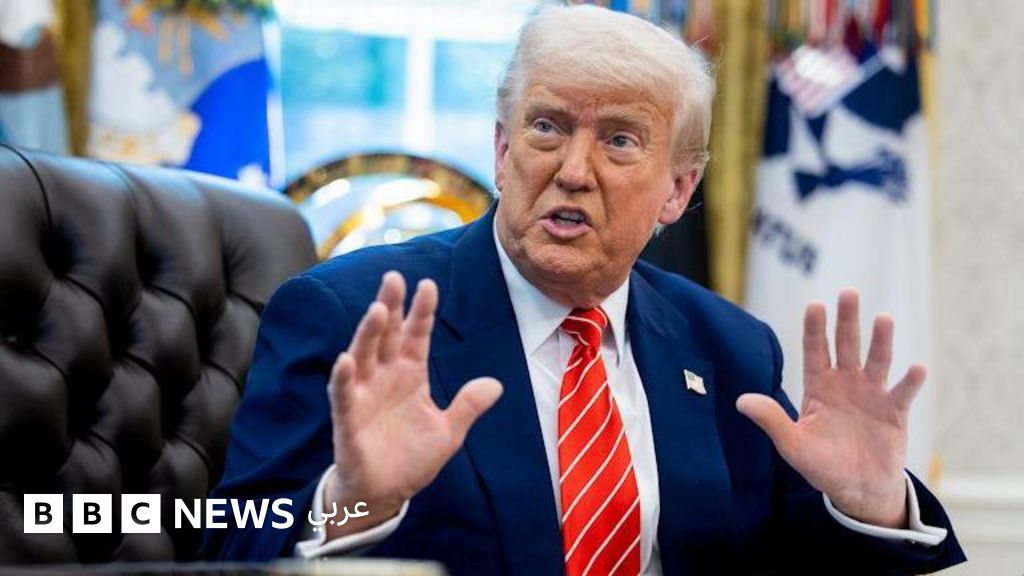
Trump: We will control Strait of Hormuz 'for a price', Iran warns regional leaders 'flames will engulf everyone'
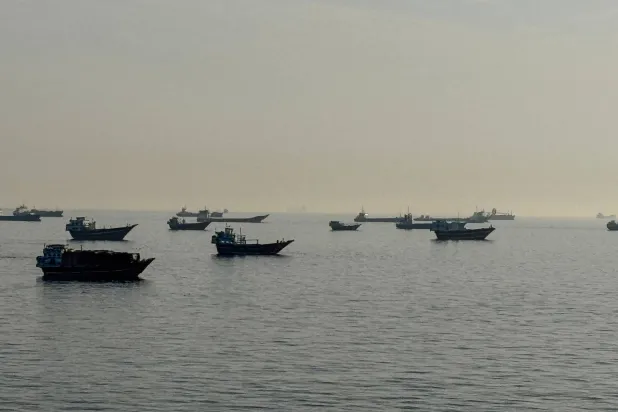
Image caption, Trump said Washington had protected Hormuz for 50 years without compensation
Published 13 July 2026, 14:16 GMT
Last updated 32 minutes ago
Reading time: 5 minutes
US President Donald Trump said the United States will control the Strait of Hormuz and will receive 'financial compensation for this', while Iran responded that it 'will not allow America to interfere in the management of the strait'.
Trump added in telephone remarks to Fox News on Monday, saying his country will control the Strait of Hormuz and will protect it 'and the United States will get a lot of money for this'.
'We have protected the strait for fifty years, and we have not charged a fee for that, we protected it for free, but now we will make money.'
The Iranian response quickly came from the Supreme Military Command Headquarters of the Iranian forces, Khatam al-Anbiya Headquarters, that the Islamic Republic of Iran 'will not allow' in any way America's interference in the management of the Strait of Hormuz.
The spokesman for the central Khatam al-Anbiya Headquarters affirmed: 'The armed forces will deal firmly with any disruption of ship passage by the US military outside the path designated by Iran.'
The spokesman accused 'America's repeated adventures' and its interventions in managing the Strait of Hormuz of seriously endangering the security of the region, international trade, and the passage of oil tankers and commercial ships.
The central Khatam al-Anbiya Headquarters warned leaders of the region's countries that any 'cooperation with America and providing logistical support to its aggressive army will be considered a war on Iran's sovereignty and national security, and if the war spreads to the region, its flames will engulf all its countries.'
Regarding the agreement with Iran, Trump told Fox News: 'Iran got nothing from me; they are a bunch of bad guys. We had an agreement, and they broke it. We will hit them very hard, we will likely take over management of the strait and the United States will be the protector of the strait.'
Skip most read and continue reading
Houthis announce Sanaa airport hit by 'Saudi bombing', Yemeni government claims targeting airport runway to prevent landing of Iranian plane
Why do mosquitoes bite some people more than others?
Departure of Sam Neill... star of 'Jurassic Park' who chose a life away from Hollywood
UK: 12 people arrested for threatening an Islamic event in Suffolk
But the Iranian Foreign Ministry accused Washington of violating the agreement and said in a statement on Monday: 'While only 25 days have passed since the signing of the war-ending agreement, the American regime has openly violated almost all terms of the agreement and committed the most heinous war crimes by attacking transportation infrastructure in Iran, fishing boats, cargo ships, meteorological facilities, and buildings.'
Skip content and continue reading
Reports of explosions near Strait of Hormuz, Iran announces casualties and continuing consultations with mediators 4 hours ago
Syria gives Trump a way to bypass Strait of Hormuz – article in The Telegraph 11 July 2026
United States and Iran: What are the options for Gulf states amid continued Iranian attacks? 12 July 2026
content end
Oil rises after exchange of attacks
Skip podcast and continue reading
Worth attention
In-depth explanation of the most prominent events and topics, to help you understand the most important changes around you and their impact on your life
Episodes
Podcast end
Iran struck military bases in Bahrain, Kuwait, Oman, and Jordan on Monday, in response to American attacks on its territory on Sunday evening, as US Central Command (CENTCOM) announced the conclusion of a new wave of offensive strikes against Iran.
Control of the Strait of Hormuz, the vital corridor for global oil supplies, has become one of the main battlegrounds in this conflict. Iran's de facto blockade of the strait has driven up energy prices and fueled concerns about global inflation.
After announcing the closure of the strait on Saturday following what it described as 'unauthorized passage', Tehran said on Sunday that the suspension of traffic was still ongoing and that permits would be issued once 'stability and calm' were restored.
The Iranian Revolutionary Guard said in a statement on Monday that the only way to return navigation to normal in the strait is to end US military interventions in the waterway, and warned that 'continuation of these interventions will exacerbate crises in the global oil and gas sector'.
US and Iranian forces exchanged intense missile and drone attacks over the past few days, and Tehran said it targeted US military facilities in Gulf countries and again announced the closure of the Strait of Hormuz, sending oil prices soaring.
This escalation was reflected in oil prices, which jumped sharply on Monday at the start of the new week's trading, after the weekend.
European condemnation
This escalation raised concern among European countries, and the foreign ministers of Germany, France, and Britain condemned on Monday the attacks launched by Iran on commercial ships in the Strait of Hormuz and on countries in the region.
The three countries added in a joint statement: 'We condemn Iran's reprehensible attacks on commercial shipping in the Strait of Hormuz and on countries in the region, including Qatar, Kuwait, Oman, and Jordan.'
The three countries, known as the European Troika, called for the reimplementation of a ceasefire and the resumption of negotiations.
Frequent power outages
Iranian authorities announced the death of two people and injuries to others in an American attack on various sites in the city of Abadan in southwestern Iran on Monday.
The local Mehr news agency reported explosions of unknown origin in two areas in southern Iran near the Strait of Hormuz, as mutual strikes between Iran and the United States continue.
Media outlets and residents confirmed hearing explosions on Monday afternoon near Bandar Abbas and Qeshm Island.
The United States resumed its airstrikes on Iran over the past few days, and US Central Command (CENTCOM) announced that it had launched successive waves of intensive airstrikes targeting about 40 military sites across Iran.
Concurrently with these attacks, several Iranian provinces experienced frequent and prolonged power outages. According to field reports and testimonies, power outages lasted for several hours daily in key areas, including Tehran, Alborz, Khuzestan, Shiraz, and Mashhad. A number of Iranian citizens spoke to the Middle East Daily about the situation.
One Iranian said: 'The past few days have seen a peak in power outages, and the main problem is that we do not receive any advance notice of the outage times.'
The person, who works as a merchant, added that 'when the electricity goes out, air conditioners and water pumps stop, leading to water cuts as well.'
He explained that the electricity did not cut off during the funeral ceremonies of the late Supreme Leader Ali Khamenei, but the voltage was low, 'which caused damage to a number of electrical appliances.'
He criticized the timing of power outages and their impact on his business, saying 'The electricity is cut during our most important working hours, that is, when temperatures drop and people leave their homes to shop. So the streets are plunged into darkness, and we cannot sell our products.'
Original source: BBC Arabic


Comments (0)
Be the first to comment.