China, Pakistan, and Oman Move to Revive Negotiation Path with Iran
Pakistan and China are exploring a path to resume stalled talks between the United States and Iran on ending the war that has been ongoing for about five months.
Three Pakistani sources said Islamabad is exploring a path to resume stalled talks between the United States and Iran on ending the war that has been ongoing for about five months, as part of a diplomatic initiative led by China, while Oman has intensified its contacts with Tehran regarding navigation security and regulating ship traffic in the Strait of Hormuz.
The diplomatic moves come as the Wall Street Journal reported that US President Donald Trump has become more impatient with the continuation of the war and more skeptical about the possibility of reaching a lasting diplomatic settlement, amid rising military losses and economic and political pressures within the United States.
Chinese Move via Pakistan
Reuters reported from Pakistani sources that exploratory discussions took place during Iranian Interior Minister Eskandar Momeni's visit to Islamabad this week, his second in ten days.
Data released by the Pakistani government showed that Momeni, a former commander in the Revolutionary Guard, met this week with Pakistani government officials and Army Chief Asim Munir.
The three sources emphasized that the obstacles to resuming any talks with the United States remain significant.
Pakistan finds itself in an increasingly complex position as a potential mediator in the next phase, amid continued Iranian attacks on Gulf states and disruptions hampering navigation in the Strait of Hormuz.
A still from a video released by US Central Command, which says it documents a precision strike targeting Iranian military capabilities on Thursday (AFP - CENTCOM)
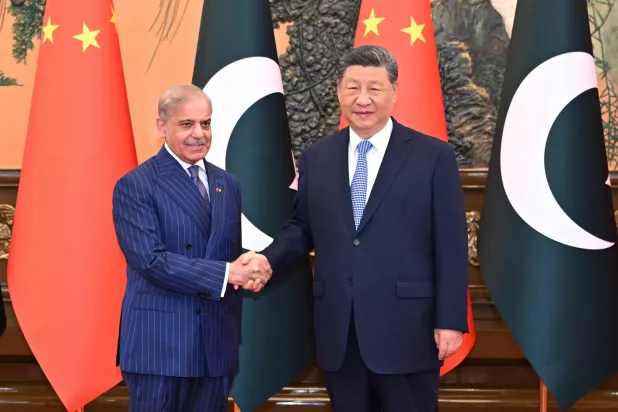
Islamabad relies heavily on Beijing, which is a major financial backer, and has direct economic interests in reaching a diplomatic solution that would allow the reopening of key trade routes in the Middle East.
The three Pakistani sources said Foreign Minister Ishaq Dar also discussed the new Middle East initiative with Chinese officials during his visit to China last week. The sources requested anonymity because they are not authorized to speak publicly on the matter.
A Pakistani government official said: 'The Chinese are upset because Iran's attacks on other Gulf states and the closure of the Strait of Hormuz harm their interests.' He added that the unrest in the Red Sea will also affect another major trade route that Beijing relies on.
Ishaq Dar and the Pakistani military's media wing did not respond to requests for comment.
China's Foreign Ministry said in a statement that 'China supports the mediation efforts of Pakistan and other parties.'
It added that Beijing will continue 'to play an active role in restoring peace and stability in the Gulf and Middle East regions as soon as possible.'
Hormuz at the Heart of Efforts
China is Iran's largest trading partner and the main buyer of its crude oil exports, despite international sanctions on Tehran, benefiting from significant discounts on Iranian oil prices.
Beijing has also increased its support for Iran's security over the past years by providing dual-use components, equipment for electronic chip manufacturing, and satellite navigation systems, although it has not provided overt military aid to Tehran since the outbreak of the war.
China has consistently supported Pakistani mediation efforts, and in March it dispatched its special envoy to lead a round of shuttle diplomacy in the Middle East.
The United States and Iran had signed a memorandum of understanding in June to move toward ending the war, following mediation by Pakistan and Qatar. It aimed to provide a 60-day window for negotiations on a permanent agreement.
But the indirect talks made no progress, and the two sides exchanged accusations of violations before confrontations resumed.
The Iranian escalation against Gulf states, along with continued restrictions on navigation in the Strait of Hormuz, has increased the risks and obstacles to the latest Pakistani diplomatic efforts.
A Pakistani official said stopping attacks on Gulf states has become 'a precondition for resuming any talks.' He added that Pakistan has conveyed this message to Iran.
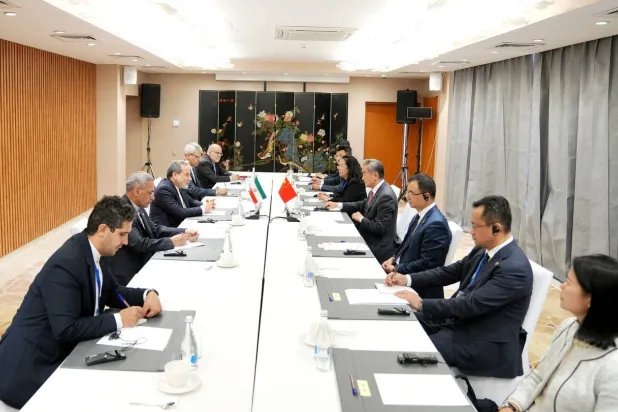
Iranian Foreign Minister Abbas Araghchi met today with his Pakistani counterpart Ishaq Dar on the sidelines of the Shanghai Cooperation Organization (SCO) Council of Foreign Ministers meeting in Kyrgyzstan, amid Pakistani efforts to resume mediation. No details were announced regarding the content of the meeting.
Araghchi meets his Pakistani counterpart Ishaq Dar on the sidelines of the SCO foreign ministers meeting in Kyrgyzstan (Iranian Foreign Ministry)
Omani Move to Regulate Navigation
In parallel, Oman has intensified its contacts with Tehran regarding the Strait of Hormuz. Iran's official IRNA news agency reported that an Omani diplomatic delegation arrived in Tehran for talks aimed at 'developing appropriate mechanisms to regulate ship traffic in the Strait of Hormuz,' as part of ongoing consultations between the two countries.
Later on Friday, Iranian Foreign Minister Abbas Araghchi held a phone call with his Omani counterpart Badr al-Busaidi, which, according to Iranian state TV, covered the latest regional developments, navigation security, and the movement of commercial vessels in the Strait of Hormuz and the Arabian Gulf.
The talks also included ways of regional cooperation to prevent further escalation, maintain navigation security, and establish peace and stability in the region, following the exchange of strikes between US and Iranian forces.
Araghchi said the problem between Tehran and Washington is 'not the absence of a mediator, but the American approach,' adding that Iran will not respond to 'the language of force, pressure, and threats.'
He added that his country 'does not fear threats and will not succumb to pressure,' and that protecting the Iranian people and Iran's interests in the Strait of Hormuz represents 'one of the fundamental principles' of its policy.
Araghchi said Tehran will continue its actions until achieving what he described as 'the legitimate demands of the Iranian people.' Iranian TV quoted him as saying that Iran will not agree to a ceasefire before its demands regarding the Strait of Hormuz are met.
Trump Loses Patience
In Washington, the Wall Street Journal reported that Trump has become more impatient with the war with Iran as it enters its fifth month with no clear end, amid rising military losses and economic and political pressures inside the United States.
The newspaper quoted a senior administration official as saying that Trump has become more skeptical about the usefulness of the diplomatic track, believing that Tehran 'only understands military force,' adding that the president has entered what he described as 'revenge mode' against Iran, and sees no good options other than continuing strikes.
A person who heard Trump during a recent Oval Office meeting said he launched a sharp attack on Iranian leaders, using profane language.
According to officials and people close to the president, Trump is frustrated because a war he thought would end in weeks has dragged on for months, despite a ceasefire announcement in April and a memorandum of understanding with Tehran in June to reopen the Strait of Hormuz. Brief periods of calm quickly ended before confrontations resumed.
Original source: Asharq Al-Awsat



Comments (0)
Be the first to comment.