Japanese Defense Minister Calls for Discussion on Nuclear Weapons
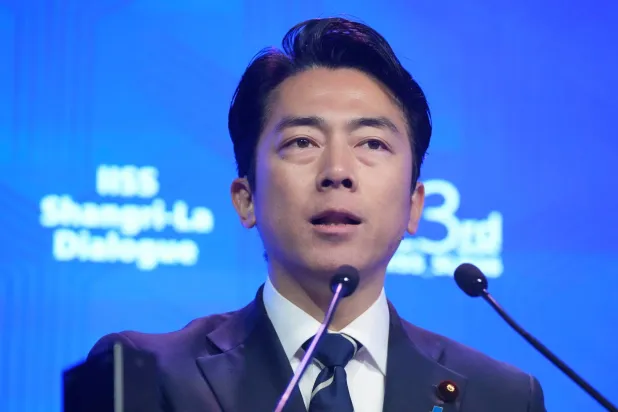
Japanese Defense Minister Shinjiro Koizumi said his country needs a discussion on nuclear weapons, as some European countries seek to strengthen nuclear deterrence.
At the opening of the World Artificial Intelligence Conference in Shanghai, Chinese President Xi Jinping stressed on Friday that this technology must not be monopolized by a single country, calling for international cooperation in this field as competition intensifies between Washington and Beijing.
Day by day, competition is escalating between Chinese startups such as 'Monsoon AI', 'Minimax', and 'Z.AI' and American groups, with a particular focus on more affordable prices for this technology that attract users around the world.
Setting regulatory controls has become essential to curb the growth of this technology, which fuels disinformation, cyberattacks, and algorithmic bias, and is used by the military and exploited by hackers or terrorist groups.
The first time
Xi Jinping said during the opening of the conference, which runs until next Monday, that 'the growth of artificial intelligence should not be monopolized by a single country, but should be in harmony in the field of international cooperation.'
0 seconds of 0 secondsVolume 90%
Press shift question mark to access a list of keyboard shortcuts
00:00
00:00
00:00
According to Agence France-Presse, this is the first time the Chinese president has delivered a speech at such events, reflecting the strategic importance Beijing attaches to this sector.
Xi stated: 'We must jointly confront... a country prioritizing its security at the expense of other countries,' in a veiled reference to restrictions imposed by the United States and the European Union on Chinese technology imports.
Bo Gao, founder of the platform 'Hello China Tech', pointed out that 'the United States is still more advanced in the field of advanced chips, precision computing infrastructure, and developing models that require greater financial resources.'
But he confirmed that 'China is its fiercest competitor... and its advantages lie in open-source models, cost optimization, speed of use, robotics, and integrating AI into manufacturing processes.'
He considered this conference, known by its acronym 'WAIC', as 'the most important annual event to keep abreast of the latest trends in the field of AI in China.' The conference hosts more than 1,100 companies and presents about 3,000 products and technologies.
'Focuses on humans'
Xi Jinping stressed the need to 'adopt laws, regulations, monitoring systems, early warning, and emergency intervention... to ensure that AI always remains under human control,' calling for a 'human-centric' approach to this technology.
In this context, Chinese Foreign Minister Wang Yi and representatives of 29 countries, including Russia, signed an agreement to establish an international governmental cooperation group in the field of AI.
The goal of the International AI Cooperation Organization (WAICO), headquartered in Shanghai, China, is to enhance consultation and cooperation among members to ensure 'healthy and orderly' growth of AI, according to Chinese media.
0 seconds of 0 secondsVolume 90%
Press shift question mark to access a list of keyboard shortcuts
00:00
00:00
00:00
A spokesperson for the Chinese Foreign Ministry said on Thursday that 'China opposes any form of bloc confrontation and technological blockade.'
He noted that Beijing aims to use the conference to 'hold candid talks' and 'reach consensus,' so that 'technological progress becomes a driver of humanity's growth and prosperity.'
Massive investments
Since 2018, the World Artificial Intelligence Conference has been held, bringing together researchers, companies, and decision-makers to showcase the latest innovations in this field and discuss ethical and geopolitical stakes.
Among the notable products presented in the 2026 edition are the 'M3' model from 'Minimax', the first phone with independent AI capabilities, and an updated version of 'Atlas 950' from 'Huawei' for learning and analysis, as well as many human-like robots.
On Friday morning, the startup 'Monsoon AI' unveiled its new highly advanced AI model 'Kimi Kai 3'.
AI has become a pillar of China's industrial policy, driven by massive investments and strong political support, aiming to establish an independent ecosystem from advanced chips to public-facing applications.
Last year, the value of China's AI market exceeded 1.2 trillion yuan ($177 billion), with expected growth of over 30% in 2026, according to official figures.
In 2025, China had over 6,000 companies active in the AI field.
Original source: Asharq Al-Awsat





Comments (0)
Be the first to comment.