Are the outlines of 'New Gaza' starting from the Tel al-Sultan neighborhood in Rafah?
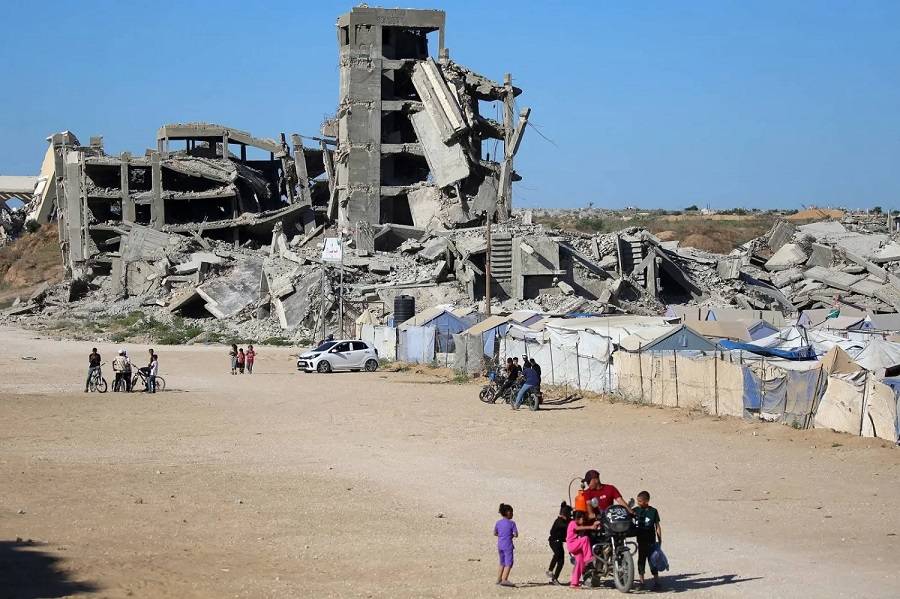
Summary: 'Plan B' aims to turn Tel al-Sultan in Rafah into an experimental field for 'New Gaza', by dividing the sector and starting to pump reconstruction and aid funds into alternative civil administration areas under the supervision of the 'International Stability Force', thereby confining the presence of armed factions to the western Gaza areas only.
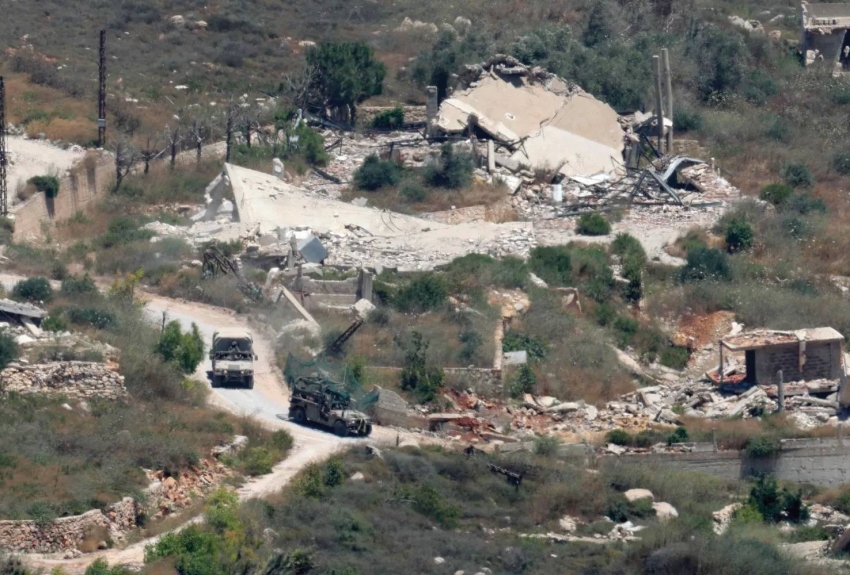
In public moves, the 'Peace Council' began inaugurating the first humanitarian zone in eastern Gaza under Israeli control, as the Tel al-Sultan area west of Rafah city witnesses intense ground movements, with cranes and trucks starting to install mobile homes (caravans) and set up solar power stations and extend water networks deep into the neighborhood, which was destroyed by the war between Hamas and Israel.
It is no coincidence that the 'Peace Council' chose to inaugurate the experimental humanitarian zone in Rafah, as none of the original Gazans live in Tel al-Sultan area; amid the war, the Israeli army ordered them to evacuate their areas immediately, and the forces imposed full military control over the neighborhood, with armed gangs active inside it imposing a complex security reality.
First practical step
The inauguration of the humanitarian zone in eastern Gaza, far from Hamas control, appears as an expanded relief project and a first step in rebuilding New Gaza, as it fundamentally represents the first steps of practical transition towards 'Plan B', implemented by the 'Peace Council' to impose a new administrative and political reality that neutralizes Palestinian factions regardless of the outcomes of the stalled Cairo negotiations.
'Plan B' is based on the principle of gradually transferring residents from western Gaza, controlled by Hamas, to eastern Gaza currently under Israeli control.
This plan is based on Article No. 17 of US President Donald Trump's 20-point Peace to Prosperity plan, which states: 'In the event that Hamas refuses to give up its weapons or stalls in negotiations, the Peace Council will unilaterally begin establishing model administrative areas within zones under the military's field control, without requiring the factions' approval.'
'Plan B' aims to turn Tel al-Sultan in Rafah into an experimental field for 'New Gaza', by dividing the sector and starting to pump reconstruction and aid funds into alternative civil administration areas under the supervision of the 'International Stability Force', thereby confining the presence of armed factions to western Gaza areas only.
At the core of 'New Gaza', it is based on the principle of dismantling the current political and military identity of the sector, and reformulating it within an American project designed by President Trump's advisers to be an extension of what is known as the 'Middle East Riviera', by turning the Gaza coast into a huge tourism and commercial investment zone integrated with the region's ports and projects.
"Plan B"
The mechanisms of the 'Peace Council' arrived in Tel al-Sultan after a complete deadlock in the negotiations conducted by the 'Peace Council' and mediators with Hamas, as the major sticking point centered on the Palestinian movement's insistence on controlling the civil apparatus of the sector.
The talks hit the dilemma of salaries for about 50,000 government employees appointed by the movement after 2007, along with the file of security supervision over crossings and outlets, as the factions refused to hand over these vital files without a political cover ensuring the survival of their infrastructure, while the American and Israeli side insists on dismantling the military system.
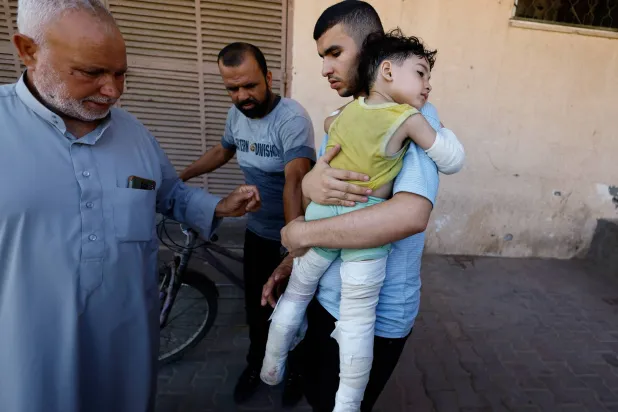
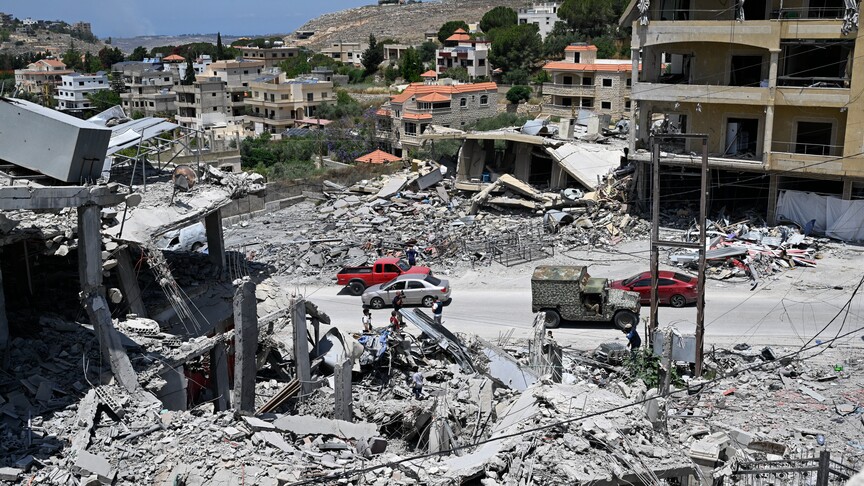
Palestinians at the site of an Israeli airstrike on a residential building in Gaza (Reuters)
The hardening of Hamas's position prompted the 'Peace Council' to withdraw the peace and prosperity plan based on mutual agreement between Hamas and Israel, and to activate 'Plan B', a strategy that does not seek a signature from the factions, but begins to impose the alternative reality directly on the ground.
Therefore, the 'Peace Council' embarked on a process of isolation and military clearance carried out by Israeli forces on the Tel al-Sultan neighborhood in Rafah to turn it into a completely demilitarized zone, for the 'Peace Council' to immediately fill the void by providing humanitarian services and civil alternatives, bypassing any administrative structure in Gaza.
The CEO of the 'Peace Council', Nikolay Mladenov, comments saying: 'The process is extremely complex and requires taking many small steps to eventually reach an agreement on the full implementation of the plan; ground movements, building trust, and meeting basic needs are the direct path to the day after.'
On the ground in Gaza, the 'Palestinian National Committee for the Administration of Gaza' is supposed to take over, the face of the new internationally accepted civil administration, as preparations are underway to begin its work in managing the safe zones.
Political researcher Ahmed al-Ajla says: 'This administrative scheme aims to gradually and softly pull the rug from under the feet of government institutions affiliated with Hamas. The movement understood the recent measures and repositioned itself to avoid direct administrative confrontation and avoid bearing the living responsibility before the population in areas that have militarily and geographically left its effective control.'
Indeed, Hamas dissolved its government emergency committee and announced its readiness to transfer the administration of Gaza to a technocrat government, but it seems the 'Peace Council' is determined to move the residents of western Gaza to eastern areas. Al-Ajla adds: 'This engineering works to dry up the environment that harbors weapons. Instead of engaging in political battles over disarmament, the factions are deprived of the most important tools of their authority, which is control over livelihood, aid, and jobs. The citizen finds himself facing an explicit equation: either accept the new civil administration model to obtain housing, work, and services, or cling to the old system and remain in isolated military squares deprived of reconstruction.'
How did Hamas deal with Plan B?
Quickly, Hamas confronted 'Plan B' by announcing the dissolution of the 'Government Emergency Committee', a step that prompted political researchers to question whether this decision was a retreat by the movement, or just a new political maneuver?
Historically, Hamas follows the tactic of 'temporary bowing before the storm' when pressures intensify. By withdrawing from managing daily life, the movement wants to shift the heavy humanitarian burden and the files of health, relief, and salaries entirely onto the shoulders of the 'Peace Council' and the international community.
Movement spokesman Hazem Qassem indicates that Hamas decided to dissolve the government committee to facilitate the entry of aid to end suffering, and because it will not be an obstacle to any humanitarian arrangements, affirming the movement's readiness to hand over facilities.
Security researcher Hisham al-Mughari says: 'The presence of the technocrat committee only in eastern Gaza may pave the way for a Palestinian clash scenario if the new police tries to impose law and disarm within the humanitarian zones, which the factions' fighters will militarily reject, threatening to blow up the entire region.'
He adds: 'Because Hamas is well aware of this, it has already begun implementing a silent infiltration plan to bypass the security sorting, as it resorted to strengthening its relations with clans and large families to ensure the survival of its influence and real authority, and to become able to direct the street and control the levers of New Gaza without needing to raise its slogans publicly.'
How does the council deal with the weapons file?
Original source: Independent Arabia

Comments (0)
Be the first to comment.