Turkey and Lebanon... What does each want from the other?

Summary Amid geopolitical shifts redrawing the balance of power in the Middle East, Turkish President Recep Tayyip Erdoğan's statement that Turkish national security begins in Beirut, Aleppo, and Damascus has raised questions about the true role Ankara seeks to play in Lebanon.
At a time when the region is being reconfigured and each state works to cement its position within the new balances for fear of becoming a victim, a statement by Turkish President Recep Tayyip Erdoğan emerged, placing Lebanon directly within Turkey's national security circle.
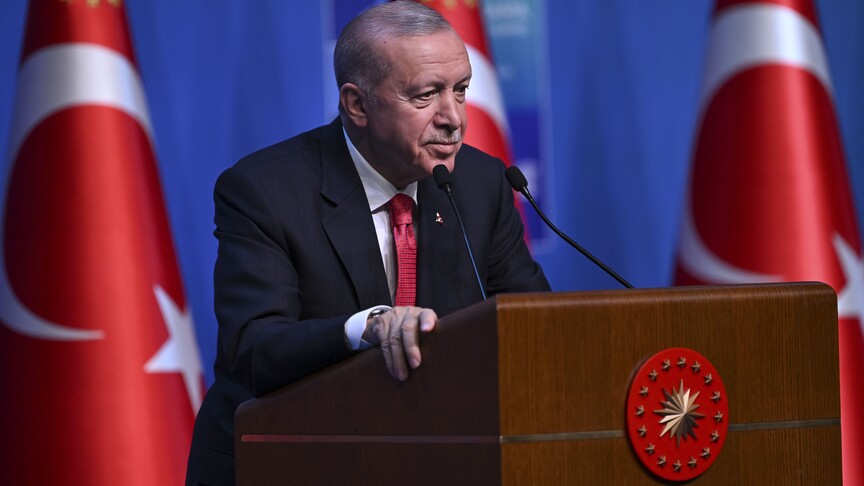
When Erdoğan declared a short while ago that Turkey's security "does not begin at Hatay, but in Aleppo, Damascus, and Beirut," he was not only speaking of political solidarity with neighboring countries, but was drawing a wide geographical scope for Turkish security interests, stretching from his country's southern borders to the heart of the Levant and the Eastern Mediterranean.
Erdoğan's words came in the context of his warning about military and political developments in Syria and Lebanon, and about attempts to impose new facts on the ground in the region. However, placing Beirut alongside Aleppo and Damascus raised questions beyond the content of the speech itself: Why has the Lebanese capital become part of the Turkish security perception? What does Ankara want from Lebanon in the new phase? Is it seeking to build a partnership with the Lebanese state, or to expand its influence in the space left by the retreat of the Iranian project?
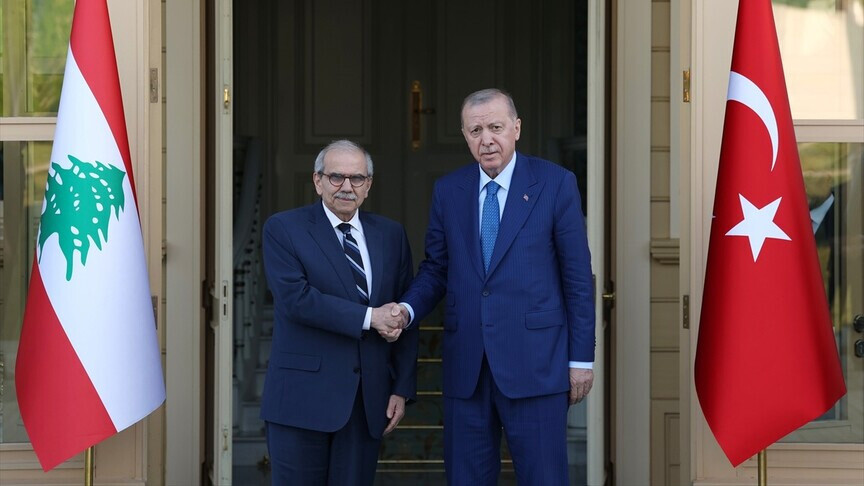
These questions gained prominence after Lebanese Prime Minister Nawaf Salam's visit to Istanbul last Friday and his meeting with Erdoğan at the Vahdettin Palace during an official working dinner. The Turkish Presidency announced that the meeting covered bilateral relations and regional issues, while the Presidency's Directorate of Communications had clarified before the visit that the discussions would include Turkey's support for Lebanon's unity, sovereignty, and stability.
According to cross-referenced political and diplomatic information, the visit cannot be separated from three main files: Syria's security and its repercussions on Lebanon, Turkey's attempt to ensure its presence in new Eastern Mediterranean arrangements, and exploring opportunities for economic cooperation, energy, and reconstruction.
Lebanese observers hide their concerns about the possibility that Turkey may seek to fill part of the vacuum resulting from the decline of Iranian influence (AFP)
Beyond Bilateral Relations
In form, Salam's visit came within the framework of official contacts between Beirut and Ankara. However, its timing gave it dimensions that go beyond the issue of developing traditional diplomatic relations.
Lebanon is going through a phase of reorganizing its foreign relations, in parallel with developments related to the south, rebuilding state institutions, the new relationship with Syria, and seeking political and economic support to help it overcome the repercussions of successive wars and crises.
Turkey, on the other hand, views the ongoing transformations as an opportunity to re-establish its position as a central player in the Levant. Especially since it does not want to remain outside any arrangements related to the future of Lebanon and Syria or the security of the Eastern Mediterranean, particularly amid the widening regional competition over economic corridors, energy lines, and spheres of influence.
The Lebanese side put on the negotiating table the possibility of developing economic and commercial cooperation, benefiting from Turkish capabilities in construction, infrastructure, transport, and energy, in addition to discussing the political support that Ankara could provide to Lebanon in the coming phase.
In return, the Turkish side focused on the importance of Lebanon's stability, controlling the Lebanese-Syrian relationship, and preventing it from becoming a source of security disruption for the new Syria or a launching point for movements that could affect Turkish interests.
Nawaf Salam's visit to Turkey came at a sensitive regional time that goes beyond traditional bilateral relations (AFP)
Relations Pass Through the State
Sources close to President Joseph Aoun and Prime Minister Nawaf Salam say that official visits and openness to Turkey are part of a plan to build balanced relations with regional countries through Lebanese state institutions, not through parties, sects, or local leaders.
The sources explain that the approach adopted by the two presidents is based on preventing the establishment of direct relations between a regional state and a Lebanese party that represents its interests inside the country, after the experience of past decades showed the danger of some Lebanese components’ external relations turning into political and security ties that bypass the state.
Moreover, Lebanon seeks to adopt a balanced foreign policy that paves the way for neutralizing it as much as possible from axis conflicts, so that its relations with Turkey, Iran, Arab countries, and other regional powers are based on mutual state interests, not on exploiting sectarian divisions or building local influence networks.
From this standpoint, the sources say that Salam's visit aimed to lay the foundations for formal political and economic cooperation with Ankara, and to establish agreements that can be followed up through the two governments and relevant institutions, away from any parallel channels.
The sources add that the Lebanese presidency does not interpret Erdoğan's statement as a declaration that Lebanon has officially entered Turkey's sphere of influence, but it takes the security content of the words seriously. The weakness of the Lebanese state and the lack of effective border control allow Lebanon to be used as a platform for the interests of regional powers, whether aligned with or opposed to Turkish interests.
The sources believe that one possible interpretation of Erdoğan's phrase is that Ankara does not want Beirut or Lebanese territory to become a threat point to the new Syria, given the close relationship between Turkey and the Syrian authorities led by President Ahmed al-Sharaa.
Security of Damascus
Since the transformations witnessed in Damascus, the stability of the new Syrian regime has become a direct Turkish priority. Ankara believes that any new security collapse in Syria could reopen the displacement file, give armed groups and separatist forces an opportunity to reorganize, and may allow the return of Iranian influence through indirect gates.
Meanwhile, Turkey views the Lebanese-Syrian border as one of the potential gaps. Over the past years, this border has been used to transport weapons, money, and fighters, and extensive smuggling networks have emerged across it, benefiting from the weakness of both states' institutions.
In this context, Ankara does not want Lebanon to remain an open space for the reformation of a military or security structure linked to Iran on Syria's western borders. It fears that Lebanese areas could become support centers for forces opposing the new Syrian authorities or destabilizing them internally.
These concerns gain additional importance after Lebanon and Syria agreed at the beginning of this July to establish a joint higher committee to develop political, economic, and security cooperation, including files on energy, transport, trade, and border security.
Erdoğan's statement placed Beirut within Turkey's national security concept alongside Aleppo and Damascus (AFP)
Inheriting Iran?
Despite the official nature of the visit, Lebanese observers hide their concerns that Turkey may seek to fill part of the vacuum resulting from the decline of Iranian influence.
Original source: Independent Arabia


Comments (0)
Be the first to comment.