Human Rights Organizations Call for Suspension of Support to Tunisia on Migration
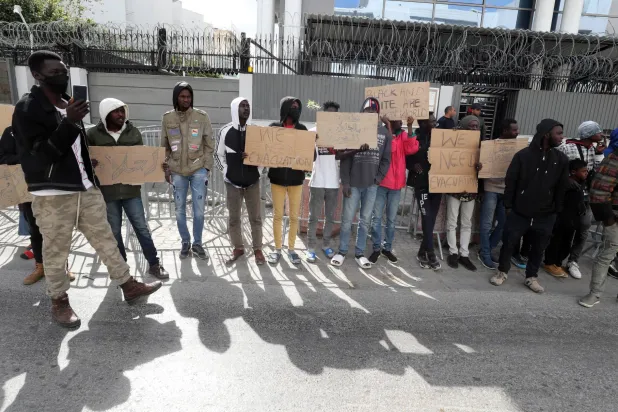
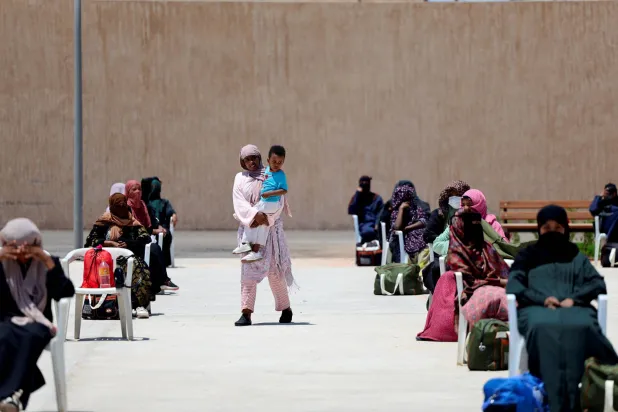
Dozens of human rights organizations on Thursday urged the European Union to suspend support provided to Tunisia on migration, under an agreement signed three years ago.
Egypt's Seaports... A Bet to Counter the Repercussions of 'Hormuz' Disruptions
The Egyptian government is betting on trade movement through its seaports to counter the effects of disruptions in the Strait of Hormuz in recent months.
Minister of Transport Kamel al-Wazir stressed the importance of expanding the implementation of new projects in Egyptian ports and abroad to enhance their role in maritime transport. During an extraordinary general assembly meeting of the 'Egyptian Maritime Ports Company' on Thursday, he emphasized 'exerting all efforts to continue providing the highest and best global rates in maritime transport performance.'
Economic experts pointed out that 'the Egyptian government relies on investment in seaports to increase maritime commercial transport rates, benefiting from its geographical location and the Suez Canal,' and noted that 'maritime transport is one of the country's foreign exchange resources.'
On more than one occasion, Egyptian officials have spoken about their country being affected by regional disturbances and the impact on navigation in the region's waterways, particularly in the Strait of Hormuz.
According to official estimates, Egypt lost more than $10 billion in Suez Canal revenues.
The operation of Egyptian seaports recorded the reception of 221 ships in the first half of this year, with a total trading volume exceeding 500,000 containers, according to the head of the 'Egyptian Maritime Ports Company', Major General Abdel Qader Darwish. During the company's general assembly meeting, he said that 'the growth rate reached 22 percent compared to the same period last year,' according to a statement from the Egyptian Ministry of Transport.
Egypt focuses on developing ports amid escalating regional disturbances (Egyptian Ministry of Transport)
The Egyptian Minister of Transport considered the 'Tahya Misr' multi-purpose terminal as one of the most important maritime transport projects operated recently, and stressed 'the terminal's continued provision of the highest global performance.'
The government inaugurated the 'Tahya Misr' terminal at the Alexandria seaport on the Mediterranean coast in June 2023, and it includes handling yards covering half a million square meters.
The government has pushed numerous investments in the ports and maritime transport sectors in recent years to enhance their economic role in partnership with foreign and local private sectors, according to member of the 'Egyptian Society for Economics and Legislation' Waleed Gaballah. He said that 'the Egyptian government relies on investing its geographical location on the Mediterranean and Red Seas, and the Suez Canal artery, to become a regional logistics hub for container handling.'
Gaballah told Asharq Al-Awsat that Egyptian ports 'have achieved a boom in maritime transport movement in recent years, and contributed to their transformation into transit corridors for ships, not just container storage areas,' noting that 'the Egyptian government strengthened the role of ports by connecting them with internal land routes, which supported the link between the Red and Mediterranean Sea ports.'
The maritime transport sector constitutes one of the foreign exchange resources for the Egyptian government, according to economic expert Mustafa Badra. He said that 'the map of seaports is one of the fundamentals of investment movement and expansion in the industrial sector recently,' noting that 'trade movement through Egyptian ports contributed to increasing export activity abroad.'
Badra believes, in statements to Asharq Al-Awsat, that 'infrastructure investments in Egyptian ports have made them one of the solutions and alternatives to compensate for the navigation crisis through the Strait of Hormuz during the Iranian war,' and said that 'Gulf countries opened corridors with Red Sea ports in Egypt and from there to Europe as one of the bets activated in the region to mitigate the supply chain crisis in recent months.'
Minister of Transport Kamel al-Wazir on a visit to one of Egypt's ports (Egyptian Ministry of Transport)
Egyptian ports have witnessed activity recently, against the backdrop of the supply chain crisis caused by the war on Iran, after increasing maritime connectivity lines with regional countries, including the inauguration of the multi-modal logistics corridor 'NEOM-Safaga' between Gulf Cooperation Council countries and Europe. The government also strengthened the link between GCC countries and Europe via the 'Ro-Ro' shipping line connecting Damietta Port and the Italian port of Trieste.
Egypt owns a map of seaports on the Red and Mediterranean Seas, and aims to develop them to improve their role in intra-regional and international trade. The Egyptian Ministry of Transport said that 'the development process of all Egyptian ports aims to transform Egypt into a regional center for transport, logistics, and transit trade, and to increase the capacity of these ports to attract investments and accommodate the growing trade movement.'
Original source: Asharq Al-Awsat


Comments (0)
Be the first to comment.