Eisenkot Surpasses Netanyahu as Israeli Elections Approach

Summary: According to an Israeli public opinion poll, the Yashar party led by Eisenkot would win 24 seats in the Knesset, compared to 23 for the Likud party led by Netanyahu. Forming a government coalition requires the support of 60 Knesset members, meaning neither party can form a government alone without support from other parties.
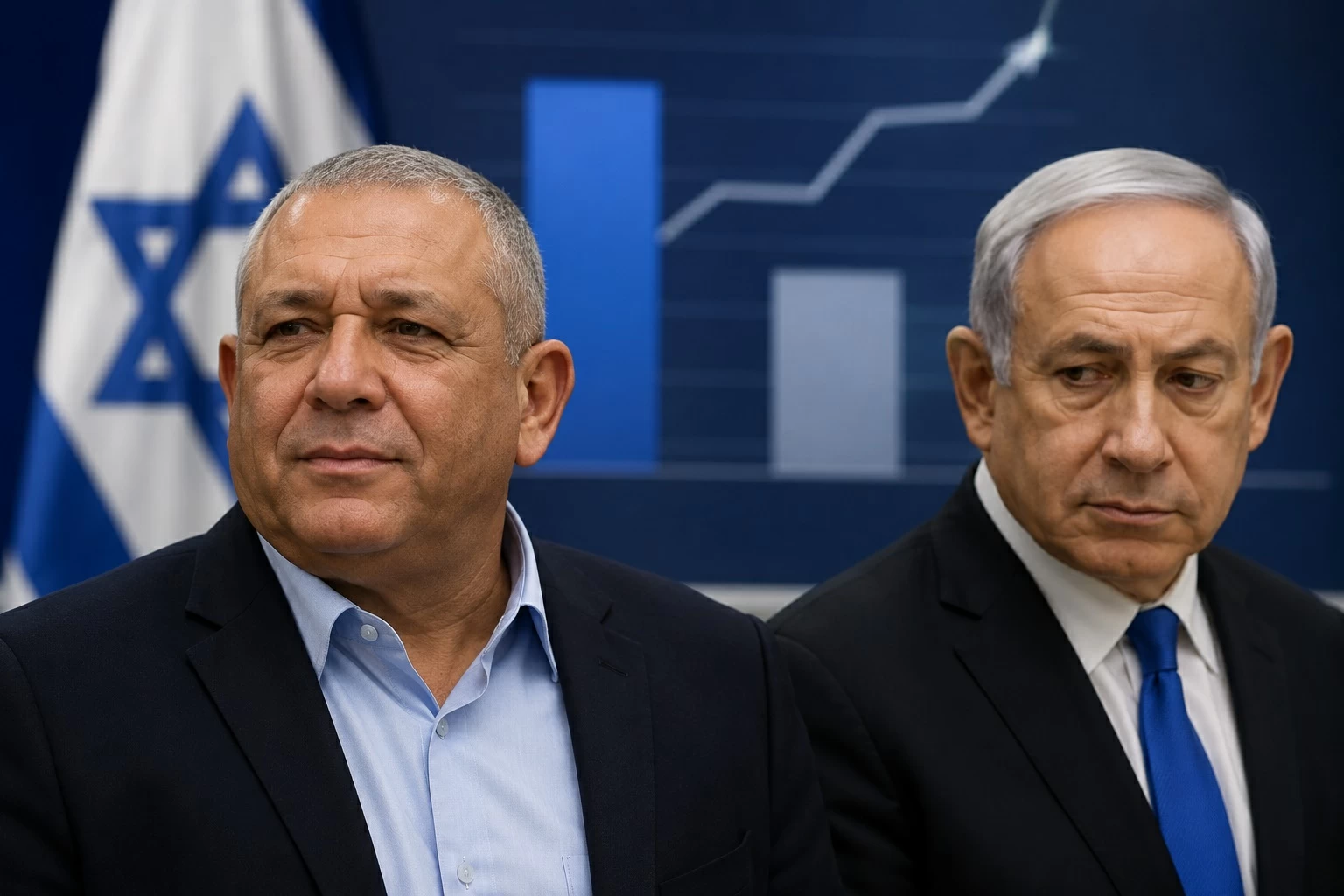
As the only figure capable of defeating Israeli Prime Minister Benjamin Netanyahu, Yashar party leader Gadi Eisenkot continues to rise in opinion polls, about 100 days before the Israeli elections.
Although Eisenkot's party, whose name means 'straight' in Arabic, was founded just a few months ago by figures from the center-right, it has now surpassed Netanyahu's Likud party.
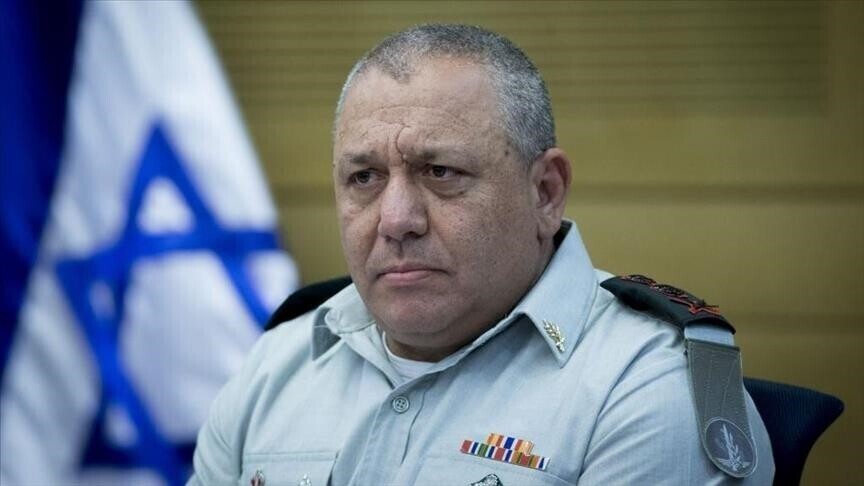
Eisenkot is a quintessential military figure, having risen through the ranks to become chief of staff of the Israeli army between 2015 and 2019. He is of Moroccan descent, born in Tiberias in 1960, studied history at Tel Aviv University, and completed his military studies in the United States.
According to an Israeli public opinion poll, the Yashar party led by Eisenkot would win 24 seats in the Knesset, compared to 23 for the Likud party led by Netanyahu.
Forming a government coalition requires the support of 60 Knesset members, meaning neither party can form a government alone without support from other parties.
Security issues topped the concerns of Israelis in the elections, with 25 percent stating security matters are most important, followed by the failure regarding the October 7, 2023 attack, the establishment of an official investigative committee, then the economy and cost of living, and judicial reform.
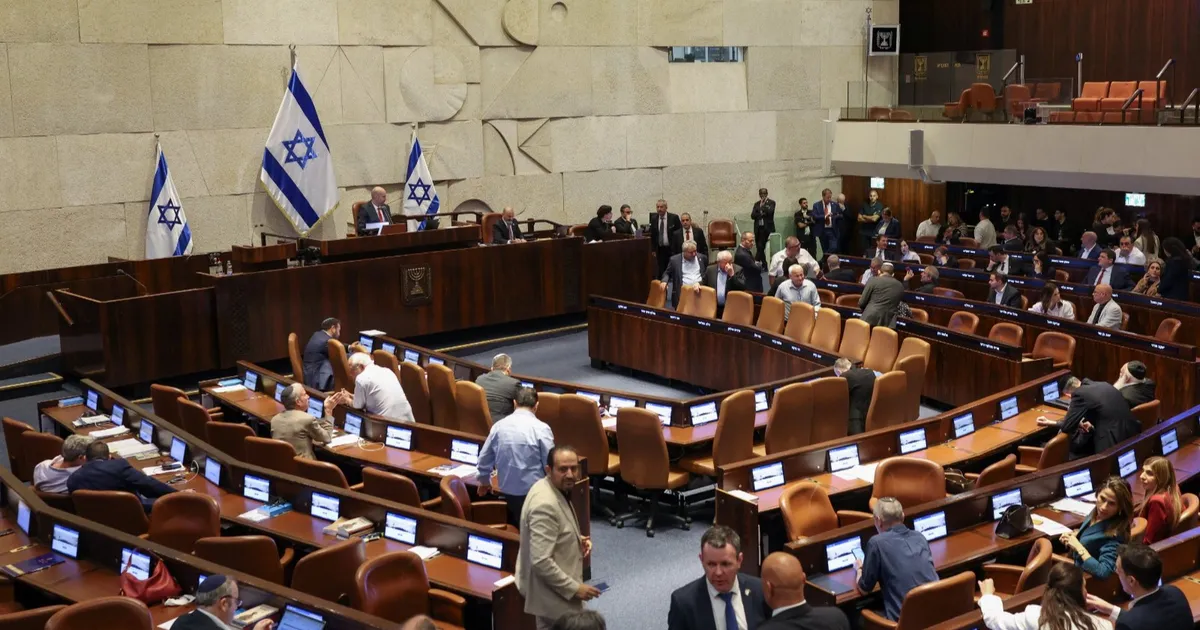
The poll was published by the official Israeli Broadcasting Authority concurrently with the setting of the date for dissolving the Knesset on the 17th of this month, and thus holding Knesset elections on October 27.
The poll showed the 'Be'ahad' party, led by the alliance of former prime ministers Naftali Bennett and Yair Lapid, winning 15 seats, while Yisrael Beiteinu won 10 seats in the poll.
The 'Democrats' alliance, an alliance between the Labor Party and Meretz, won nine seats; the Otzma Yehudit party led by Itamar Ben-Gvir won eight seats; similarly, Shas and United Torah Judaism each won eight seats; and Religious Zionism led by Bezalel Smotrich won five seats.
As for the Palestinian parties in Israel, the 'Front and Arab Change' alliance won five seats, while the Arab Arab list led by Mansour Abbas also won five seats.
Regarding the most suitable person to serve as Israeli prime minister, Eisenkot surpassed Netanyahu, with 41 percent compared to Netanyahu's 37 percent, according to the poll conducted by the Kantar Institute.
Israeli affairs researcher Yasser Manaa believes that 'Eisenkot's rise does not reflect a shift in Israeli society toward the left, or a decline in the centrality of militarization in Israeli political consciousness.'
According to Manaa, Eisenkot's supporters 'want a figure other than Netanyahu capable of managing force, achieving recovery from wars, setting their goals, and turning their field results into sustainable political gains.'
Manaa explained that Eisenkot 'has become a figure capable of confronting Netanyahu because he comes from within the military field, which has made him the most important source of his political legitimacy.'
Read more
Israel plans to establish a settlement in the Palestinian neighborhood of Um al-Lisun in Jerusalem.
Israel kills a Palestinian who tried to enter Jerusalem through the separation wall.
Israeli parliament sets October 27 as date for legislative elections.
According to Manaa, Eisenkot's rise came after 'a shift in the behavior of segments of the opposition from party voting based on ideological proximity to strategic voting based on assessing chances of winning and defeating Netanyahu,' and he noted that the rise of 'Eisenkot's status as a viable candidate caused him to gain more votes from Netanyahu's opponents.'
Regarding the reasons for Eisenkot's superiority over Naftali Bennett, Manaa attributed it to Bennett's alliance with Yair Lapid, which cost him part of his right-wing independence, adding that Eisenkot 'exploited that, presenting a more coherent version because he has deeper military experience and maintains a more stable personal image.'
Regarding Eisenkot's ability to compete with Netanyahu, who built his leadership on linking security to himself, Manaa explained that 'the October 7 attack dealt a blow to that, because it revealed widespread failures in the security and decision-making system.'
According to Manaa, Eisenkot 'benefited from that, because he did not attack the use of force from a pacifist standpoint, but rather focuses on the difference between operational achievement and strategic outcome.'
Weeks after the October 7, 2023 attack, Eisenkot joined the war cabinet, before withdrawing in protest over 'the lack of a verifiable strategy.'
Manaa noted that Eisenkot 'managed to gather the issues that unite the opposition under the concept of responsibility, linking the investigation into the October 7 failure to the recruitment of Haredim, rebuilding the army, and protecting state institutions.'
Although Manaa said Eisenkot 'succeeded in solving the leadership crisis within the camp of Netanyahu opponents,' he pointed out that he 'has not yet been able to obtain a parliamentary majority,' adding that this 'requires Eisenkot to achieve a tangible breakthrough within the Likud base, or the support of Arab parties, or the transfer of a religious or right-wing party from Netanyahu's camp to his camp.'
Israeli affairs researcher Salim Brik believes that Eisenkot's rise in polls is due to him being 'a quintessential military figure, having no corruption allegations against him, and enjoying wide acceptance among Israelis,' adding that the loss of his son and two relatives in the Gaza war earned him popularity among Israelis, unlike Netanyahu whose children did not participate in that war.
According to Brik, 'Eisenkot's choice of "Straight" as his party name is a good step, because the last thing you could call Netanyahu is straight,' and noted that 'the Yashar party consists of figures from the center-right, acceptable to a wide sector of Israelis.'
The Israeli affairs researcher explained that 'Eisenkot gives attention to the peripheral areas of Israel, especially in the north on the border with Lebanon and in the south, unlike Netanyahu who faced criticism for neglecting those areas.'
Original source: Independent Arabia


Comments (0)
Be the first to comment.