French Prime Minister to Morocco to Strengthen Paris-Rabat Ties
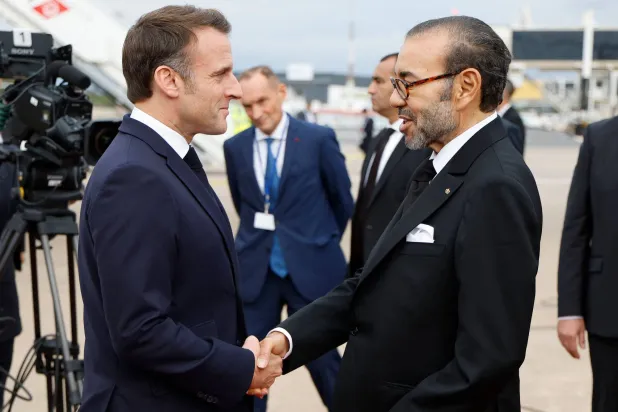
French Prime Minister Sebastien Lecornu will travel to Rabat on Wednesday, with the visit lasting until Thursday, aiming to strengthen ties between France and Morocco.
Private tutoring in Egypt: Rising prices and an extended holiday season
Calls have renewed in Egypt for more decisive measures to tackle the phenomenon of private tutoring, especially with rising prices and increased activity of 'educational centers' during the summer vacation, as a member of the Egyptian House of Representatives (the first chamber of parliament) called for strict regulatory controls on these entities.
On Tuesday, MP Ashraf Amin submitted a request for information addressed to Prime Minister Dr. Mostafa Madbouly and Minister of Education and Technical Education Mohamed Abdel Latif regarding what he described as 'the significant rise in private tutoring prices' and the increasing burden it places on millions of Egyptian families, especially with 'the start of (centers) receiving students during the summer vacation and before the start of the new academic year.'
Amin called for 'urgent government intervention to confront the phenomenon of private tutoring,' stressing that 'the continued rise in the cost of private tutoring has become a real challenge for families, given the increasing reliance on it and the frequent decline of the school's role.'
Price inflation
He warned that 'the inflation of private tutoring prices has become a national crisis requiring swift action, as many (centers) have turned into entities imposing high fees without effective oversight or clear controls,' according to local media reports on Tuesday.
Vast segments of the 25 million students across different educational stages rely on private tutoring, which has been socially and culturally ingrained in the consciousness of many families for years. Government measures have failed to confront it, to the point where there has been coexistence with it despite administrative actions to close 'centers' and others related to providing an alternative for students inside schools through 'remedial classes' (sessions for a nominal fee).
Egyptian Prime Minister Mostafa Madbouly inspects a school in Giza Governorate last May (Egyptian Ministry of Education)
In the opinion of Dr. Hassan Shehata, professor of curricula at Ain Shams University and an educational expert, confronting private tutoring must begin with 'developing the educational process' and seeking funding sources to improve the quality of education inside schools, providing teachers, reducing class density, and providing modern educational technologies. He told Asharq Al-Awsat that '(centers), private tutoring, and external books are all phenomena and terms that destroy the educational process, aiming to entrench memorization and elevate a culture of storage in contrast to a culture of thinking.'
Shehata believes that 'the dedication of centers to a culture of memorization and rote learning without understanding unfortunately finds acceptance among some parents and students, who want success without learning and model answers without effort, which hinders the possibility of closing them and limits the government's ability to confront the phenomenon of private tutoring.'
However, Education Minister Mohamed Abdel Latif said in statements at the end of last year that 'the language of numbers and field indicators reflects a noticeable decline in the (business) of private tutoring and external books as a result of the return of confidence in the school's role.' In a televised interview at the time, he pointed to 'a decrease in the volume of work in private tutoring centers by between 50 and 60 percent, due to students attending schools regularly during the morning period.'
Parents
Meanwhile, Dalia Al-Hazzawi, who oversees a parents' group on social media and founded the 'Egyptian Parents Coalition' group, observed that some 'centers' have opened their doors to students during the summer vacation in preparation for the next academic year. She also noted a rise in session prices, stating in a statement to Asharq Al-Awsat that 'the reason centers start work during the summer vacation is that the school year is insufficient for students due to the crowded curriculum and lack of time, as there is a big gap between the volume of curricula and the days of the academic year, forcing parents to resort to them from the beginning of summer.' She confirmed that 'prices at centers have risen significantly compared to last year, increasing the financial burden on most families.'
Egyptian Education Minister Mohamed Abdel Latif follows high school exams (Ministry of Education)
Al-Hazzawi believes that 'private tutoring is a (symptom) and not a (disease), and eliminating the disease requires restoring the school's role and developing the educational process. Class time is insufficient for explanation, and changing curricula confuses teachers and students. There must be an expansion of (school reinforcement groups), because closing (centers) will not eliminate private tutoring; it will simply move into homes.'
MP Ashraf Amin, in his request for information, called for 'strict oversight of educational centers to ensure their compliance with laws and regulations governing their work, and to prevent any practices that lead to exploitation of parents,' stressing that 'educational development will only be achieved by restoring the school's fundamental role in providing distinguished educational service, improving the level of explanation in classrooms, and expanding school reinforcement groups at reasonable prices.'
He demanded that 'the government be obliged to set a specific implementation plan with a clear timeline to eliminate the chaos of private tutoring, restore the prestige of the Egyptian school, and protect parents from the burdens of exploitation.'
Original source: Asharq Al-Awsat




Comments (0)
Be the first to comment.